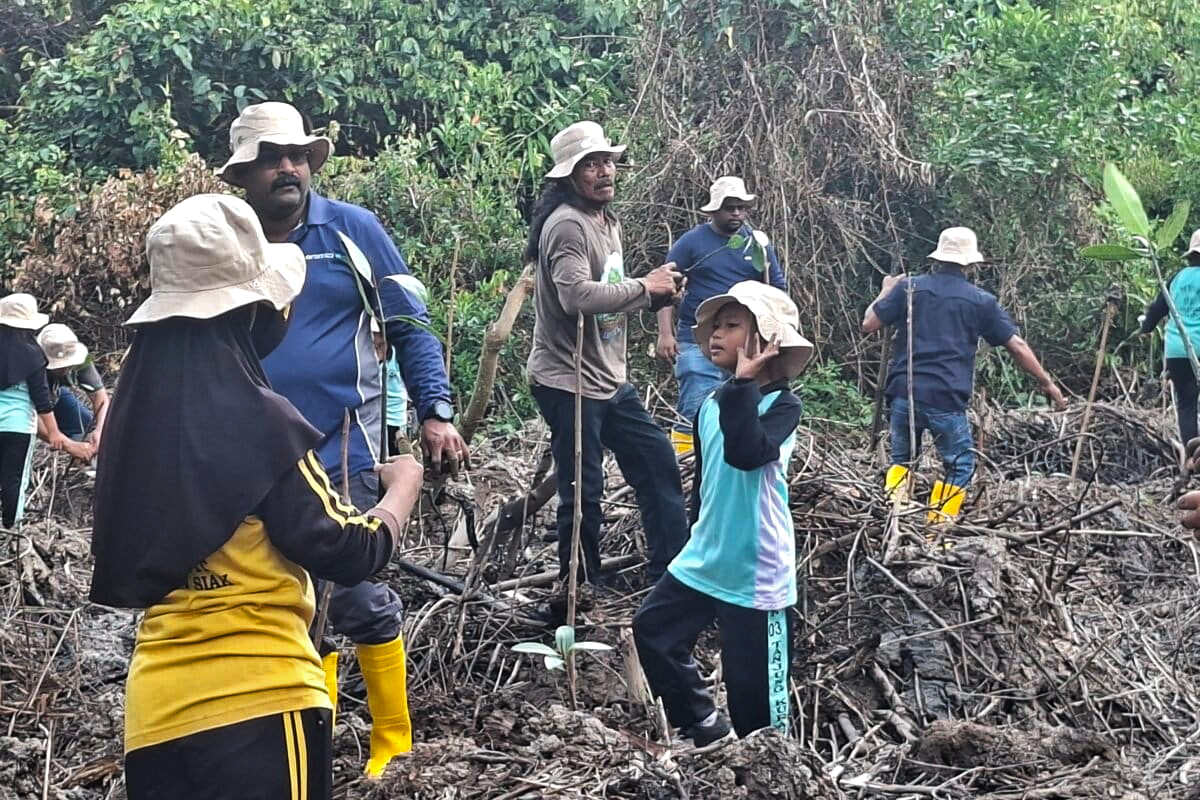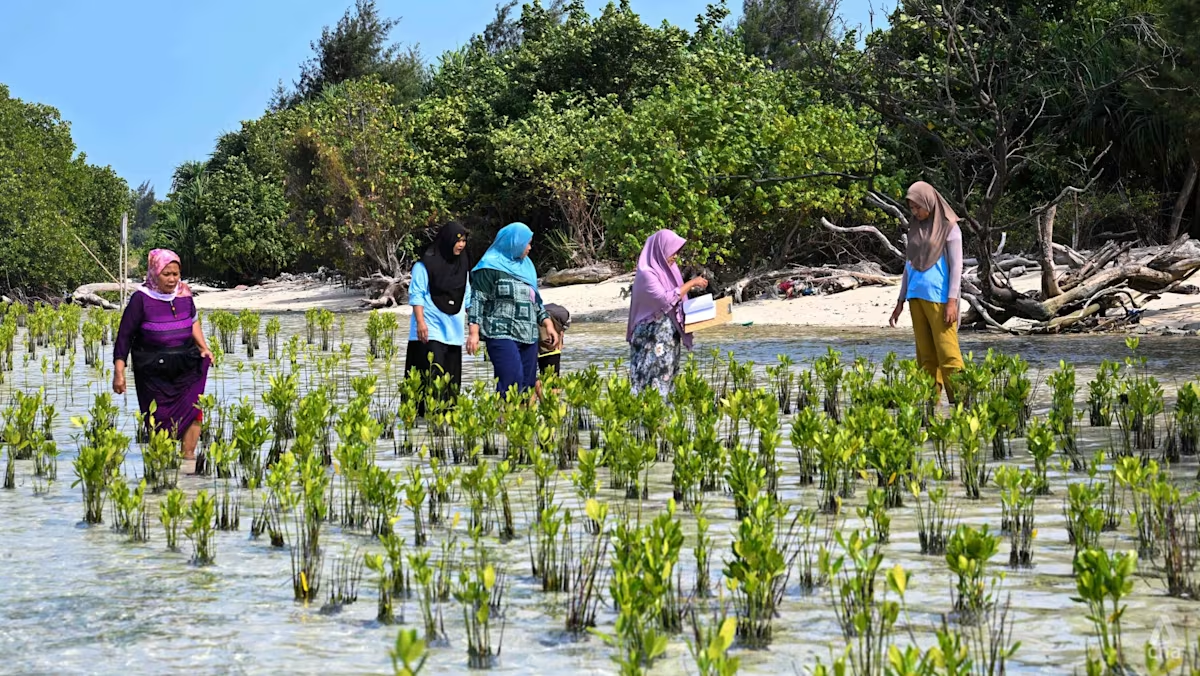
PARI ISLAND: On a small island about a two-hour ferry ride from North Jakarta, 60-year-old Wina Sabenah walks slowly along the coastline, hunched over as she pauses to check on young mangrove saplings that she and a group of other women had planted in neat rows some months back. Armed with a pen, paper and a ruler, Wina and her friends carefully inspect and measure each growing plant, making sure that the roots are holding firm in the soft tidal soil of Pari Island against incoming waves.The women are part of a crew known as the Pari Island Women's Group, which aims to protect the 43ha island - equivalent to about 60 football fields - from being taken over by a private firm. Their primary objective: to ensure that families can continue living on the island - which forms part of Jakarta’s Thousand Islands regency - for generations to come.“I joined (the) Pari Island Women’s Group to hold onto my birthplace and so that my children and grandchildren can also continue living here. This is our home,” said Wina, a grandmother of one.
Wina Sabenah inspects mangrove saplings planted as part of the community restoration programme on Pari Island. (Photo: CNA/Ridhwan Siregar)
Pari Island Women’s Group regularly hold activities such as mangrove planting and beach cleaning as a means of protecting their environment and supporting their families. It was founded in 2017 by 43-year-old Asmania, who like most Indonesians goes by one name.Pari Island lies just 1.5m above sea level, and reports predict that rising sea levels due to climate change could submerge most parts of it by 2050.In December last year, a Swiss court agreed to hear a landmark case filed by Asmania and three other Pari Island residents against global cement giant Holcim seeking financial compensation for climate-related loss and an order to reduce its greenhouse gas emissions.The court decision made global headlines.