When an agent writes the code, you stop reading every line. You can pretend otherwise for a while, but on any real codebase you end up skimming a 600 line diff and approving it because nothing jumped out. Nothing jumping out is not the same as nothing being wrong.
Documentation and a well tended CLAUDE.md only take you so far. The longer an agent runs, the more those instructions get crowded out of context and quietly forgotten. Instructions are advisory. Tooling is not.
Two ideas run through everything below.
The first is that the economics of enforcement have changed. Every quality threshold we set as an industry was really a judgement about how much human time it was worth spending. 100% branch coverage was not wrong, it was expensive, so we called it diminishing returns and settled at 80%. That cost is now paid in agent time, which is cheap and which you are not spending your evening on. Thresholds that were uneconomic five years ago are now just settings. Turn them up.
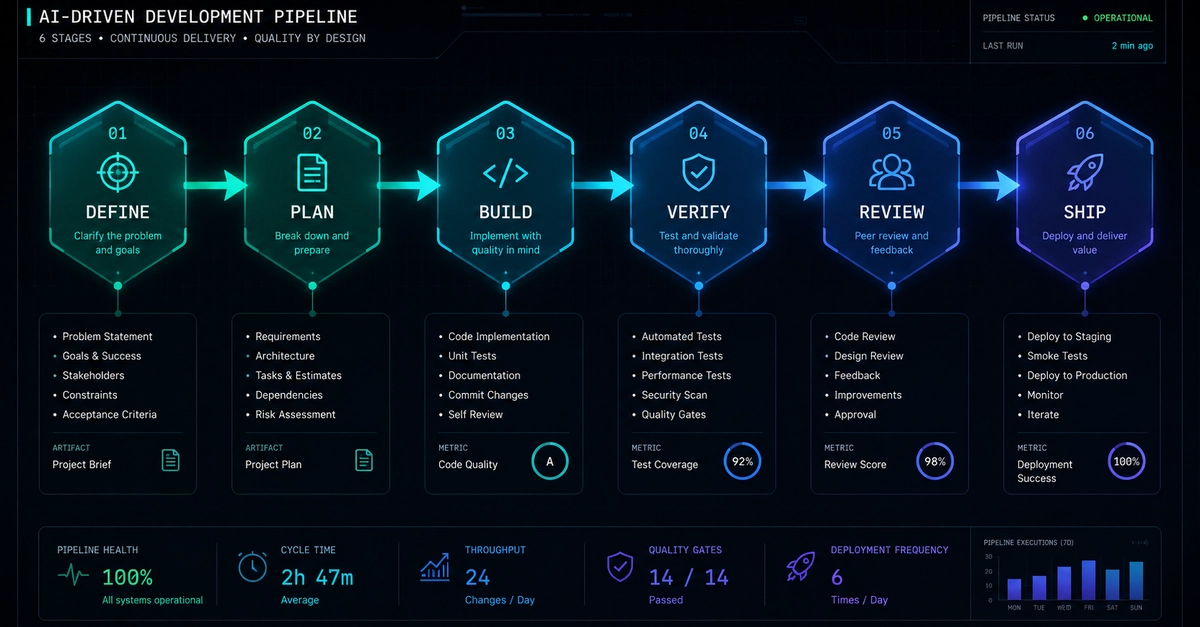
The second is that a tool only counts if the agent sees the output. A linter that fails in CI thirty minutes after the agent stopped is a message to you. A linter the agent runs itself, reads, and fixes before you ever see the branch is part of the harness. Same tool, completely different value. Everything on this list should be reachable by the agent with one command, and should fail loudly enough that it cannot be ignored.