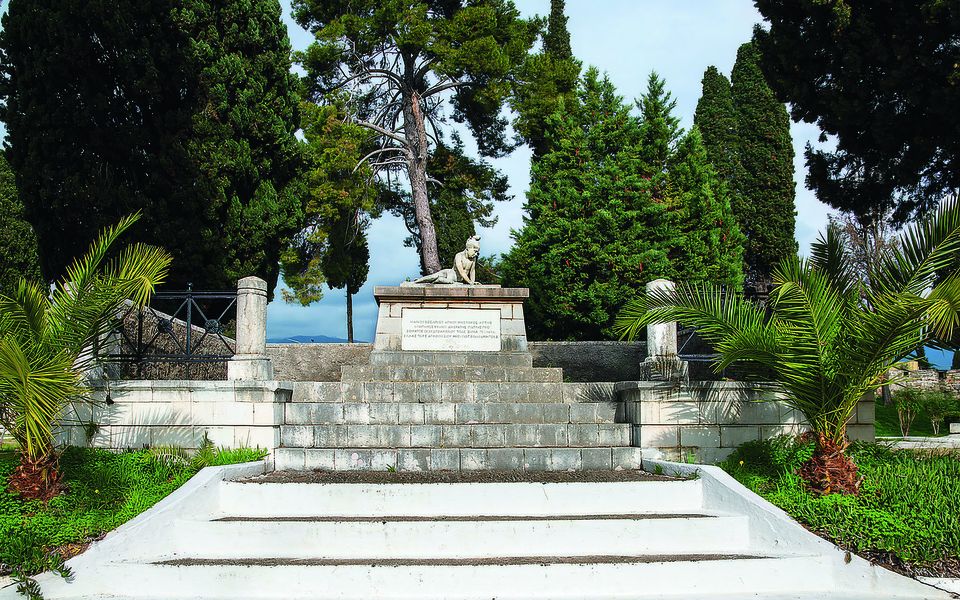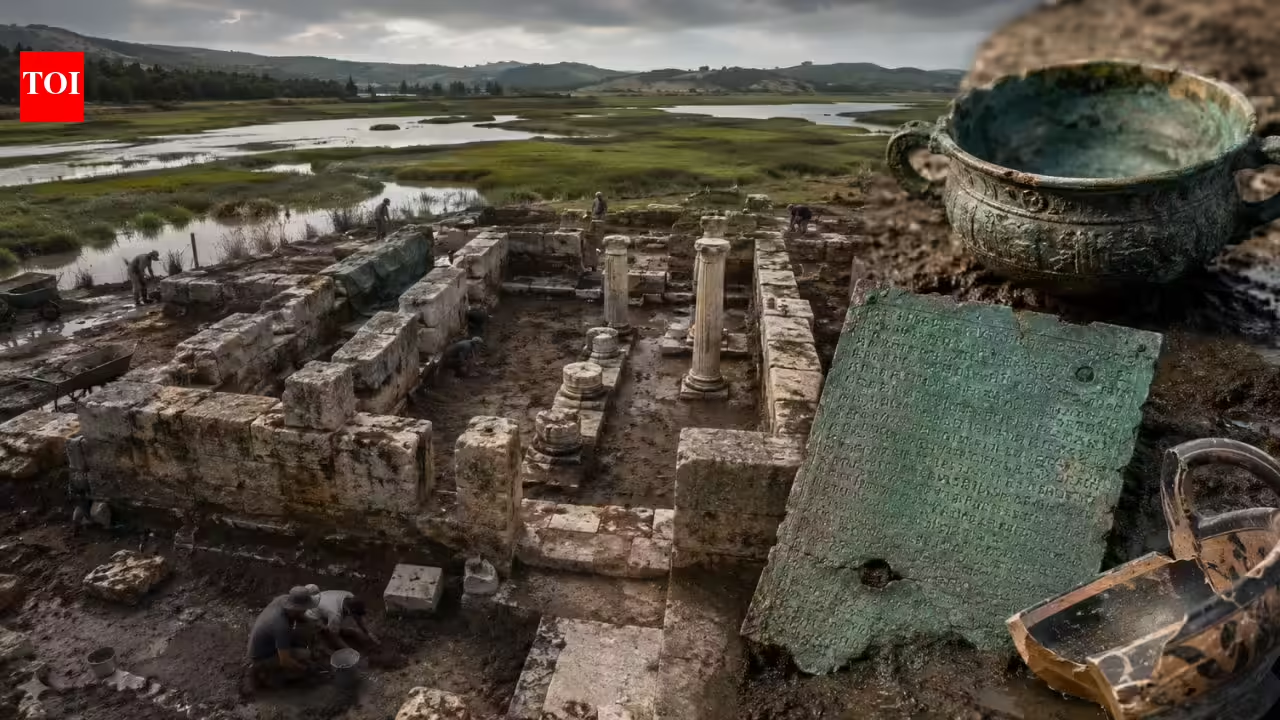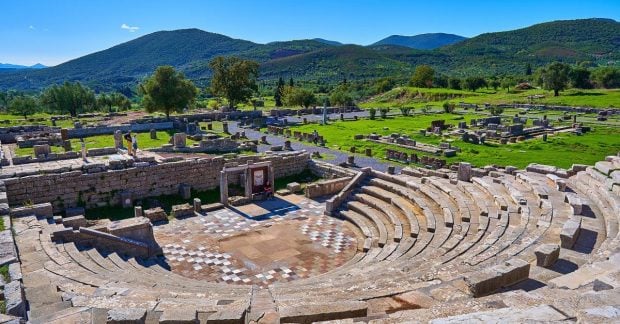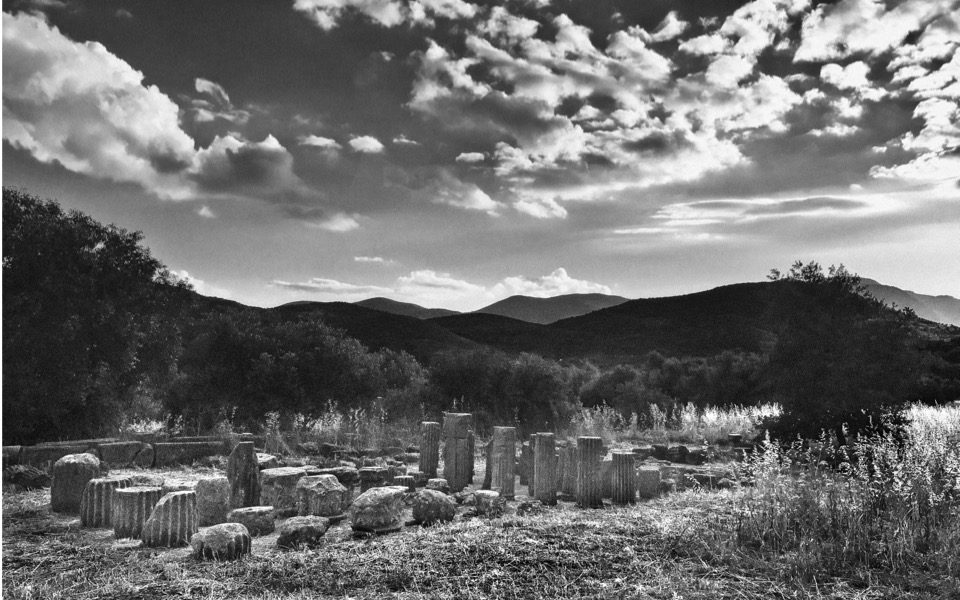
The setting of dry weeds, marble ruins and open skies may seem unchanged in Ancient Messene, but beneath this tranquility lies more than 2,000 years of history.
Photographer Stella Nastou visited the archaeological site in the southwestern Peloponnese in May 2017 and created a “still journey” stretching from 369 BC to the present. She did not approach antiquity as an impressive setting, but used the forms of the ruins to convey a sense of unmoving time in the exhibition “Messene or The Power in the Silence of Time,” running through August 30 in the entrance of the Athens Concert Hall (megaron.gr; free).
The ancient city-state of Messene, or Ithomi, was founded in 369 BC as the capital of the Messinian state after its liberation from three-and-a-half centuries of Spartan rule that drove many locals into self-exile to avoid becoming slaves. Much more than a new city, its establishment, achieved with the help of the Thebans, was an invitation to those exiles to return and to rebuild a new collective identity. Over four centuries, the city evolved into an important center for politics, religion and the arts. Today, its monuments still form a coherent urban whole, making Ancient Messene one of the most important and complete archaeological sites in Greece.