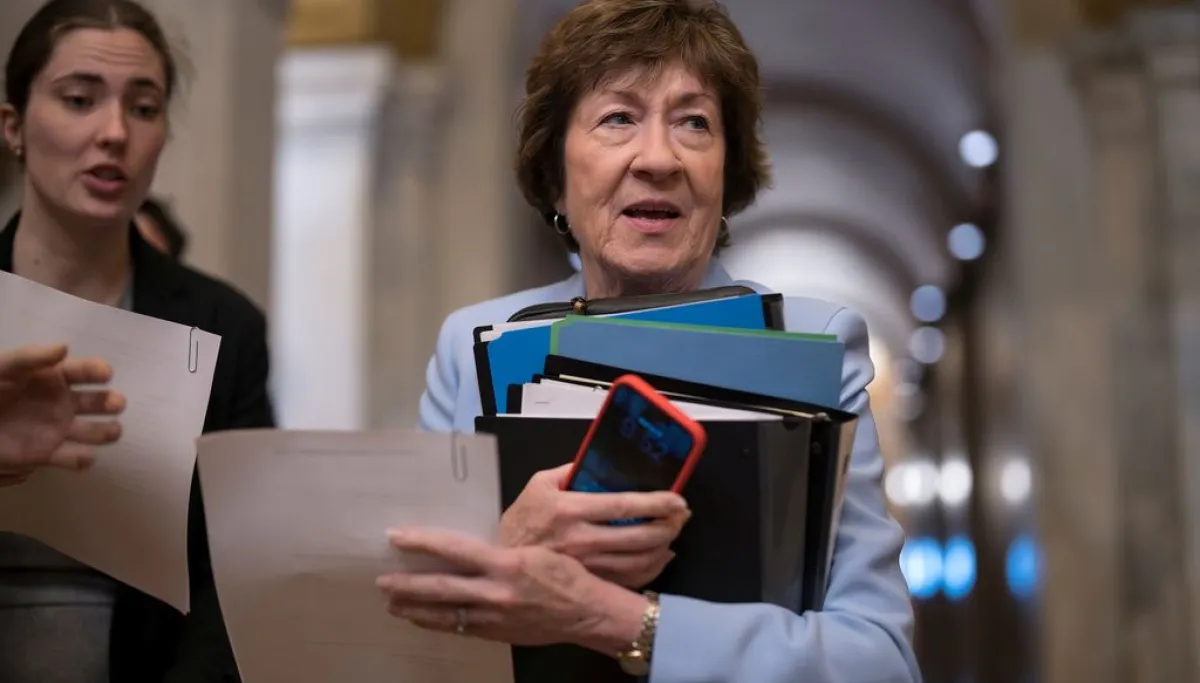
ToplineRepublicans risk losing their slim majority in the Senate in the November midterm election, as five of these six seats rated toss ups by Cook Political Report are held by the GOP, with only one in a state President Donald Trump lost in 2024.Michigan Democratic Senate primary winner Abdul El-Sayed claps during a press conference in front of the Spirit of Detroit statue on August 05, 2026 in Detroit, Michigan. (Photo by Finn Gomez/Getty Images)Getty ImagesKey FactsAlaska: Democratic former Rep. Mary Peltola is vying to unseat Republican Sen. Dan Sullivan, who is seeking a third term. The primary served as a test for the general election as candidates of all parties run on the same ballot and the top two vote-getters advance. Peltola beat Sullivan by five points in the primary. The last time Alaska elected a Democrat as senator was in 2008, and the state has voted for a Republican in every presidential election since 1968. Peltola has a history of winning in the state, however, when she beat Republicans, former Gov. Sarah Palin, and Rep. Nick Begich III, in the 2022 special election, then was defeated by Begich in 2024. Iowa: The race between Republican Rep. Ashley Hinson and Democratic state Rep. Josh Turek to replace retiring Republican Sen. Joni Ernst was shifted to a toss up this week by Cook Political Report. Iowa voted for Trump in the past three presidential elections, but voted for former President Barack Obama in 2008 and 2012. Hinson led by two and three points in New York Times/Siena University and Emerson College polls, respectively, taken earlier this month.Maine: Democrat Troy Jackson, a former Maine state senator, is running against incumbent Sen. Susan Collins, who occasionally breaks with Trump on some issues. The race has been highly publicized over the many scandals surrounding former Democratic nominee Graham Platner, who dropped out of the race after a former girlfriend accused him of rape, which he denies, prompting calls for his resignation. Jackson led Collins by three points in a University of New Hampshire poll taken in July. Maine is the only state of the six toss ups that Trump lost in 2024.Michigan: In another closely watched Democratic primary, progressive Abdul El-Sayed narrowly beat moderate Rep. Haley Stevens in a battle that underscored the party’s internal identity struggle. El-Sayed, who is not a socialist but is a prominent example of the left-wing’s rise in the party, faces former Republican Rep. Mike Rogers in the general election to replace outgoing Democratic Sen. Gary Peters. A survey by Susquehanna Polling and Research released earlier this month shows El-Sayed leading by seven points.Ohio: Former Democratic Sen. Sherrod Brown, who lost to Trump-backed Sen. Bernie Moreno in 2024, is aiming for a comeback against Republican Sen. John Husted. A Fox News poll taken earlier this month shows Husted trailing Brown by eight points, while a plurality of respondents, 33%, said Husted is too close to Trump. Husted is the former Ohio lieutenant governor and Ohio secretary of state who was appointed by Trump last year to replace JD Vance when he became vice president.Texas: Republican infighting in the GOP primary and Democratic nominee state Rep. James Talarico’s controversial past comments on gender and religion have made this a high-profile race. Trump gave a last-minute endorsement to Texas Attorney General Ken Paxton over four-term incumbent Sen. John Cornyn, angering some Republican senators as Cornyn is well-respected among his GOP colleagues. Paxton beat Cornyn in a runoff by 28 points. Talarico and Paxton are deadlocked in polls, with an Emerson College survey taken earlier this month showing Paxton leading by one point and 5% of voters undecided.Big Number38%. That’s Trump’s approval rating in Nate Silver’s Silver Bulletin polling average, amid a string of surveys in recent months showing his approval rating at record lows amid growing fatigue with the Iran war and its impact on the economy. While Trump’s rating is low compared to most modern presidents at this point in their terms, the president’s party historically performs poorly in midterms elections, due to a combination of factors including low turnout in a non-presidential election year and motivation by voters who view the midterms as a referendum on the president’s agenda. Key BackgroundRepublicans hold a 53-47 majority in the Senate. The party won back control in 2024, flipping West Virginia, Ohio, Pennsylvania and Montana, after four years in the minority. Cook Political Report rates the battle for control of the Senate as a toss up, with Republicans favored slightly to win. In the House, where Republicans hold a 218-213 majority, most polls show Democrats with an advantage on the generic congressional ballot. A split Congress or one that’s fully in Democrats’ control could significantly hamstring Trump’s agenda, though he’s circumvented Congress to enact some of his most controversial priorities, including mass immigration raids, the Iran war and reconstruction of the Capitol and surrounding areas. Democrats are also gearing up to launch numerous investigations into Trump if they regain control of one or both chambers, with probes set to focus on whether he has used the presidency to enrich himself personally.
2026 Midterms: These Are The 6 Senate Races To Watch
Trump has a 38% average approval rating in Nate Silver’s Silver Bulletin.
850 words~4 min read