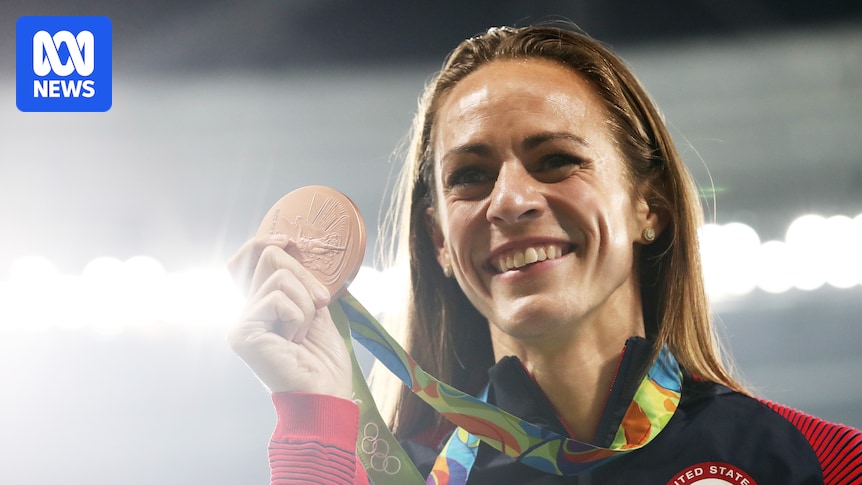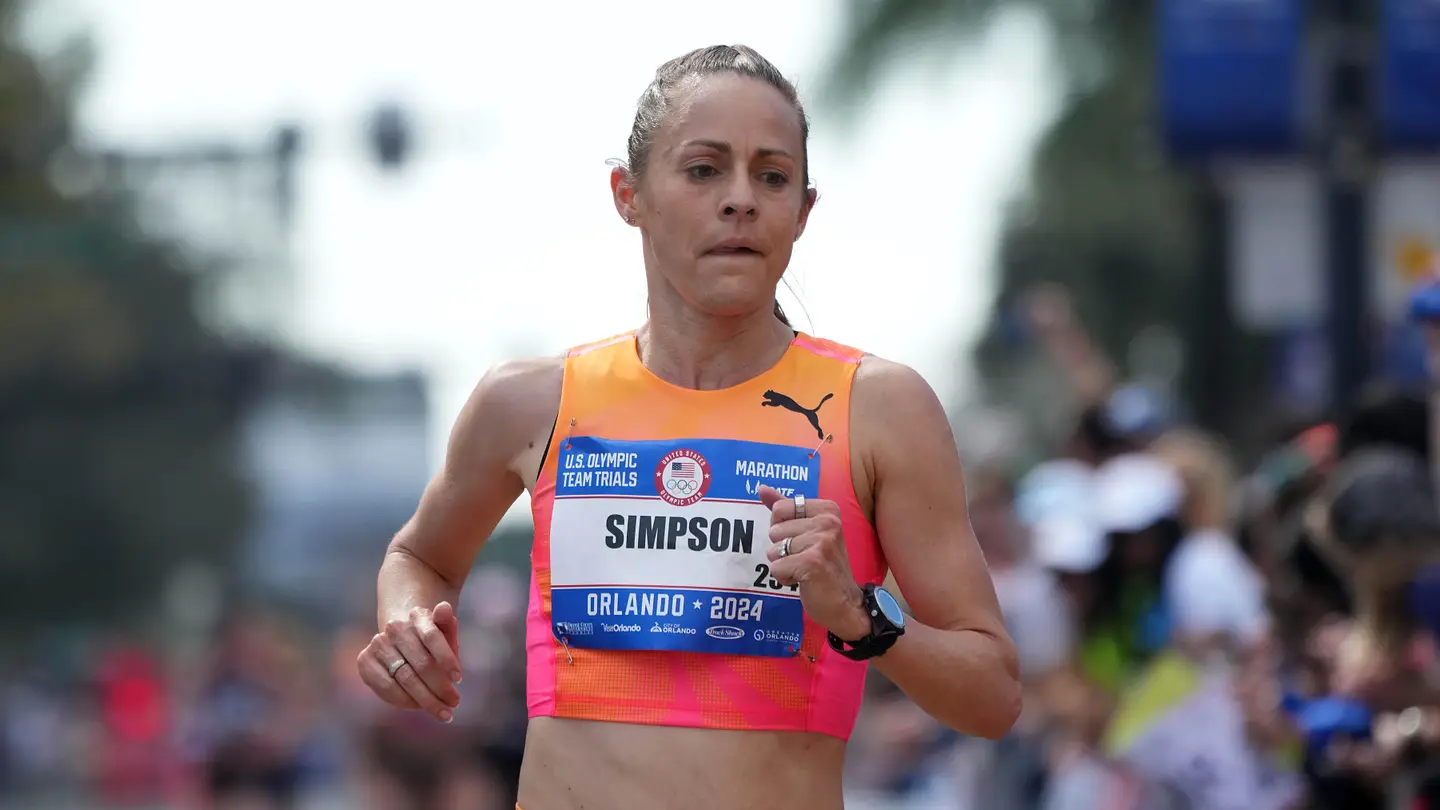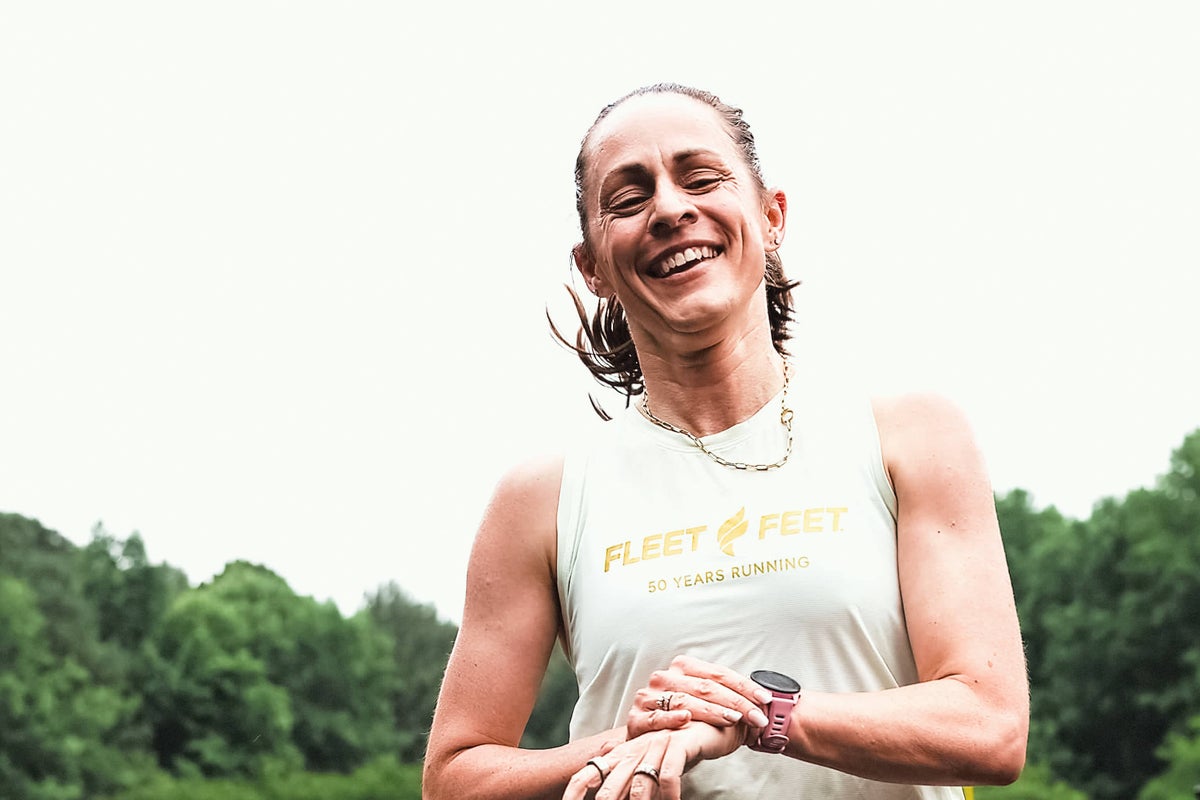
Jenny Simpson does not remember one of the most consequential days of her life. It’s possible she never will. That can happen when you outrun heart failure.Simpson, an Olympic bronze medalist in Rio and 1,500-meter world champion, woke up expecting June 16 to be like any other Tuesday.She thinks she went for her typical morning run, then headed to the Raleigh, N.C., offices of Fleet Feet, a running apparel company for whom she works as Chief Running Officer. Her work done for the day, she’s told, she left the office early with some colleagues and headed to a community running event called the Sir Walter Miler.Simpson, who turns 40 on Sunday, was supposed to be a special guest, but was not going to participate. That plan changed in the car ride over to Peter Hines Williams Stadium, when running buddy Dr. Ivy Pointer convinced her to lace up. There was a group of eighth-grade girls at the event hoping to set personal records for running a mile. Their goal: 5:30.It was light work for Simpson, who in 2009 ran the 1,500 meters (roughly 100 meters shy of a mile) for Colorado in 3:59:90, becoming the only woman to break four minutes in that distance during an NCAA season. Her record still stands, 17 years later. She went on to win three national championships in the 3,000-meter steeplechase and one in the indoor 3,000 meters. Then came appearances in the Beijing and London Olympics, before she reached the podium in Rio.Jenny Simpson’s connection to the running community has continued to drive her, years after she retired from high-level competition. (John Ruggero / The Running Photographer NC)This evening in Raleigh, she paced the group to a spot-on 5:29 finish. Mission accomplished, she headed for the infield to mingle with attendees.“I can see from the pictures and from what has been shared with me from other people that were there, I mean, I was feeling good. I was joyful. It was kind of a very typical, normal community kind of day,” Simpson said. “… What’s been told to me was that I was chatting with someone on the infield, and then I just told them that I didn’t feel very well and asked for a minute, and I stepped away. That’s when I collapsed.”There aren’t any “good” places to enter cardiac arrest, but Simpson could have done much worse.“There were bystanders in the stands that were literally ICU physicians, physician assistants — people that worked in emergency situations that were able to come and give me life-saving care,” she said.One of those people was Dr. Pointer, who works as a pediatric ICU physician at WakeMed. She was particularly qualified to help Simpson. Her 15-year-old son, Liam, was born with a cardiac condition of his own and was scheduled for open-heart surgery later that week. Dr. Pointer immediately began CPR, alternating with others ready for the moment.Joey Pointer, Dr. Pointer’s husband and Fleet Feet’s CEO, began screaming for an automated external defibrillator, or AED. Suddenly, he realized where he could find one. The Pointers had purchased a defibrillator for Liam’s track team, just in case, and the team happened to be at the event that day. Pointer ran to his son’s coach, and the two took off to the coach’s truck, where the life-saving device was waiting.“I can remember, like, the crowd sort of like opening up,” Joey Pointer said. “I’m not in the medical field. There’s people more qualified, so I give them the AED. I run my leg of the race, so to speak.“I can remember being 10 or 15 yards away. She is, like, lifeless. My wife is at her head yelling, ‘Jenny, Jenny, Jenny,’ in the sense of like talking to her. You can hear them saying, ‘I don’t have a pulse.’ They’re doing compressions. There’s probably 200 people who are now all eyes, you know, and everybody is giving space. It’s this surreal moment.”
The day Olympic medalist Jenny Simpson’s heart stopped
The Rio bronze winner and 1,500 record holder collapsed after a mile run. That it happened near an AED and medical professionals saved her.
1,920 words~9 min read