An observational study on a five-day corpus — 179 messages between parallel coding sessions — followed by an experiment built from what the corpus said. Every message was coded twice by independent coders, and disagreements are reported rather than resolved in my favour. One machine, one person, one set of repositories: the ceiling is coverage, not confidence.
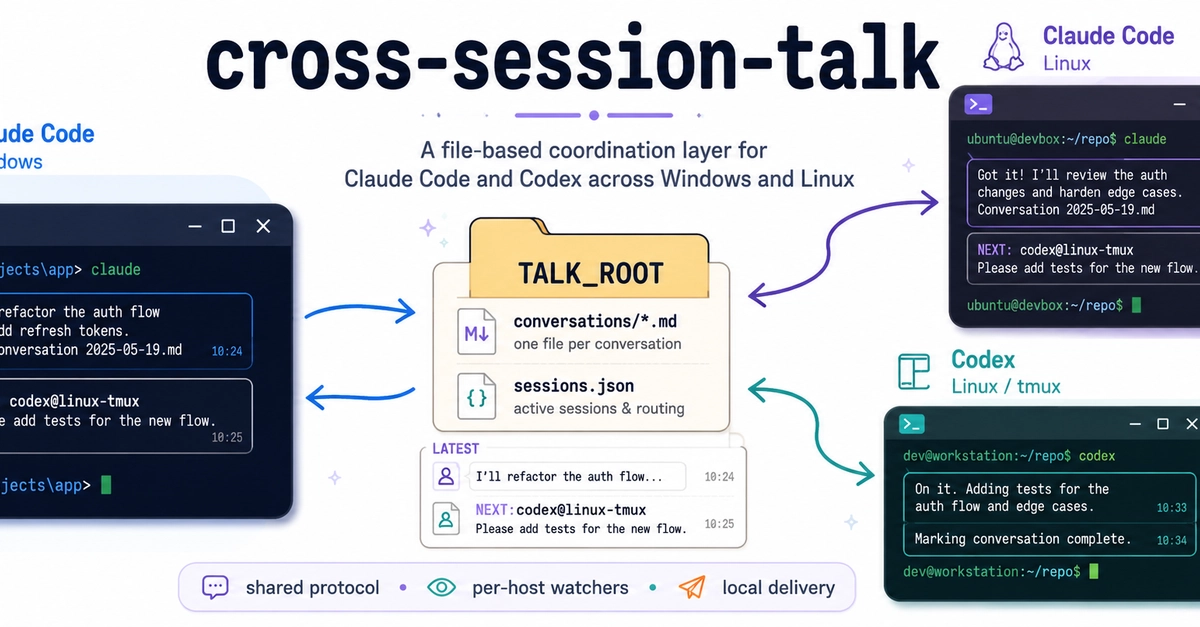
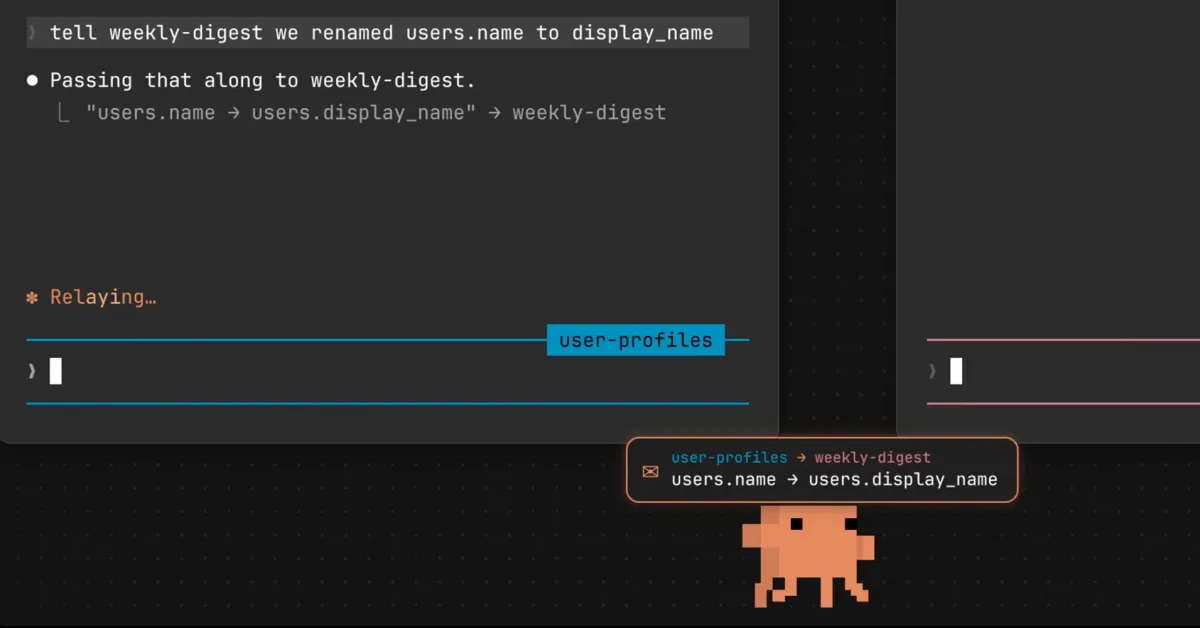
Claude Code sessions can now message each other. One session sends a summary — not its history, not its files — and another picks it up.
I had been running up to four sessions in parallel for about a week, and the experience was good. I want to state that plainly before taking it apart: they warn each other, they notice collisions, they wait so as not to step on one another, and sequences form on their own where each one merges with whoever it bumps into. It looks like teamwork.
That was exactly why I distrusted it. A month earlier I had run an experiment on whether coding agents can collaborate on top of Stanford's CooperBench, and two of its findings are awkward for any enthusiasm about a message channel. The agents there already had a channel from minute one and used it unprompted — forcing a handshake before they could touch code never even triggered. And the lever that actually recovered performance was making one agent own the final integration, not the channel. The sharpest failure I documented was follow-through: an agent read a request, wrote "I should coordinate" in its private reasoning, and never replied or did its part.