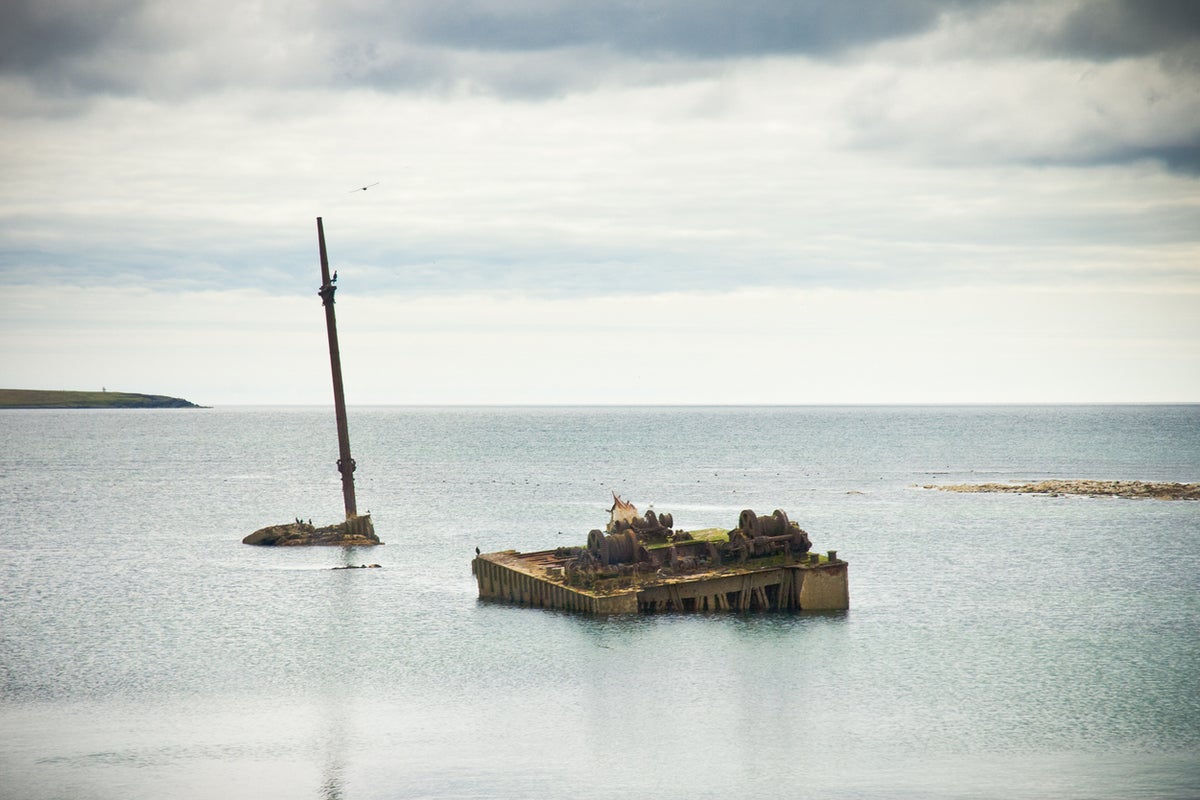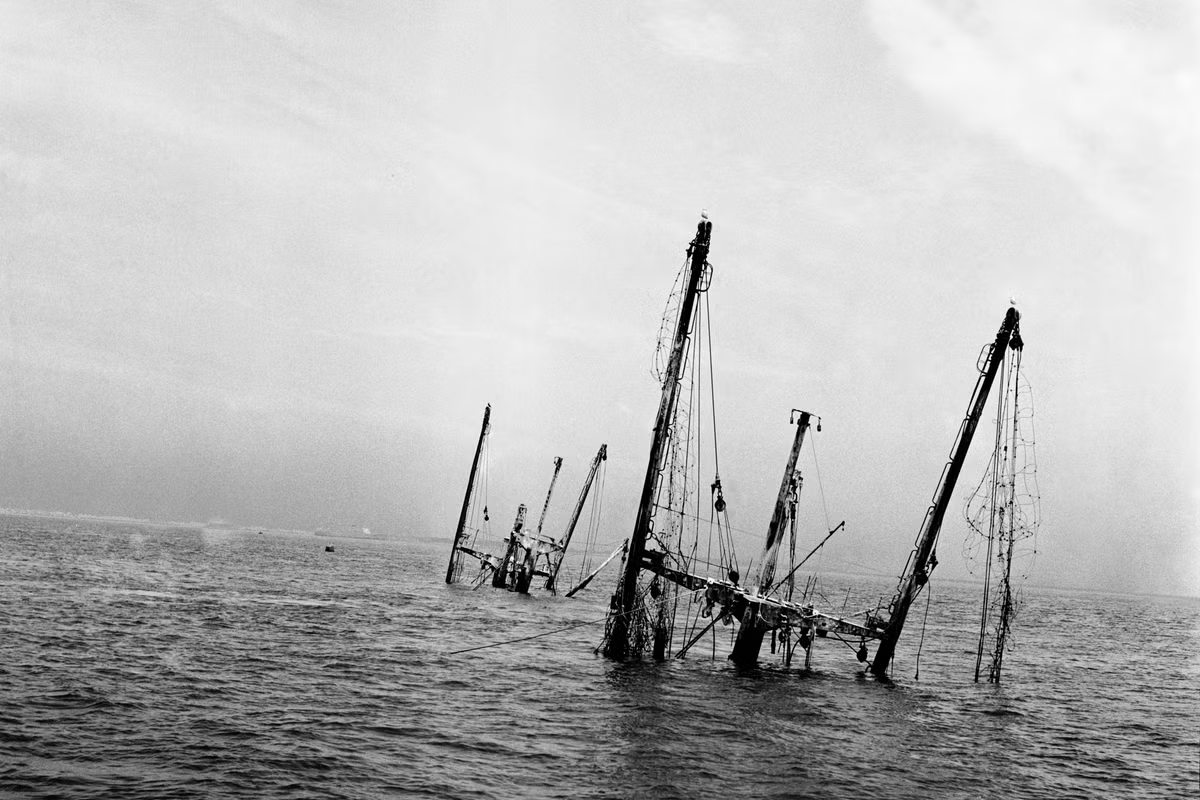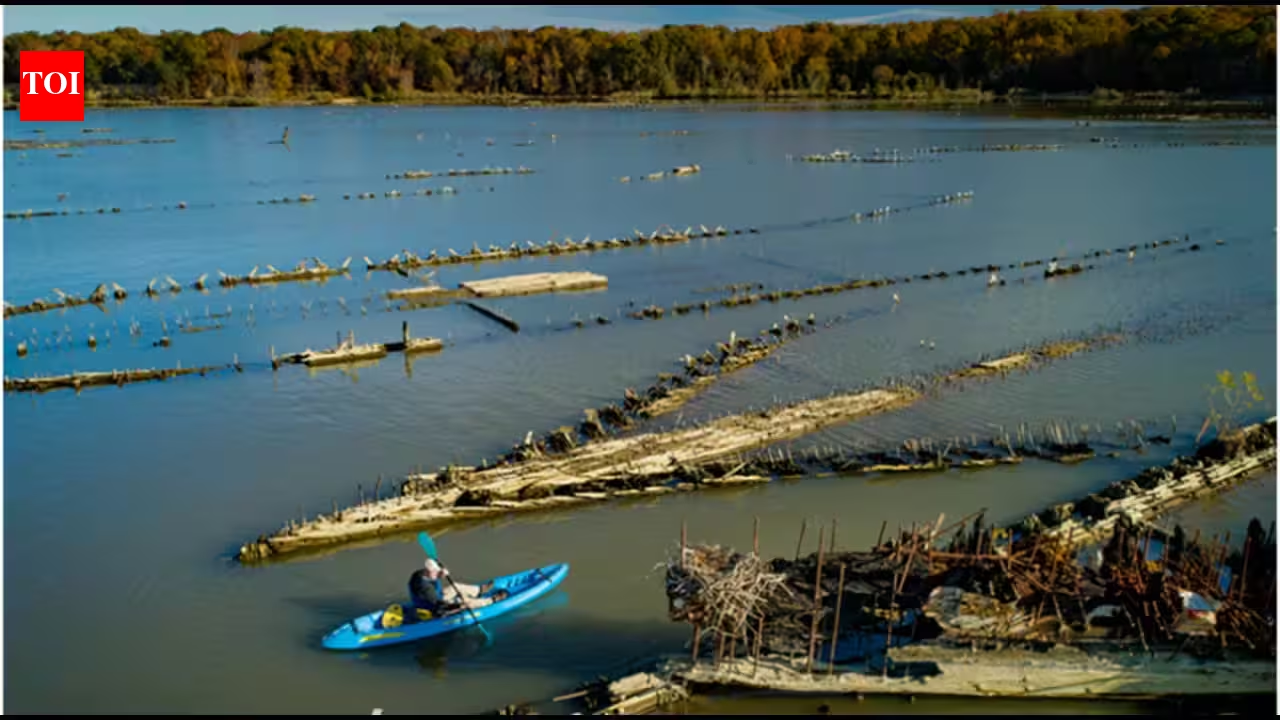
A kayaker among the "Ghost Fleet" shipwrecks in Mallows Bay. Image Credits: Wikimedia Commons.A century ago, the wooden steamships gathered in Maryland’s Mallows Bay were remnants of a wartime shipbuilding programme that had produced more vessels than the market could absorb. After the war, efforts were made to salvage their valuable materials, with some ships stripped and burned so their engines and boilers could be recovered. Bethlehem Steel later carried out a large-scale salvage operation, but many hulls remained in the Potomac River.According to the US Maritime Administration (MARAD), the United States launched a large-scale shipbuilding programme during World War I to overcome severe shortages of merchant shipping. The Emergency Fleet Corporation proposed hundreds of wooden steamships because timber was readily available and there were concerns that steel production could not meet wartime demand. By July 1920, shipyards had delivered 296 wooden steamships. Although many entered commercial service after the war, an economic slowdown in the early 1920s and the growing availability of newly built steel vessels eventually reduced their usefulness.From wartime fleet to abandoned wrecksIn 1922, the Western Marine and Salvage Company purchased about 230 of the vessels and moved them to the Potomac, intending to strip them of valuable metal. The plan soon ran into problems. Ships broke loose, caught fire and became hazards to navigation, while attempts to dismantle them proved more difficult than expected.By August 1929, 169 ships had been moved into the shallow waters of Mallows Bay. Their wooden superstructures were burned away to make it easier to recover engines, boilers and other metal components. The salvage operation, however, never cleared the fleet completely. During the Great Depression, residents continued to recover scrap from the wrecks as a source of income. A final major salvage effort began during the Second World War, when Bethlehem Steel took over the operation, but it ended in 1944.The vessels that remained were gradually incorporated into the surrounding landscape. Sediment accumulated around and inside the hulls, while seeds took root in the wreckage. Some ships became partly buried, while others developed vegetation-covered surfaces that now rise above the water like small islands. Over time, the abandoned hulls became fixed features within the shifting tidal environment, providing surfaces where sediment and vegetation could accumulate.When wrecks became habitatsThe ecological transformation is particularly striking because the ships were never designed to serve as artificial reefs or wildlife refuges. Their decaying frames created hard surfaces and sheltered spaces that organisms could colonise. According to a study in BioScience, shipwrecks can provide habitat for organisms ranging from microbes and invertebrates to fish and larger animals, while ecological communities develop around the structures over time. At Mallows Bay, the wrecks have similarly become part of the local habitat, interacting with sediment, vegetation and the surrounding tidal waters.At Mallows Bay, vegetation has taken root on and around the wooden hulls. Trees and wetland plants have turned some wrecks into green, ship-shaped islands. These structures provide nesting and resting sites for birds, while submerged sections offer shelter and feeding areas for aquatic species. Ospreys are regularly associated with the wrecks, while blue herons and bald eagles also use the wider habitat. Beavers have even established a lodge on one of the vessels.Shipwreck at Mallows Bay, Charles County, Maryland, USA. Image Credits: Wikimedia Commons.A new life for the Ghost FleetAccording to a study in Scientific Data, researchers used drone-based surveys to map all 147 wrecks visible in Mallows Bay, producing high-resolution aerial mosaics and digital records of individual vessels. The survey created a detailed baseline of the fleet’s archaeological, ecological and cultural resources, with the wreck outlines linked to existing records from the Maryland Historic Trust. The researchers noted that these records could support future monitoring of the site as the wrecks change through sediment accumulation, vegetation growth and physical deterioration.The wrecks have consequently become intertwined with the surrounding river environment rather than remaining isolated remnants of the wartime fleet. The drone survey now provides a detailed snapshot of that relationship, allowing future researchers to compare the condition and position of the wrecks with later observations. The Ghost Fleet therefore represents more than the remains of an abandoned shipbuilding programme. Built during the First World War and later left in Mallows Bay after repeated salvage efforts failed, the wooden vessels have gradually become part of the landscape they were once meant to occupy only temporarily. Today, their historical remains and the habitats that have developed around them exist side by side, making Mallows Bay a site where industrial history and natural change can be observed together.
In the 1920s, over 100 World War I wooden steamships were moved to Maryland’s Mallows Bay for salvage; a century later, the wrecks shelter fish, beavers and birds
A century ago, the wooden steamships gathered in Maryland’s Mallows Bay were remnants of a wartime shipbuilding programme that had produced more vessels than the market could absorb. After the war, efforts were made to salvage their valuable materials, with some ships stripped and burned so their engines and boilers could be recovered.
757 words~3 min read