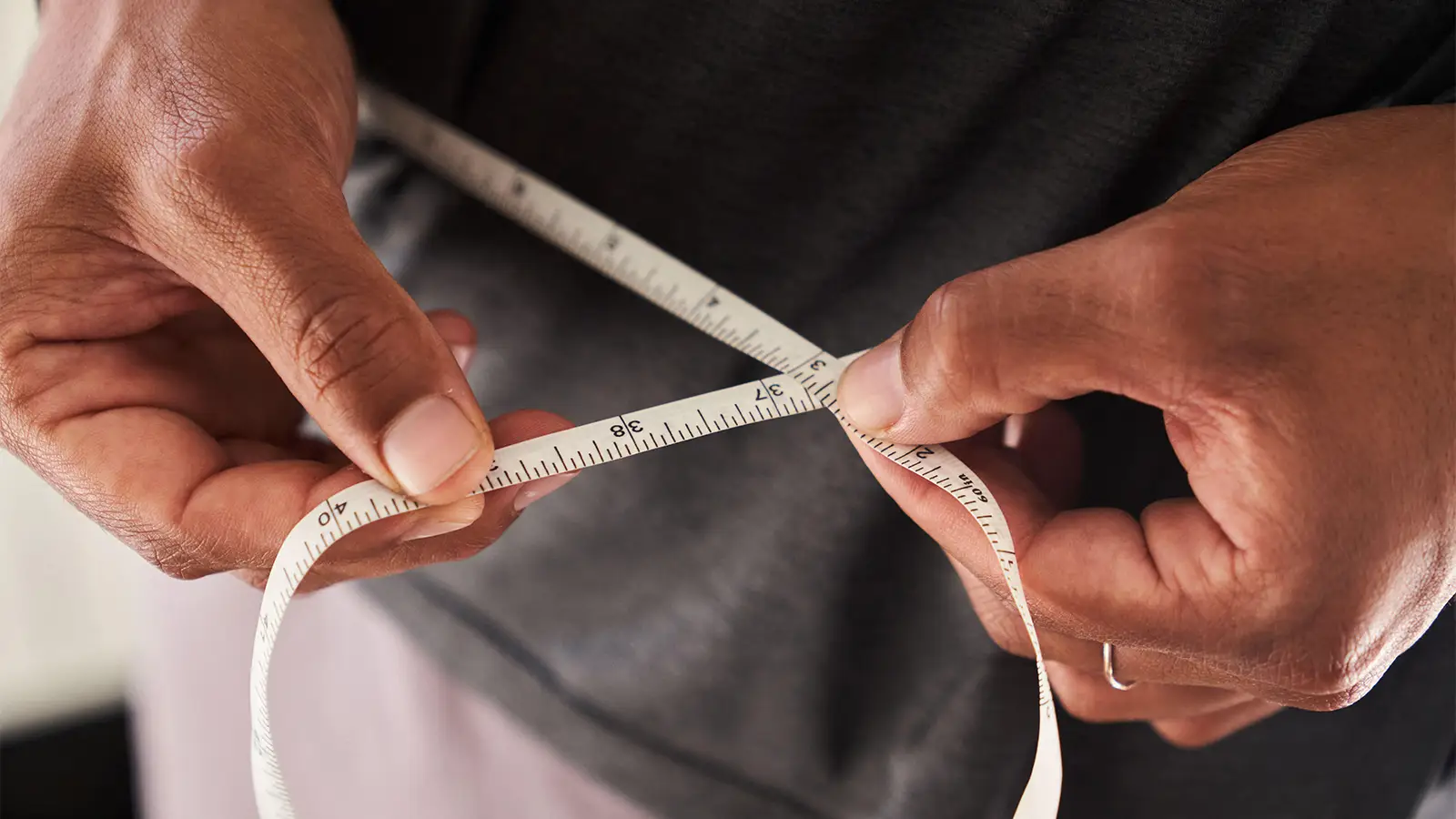
Key PointsA "normal" BMI does not necessarily indicate low health risk, particularly when accompanied by a larger waist circumference, researchers say.Rather than using BMI alone, they suggest considering waist circumference, muscle mass, body composition and a person's overall health.A person's Body Mass Index (BMI) may not tell the full story about their risk of dying in older age, with new research suggesting waist circumference can identify risks that a normal BMI misses.The study of 6,905 adults in the United States aged 65 and over found that being overweight was associated with a lower mortality hazard than having a normal BMI, particularly among men. But a larger waist circumference was associated with a higher mortality hazard in both men and women.The researchers say the findings do not mean obesity is protective. Instead, they highlight the limitations of using BMI as the sole indicator of a person's health.BMI, or body mass index, is a measure calculated from a person's height and weight. It is commonly used to classify people as underweight, normal weight, overweight or obese, but it does not distinguish between muscle and fat.News that makes senseYour trusted source for staying up-to-date with the world around you. Get free daily news updates and analysis, straight to your inbox."BMI and waist circumference provide complementary information about health risk in older adults," co-author Dr Bryan Blissmer from the University of Rhode Island said."Our findings suggest that considering both measures together, rather than relying on BMI alone, may improve mortality risk assessment and support more informed clinical decision-making."What did the study consider?In the study, a BMI below 18.5 was considered underweight, 18.5 to 24.9 was considered normal weight, 25 to 29.9 was considered overweight, and 30 or above was considered obese.Obesity was divided into three classes: Class I, BMI 30 to 34.9; Class II, 35 to 39.9; and Class III, 40 or above.However, for their analysis, the researchers combined Class I and Class II into a single category.The researchers analysed 14 years of data from the US National Health and Aging Trends Study, following 6,905 people from 2011 to 2024.They used a statistical measure called a hazard ratio to compare the likelihood of death occurring over the follow-up period between different groups.A hazard ratio of 1 indicates no difference from the comparison group. A value below 1 indicates a lower hazard of death, while a value above 1 indicates a higher hazard.For example, a hazard ratio of 0.5 represents roughly half the mortality hazard of the comparison group, while a ratio of 2 represents roughly twice the hazard.What were the results for men and women?The study found important differences between men and women, particularly in the relationship between BMI and mortality.Among men, being overweight was associated with a 46 per cent lower mortality hazard than having a normal BMI. Men with Class I or II obesity also had a lower mortality hazard, at 51 per cent lower than men in the normal BMI range.The pattern was weaker among women. Overweight women had a 27 per cent lower mortality hazard than women with a normal BMI. The lower hazard observed among women with Class I or II obesity was not statistically significant, suggesting it may have been due to chance.Waist circumference showed a much more consistent pattern. A waist circumference above 40 inches (102 centimetres) for men or 35 inches (89 centimetres) for women was associated with a 24 per cent higher mortality hazard in both sexes, independent of BMI.The researchers also found that a normal BMI could mask higher risk. Men with a normal BMI but a high waist circumference had a 33 per cent higher mortality hazard, while women had a 23 per cent higher hazard.Being underweight was also associated with almost twice the mortality hazard in both men and women.Overall, the association between higher BMI and lower mortality was stronger in men, whereas the relationship between larger waist circumference and higher mortality was similar in both sexes.Understanding the 'obesity paradox'Associate professor David Scott from Deakin University's Institute for Physical Activity said that measuring health solely by BMI creates an "obesity paradox"."It demonstrates the 'obesity paradox': the finding that in older adults and some populations with chronic health conditions, higher body mass indexes, even in the overweight or obese range, can protect against mortality," he said.BMI cannot distinguish between muscle and fat, nor can it show where fat is stored."Because BMI does not distinguish between fat and lean mass, the 'obesity paradox' may be explained by the fact that some people classified as overweight or obese have high amounts of lean mass and relatively low amounts of fat mass, while others who appear to be a healthy weight may actually have a high body fat percentage," Scott added.The researchers argue that waist circumference can provide important additional information because fat stored around the abdomen is associated with metabolic and cardiovascular problems.The researchers say the findings support a broader approach to assessing health in older adults.Rather than relying on BMI alone, they suggest considering waist circumference, muscle mass, body composition and a person's overall health.For older adults, the study's central message is that a "normal" or "healthy" BMI does not necessarily indicate low health risk, particularly when accompanied by a larger waist circumference.For the latest from SBS News, download our app and subscribe to our newsletter.
'Obesity paradox': Study finds common health metric could be misleading for older people
Researchers say the findings support a broader approach to assessing health in older adults.
882 words~4 min read