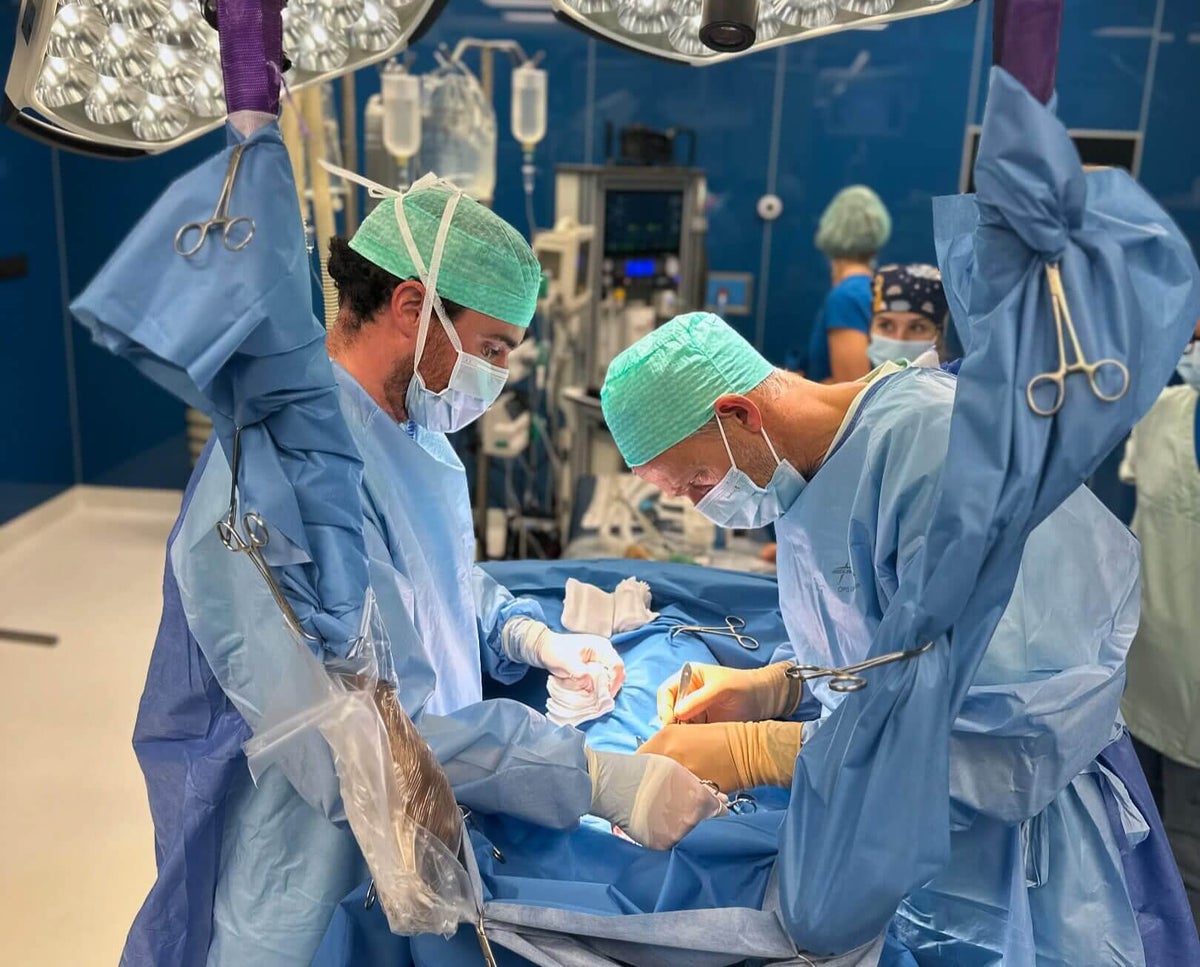
In a town in central Belgium, surrounded by 15 hectares of green fields, sits Europe’s largest private equine hospital. From Brigitte Bardot’s badly wounded donkey to the world’s most expensive dressage horse, thousands of equines have been treated in this state-of-the-art clinic which began life as a modest barn a little over 20 years ago.Its cutting-edge technology and glass-walled operating rooms, where owners are invited to watch, has attracted an international clientele; the Crown Prince of Dubai, the daughters of Bill Gates, Steve Jobs and Bruce Springsteen and former and current Olympic show jumping champions.Dr. Tom Mariën founded the clinic in 2002 with old equipment given to him from human hospitals. These days there’s a spa, five intensive care units, an aqua-trainer, 150 stables, orthopaedics, ophthalmology, medical imaging and rehabilitation.Ahead of the Paris Olympics, the clinic was at its busiest as equestrian teams from around the world anxiously had various injuries checked. The clinic is preparing for another busy period ahead of next week’s Brussels Stephex Masters, a five-day international show jumping event that culminates with the Rolex Grand Prix on August 30 and where Mariën’s team will also provide veterinary care on site. Ten of the groups vets were on site assisting different national teams at this month’s FEI world championships in Aachen, Germany.“These events bring together a very high concentration of top-level horses and riders, so they are naturally particularly busy periods for our teams,” Mariën said. “Our role is to make sure that high-quality veterinary care is available on-site throughout the competition.”Some of Mariën’s famous show jumping clients are former Olympic champions Jos Lansink and Jan Tops of the Netherlands, German great Paul Schockemöhle, Belgian Olympic bronze medallist Jérôme Guéry and Rolex Grand Slam major winners Simon Delestre of France and Sweden’s Henrik von Eckermann.“I have operated on the best horses in the world, but whether I operate on a small pony from the neighbor or on an expensive horse, it doesn’t change anything,” Mariën said. “We will fight for every horse in the same way we would fight for a human being.”An aerial view of the clinic in Belgium. (Equitom)In 2020, Equitom became the first equine clinic in Europe to use a high-tech robot and it also uses virtual reality. Its innovative surgical techniques are used all over the world, with complex cases instantly being shared with specialists in other countries.The future of veterinary science, particularly in horses, according to Mariën, will be data-driven and team-based preventive medicine, with animals treated like human elite athletes with tailored care, often exchanging information about treatments with doctors treating human athletes.“It’s not like 30 years ago,” he said. “If a horse had a fracture, it was over. Today, we can repair that.”To that end, Mariën and Dr. Frederik Bruyninx, the team veterinarian of the Belgian show jumping team, in 2021 co-founded the Equine Care Group, creating an international network of vets and equine hospitals in Europe and the U.S. working as one team that currently treats more than 100,000 horses a year.With the emergence of advanced imaging, genetics, biomechanics, regenerative therapies and AI, the priority will be to spot problems early and avoid injuries altogether. “The best surgery is the surgery that you never need to perform,” said Mariën, who honed his surgical skills in the U.S. after graduating from vet school at Ghent University in Belgium, and estimated he has done more than 100,000 operations in his career.The world’s top horses at his clinic are monitored using advanced diagnostic techniques, such as MRI, scintigraphy, which uses small amounts of radioactive material attached to drugs to take pictures of the inside of the body, and UTC tendon imaging, which uses a motorized tracking device that produces high-resolution scans.“The biggest change is that we are now able to identify many problems much earlier than we could in the past,” Mariën said. “With these advances, we are able to prevent or avoid many of the serious injuries that we used to see much more frequently, such as significant tendon injuries and fractures.”This includes bone oedema, a painful build-up of fluid inside the bone marrow that’s seen frequently in high-level show jumpers. “If this is not detected early, it can progress to a fissure or, in some cases, a complete fracture. Early diagnosis and appropriate management are therefore extremely important,” Mariën said.Unusually for a equine vet clinic, Equitom has close to six million combined followers on the world’s biggest social media platforms, including TikTok, thanks to its videos and explainers of treatments and surgeries including dentistry, castrations, a ruptured bladder in a foal, skin tumors and gait issues.
Brussels Stephex Masters: The vet to equestrian’s superstars, ‘We will fight for every horse’
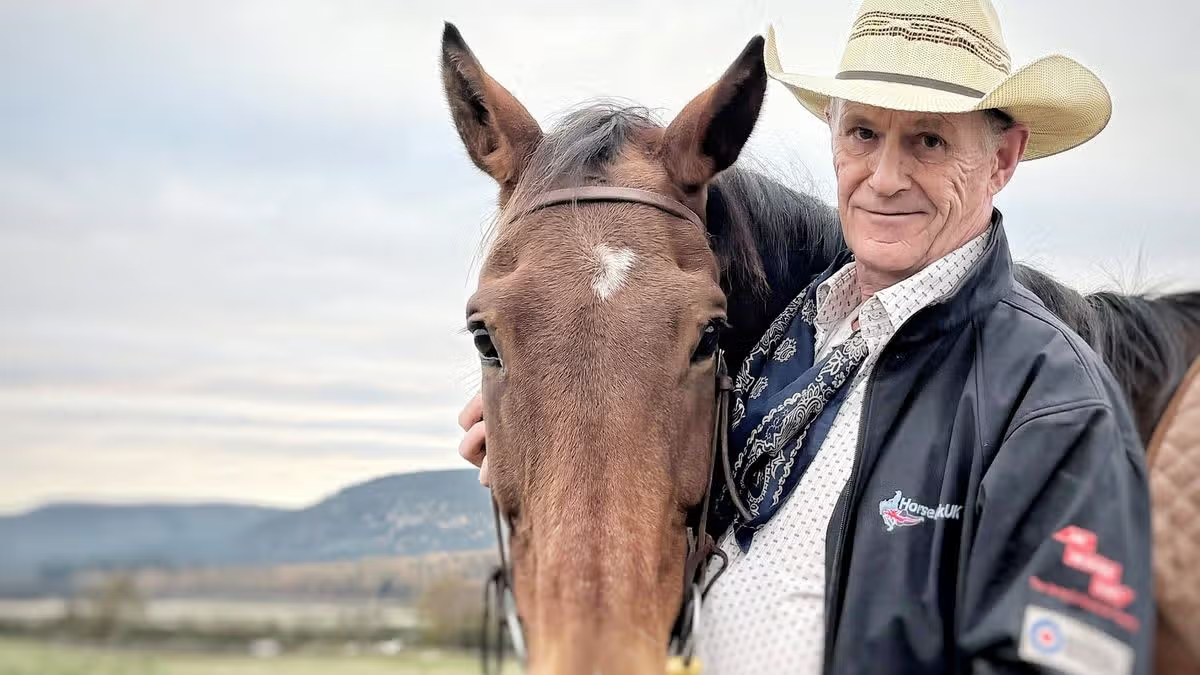
Dr. Tom Mariën founded his clinic in 2002 with old equipment given to him from human hospitals. Now it's a state-of-the-art equine hospital.
1,201 words~5 min read