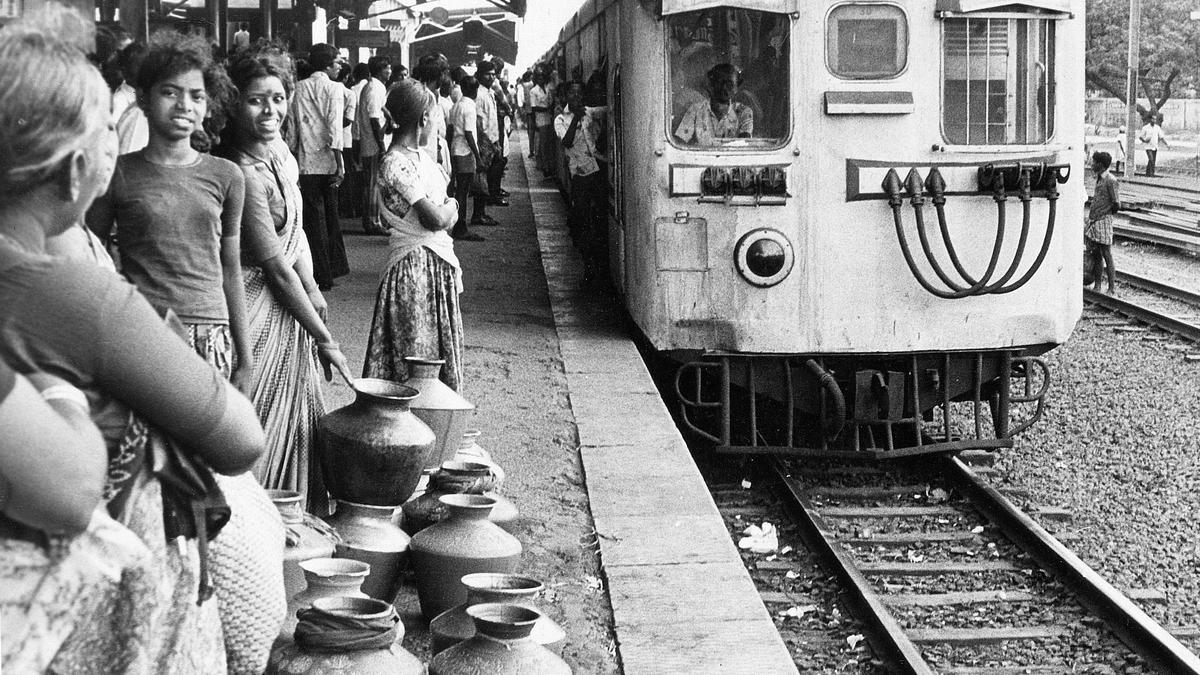
People waiting to board the suburban EMU at the Saidapet railway station in March 1982.
| Photo Credit: The Hindu Archives
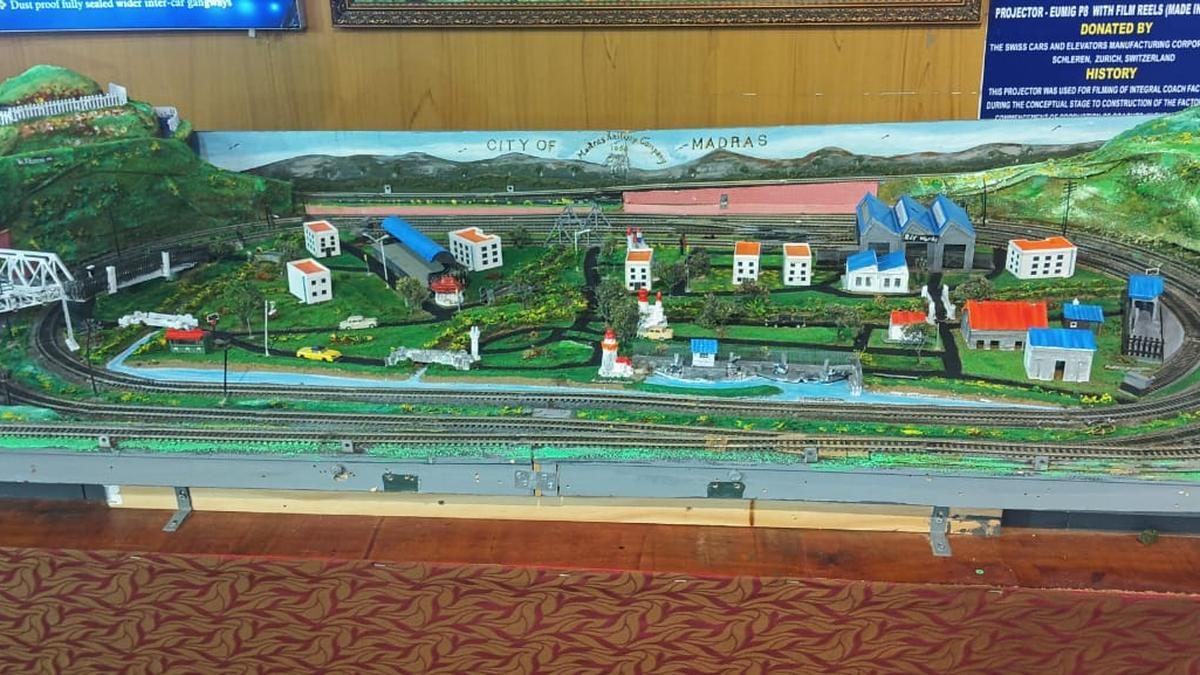
Trains in India first came to Madras. Period. Long before that famed train service between Boribunder and Thane, we had a train that hauled stone, from Red Hills and was operational in the 1830s and designed by that brilliant engineer Arthur Cotton. When commercial railway services were begun, Madras was connected in 1856 to Walajah Road. The terminus in the city was at Royapuram, which is why we still have a Northern Terminus Road there. All this was for long-distance connections. Requirement for the suburban railway line began in what can only be considered as a repeat of what prompted Cotton to design one in the 1930s. With the harbour developing early in the 1900s to its full capacity, Sir Francis Spring, the dynamic Chairman of the Port Trust decided to link it to the railway line. It helped that he was a former railway man himself. The South Indian Railway was connected to the harbour. Within the premises, India’s smallest railway line — the Port Trust Railway would take over.As the workforce in North Madras increased, the suburban line was extended to passenger service as well. And then, in 1931, this single line that handled both cargo and passengers, was electrified. The Hindu carried detailed reports of its inauguration by Governor Sir George Stanley. In what was a far-sighted approach, the lines were planned to link far-flung suburbs such as St Thomas Mount and Tambaram to Madras Beach station. A series of suburban stations came up en-route, all the buildings reflecting the Art Deco style that was then prevalent. There were ambitious plans to create stronger linkages but given the Second World War and delays post-Independence and the nationalisation of the railways, the suburban network took its time to develop. And the city lost plenty of opportunity. The Chennai Suburban never became what its equivalent was in Mumbai. Madras Day: Three actors share their favourite Chennai food memories