Story audio is generated using AI
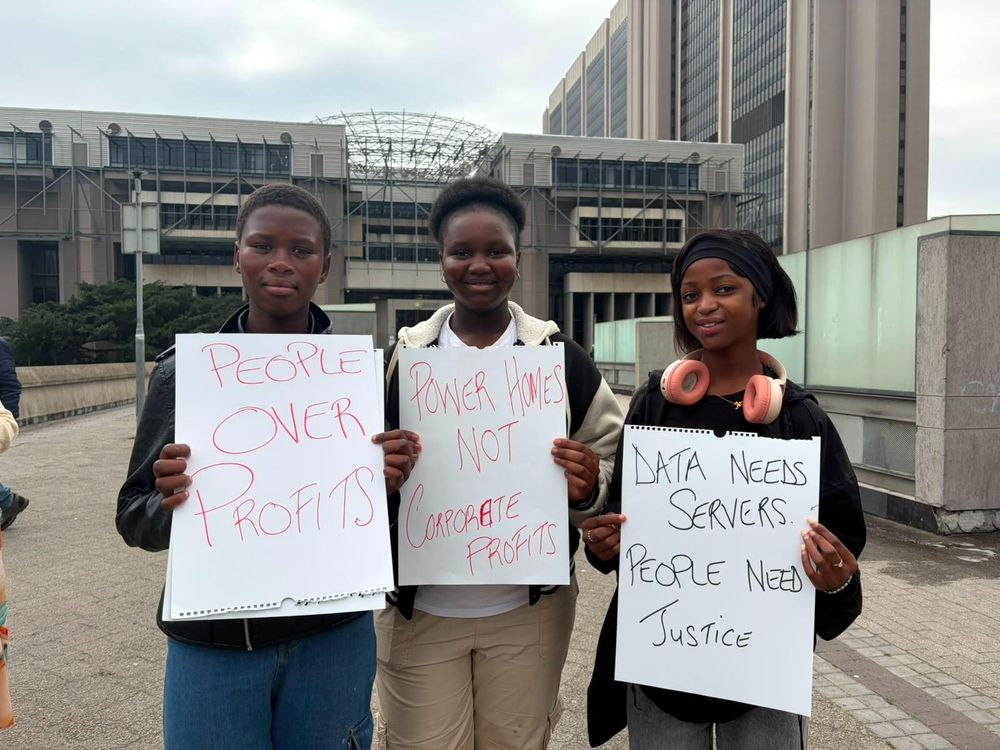
South Africa’s rapid data centre expansion is coming under scrutiny from the South African Human Rights Commission (SAHRC), with environmental groups warning that the infrastructure needed to power the country’s artificial intelligence (AI) ambitions could place growing pressure on scarce water, electricity and land resources. The warning is contained in submissions to the SAHRC’s inquiry into the human rights implications of the country’s data centre boom, which has exposed a sharp divide between technology industry groups and civil society over the impact of facilities being built to meet rising demand for cloud computing, AI and digital services.The Climate Justice Coalition (CJC), representing more than 80 civil society, labour and community organisations, has told the commission that “profit accumulation must not be prioritised over the human rights and dignity of people”. It said that, given the rapid global expansion of data centres, especially in response to pressure for AI companies to demonstrate AI’s usefulness and profitability, facilities are being rapidly built around the world. “Profit accumulation is channelled to an elite few, while the regions, towns, cities and host communities of data centres and the mining for critical minerals and waste sites for electronic waste are those that are most impacted,” the CJC’s submission said.Data centres put increased pressure on the electricity grid and available water supply, increase exposure to air, light and sound pollution, and drive up land prices in the cities and towns where they are established, it said. According to the CJC, electricity consumption for data centres is set to double — or triple, for AI-focused centres — by 2030. Furthermore, data centres often do not pay the full cost of electricity, causing local residents to carry the burden of increased electricity prices. Data centres are critical in the storage and processing of vast amounts of data. The facilities operate around the clock and require constant cooling to prevent servers from overheating. The African Centre for Biodiversity (ACB) argues that data centres should be treated as large industrial facilities whose environmental footprint extends well beyond the buildings housing their servers. South Africa hosts about 55 data centres — with about 10 more planned in multiple cities.The Internet Service Providers’ Association (ISPA) — which represents internet and telecommunications companies — has rejected what it describes as misinformation about the impact of data centres. It said that the facilities are essential infrastructure for a modern economy and not responsible for South Africa’s electricity constraints. “ISPA urges the commission to recognise the value of data centres as anchor infrastructure for the digital economy and the future delivery of government services to South Africans,” the organisation said.“An inquiry such as this inevitably involves balancing competing interests and concerns: the scales should reflect that there are multiple benefits to South Africa being a preferred investment destination for data centres.”The inquiry comes as South Africa establishes itself as Africa’s leading data centre market, with Johannesburg and Cape Town attracting billions of rand in investment from global technology companies, cloud providers and infrastructure operators. The facilities are becoming increasingly important to the country’s digital economy, supporting everything from banking and government services to cloud computing and the development of AI applications. Electricity, water and municipal services constraintsBut their rapid expansion has raised questions about whether South Africa can accommodate the infrastructure while dealing with existing constraints on electricity, water and municipal services. The controversy mirrors growing tensions in the US, where the rapid expansion of AI data centres has triggered opposition from communities concerned about electricity consumption, water use and environmental effects. US opposition has become a significant political issue, with surveys showing rising resistance to new data centres in local communities. The issue has prompted state governments to introduce greater scrutiny of proposed facilities. ISPA, however, cautions against importing concerns from markets such as the US and Ireland into South Africa without considering local circumstances. “Data centre development in parts of the US in anticipation of AI-driven demand is international news because of what appears to be warranted opposition from local communities concerned about a variety of negative environmental and energy shortage consequences.” In its submission to the SAHRC, the association argues that data centres have become convenient targets in public debates despite being critical to modern economic activity. It says its members rely on data centres for the provision of their services. “All South Africans rely on data centres to some extent to enable their communications, their bank transactions, government services and many other things which they take for granted.” ISPA challenges claims that data centres are worsening South Africa’s electricity problems. According to the association, Eskom’s central problem is not excessive demand but declining electricity consumption caused by deindustrialisation and the rapid uptake of private solar generation. But the ACB takes a fundamentally different view. In its submission, it warns that describing data centres as part of “the cloud” or as essential infrastructure for AI and digital transformation obscures their physical footprint. “This submission argues that South Africa requires a rights-based, precautionary and public-interest governance framework for data centres and their associated infrastructure,” the ACB said.“This framework must assess not only the data centre building itself, but the whole infrastructure chain that makes data centre expansion possible, including on-site renewable energy projects, power-purchase agreements (PPAs), wheeling arrangements, grid connections, backup systems, land-use approvals, water implications, e-waste streams, data governance and corporate ownership structures.” This submission argues that South Africa requires a rights-based, precautionary and public-interest governance framework for data centres and their associated infrastructure— African Centre for BiodiversityIt warns that communities already affected by unreliable municipal services could carry the environmental costs of data centre development while the economic benefits accrue disproportionately to multinational technology companies and wealthier consumers. The ACB challenges the argument that renewable energy removes the environmental concerns associated with data centres. It points to a solar facility being developed in the Free State to supply Africa Data Centres’ facilities in Cape Town and Gauteng through wheeling arrangements. The Association for Computing Machinery (ACM), in its submission, has taken a middle ground. It says data centres are critical to South Africa’s digital transformation and AI ambitions and can support economic growth, innovation and socioeconomic development. But it has raised concerns about the concentration of computing power, personal data and digital infrastructure among a relatively small number of predominantly foreign-owned operators. The ACM questions whether publicly shared resources such as electricity and water should effectively subsidise private infrastructure when some of the value generated could ultimately flow offshore. It has proposed the introduction of a “digital inclusion dividend”, under which major data centre projects would be required to deliver measurable benefits to ordinary South Africans. These could include community networks, affordable connectivity programmes, skills development, local procurement and access to computing capacity for universities, researchers and small businesses. The ACM has also raised concerns about data sovereignty and privacy. Business Times