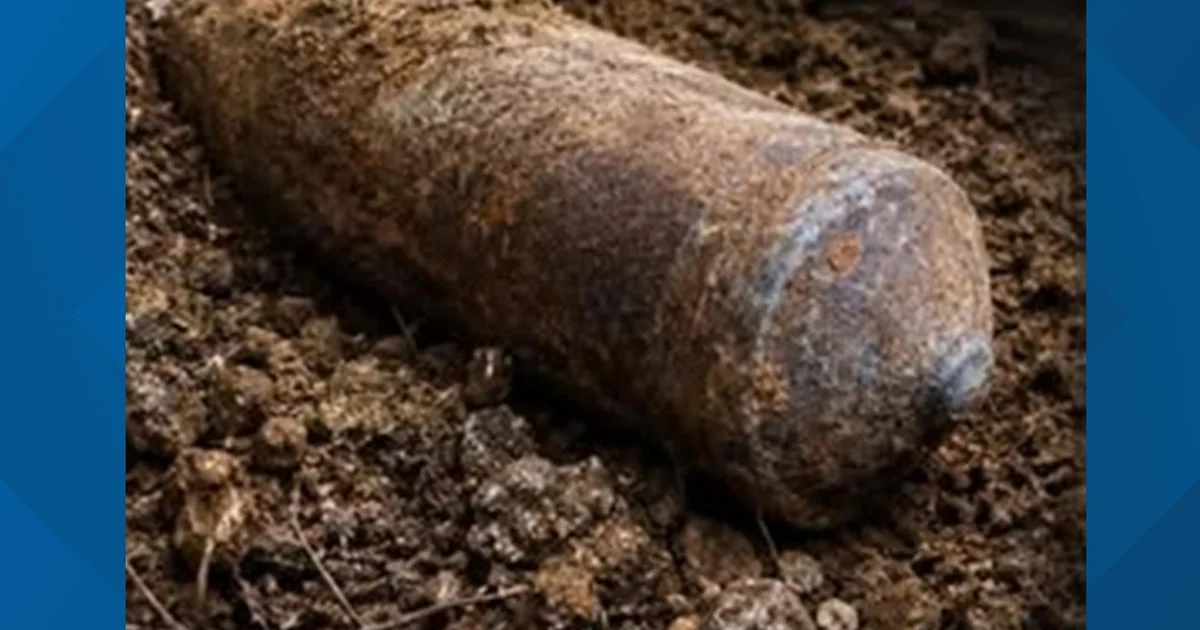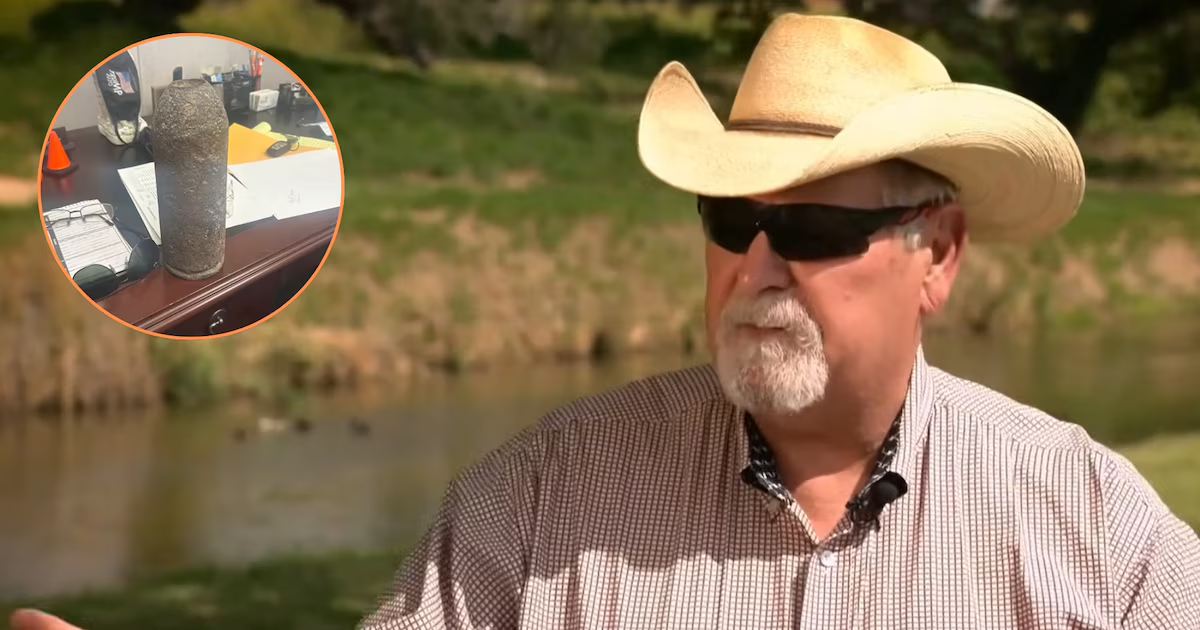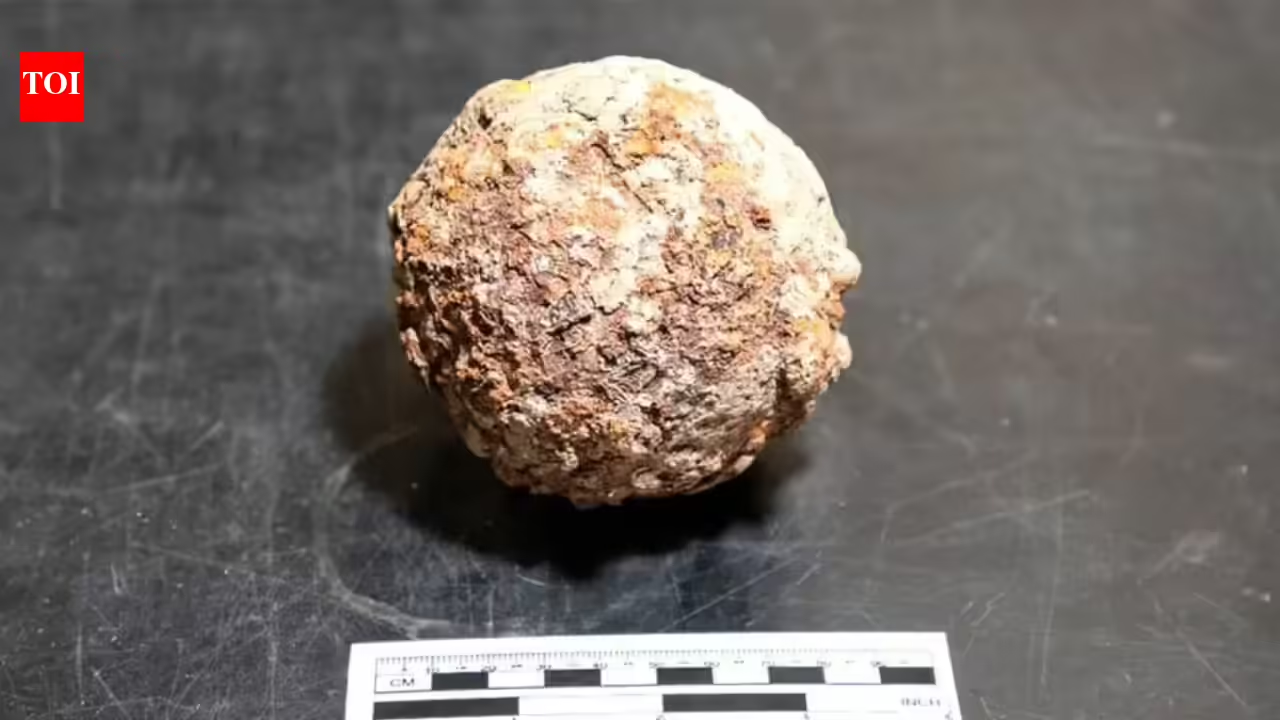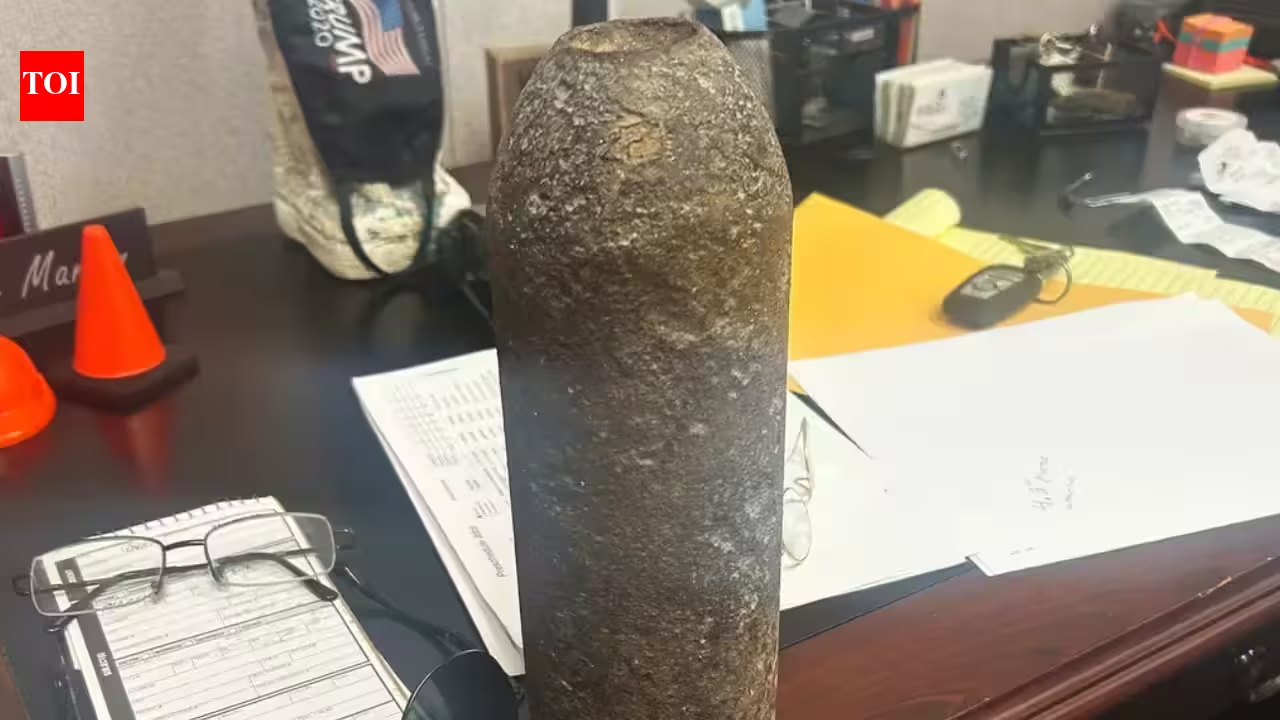
160-year-old Civil War artillery shell as a paperweight, PC: Atascosa County Sheriff’s OfficeFor years, Steve Martin of Atascosa County, Texas, kept a heavy, rust-coloured object on his desk as a conversation piece, unaware it was a potentially deadly Civil War artillery shell. His son, Jarrett, had found the object while fishing along the Guadalupe River and brought it home, where the family assumed it was an inert relic or perhaps a dummy bomb. The assumption went unchallenged until a truck driver with military experience visited Martin's office and warned him that the object looked like live ordnance. Martin contacted the Atascosa County Sheriff's Office, which brought in military explosive ordnance specialists to examine it. The technicians identified the roughly 20-pound object as a live Civil War-era Parrott artillery shell. After more than 160 years, the shell still contained an explosive charge. Rather than risk leaving it intact, specialists transported it to a military explosives range, where it was safely detonated.How specialists discovered the paperweight was still dangerousAccording to News4SanAntonio's report, deputies responded after Martin reported the suspected Civil War artillery round. The sheriff's office contacted an explosive ordnance disposal team from Joint Base San Antonio-Lackland to assess the object. Specialists identified it as a Parrott shell, an artillery projectile designed for the Parrott rifle, a Civil War-era weapon developed by Robert Parker Parrott and widely used during the conflict. The identification was significant because the shell was not simply an empty historical object. It remained live, meaning its explosive contents still posed a serious danger despite more than a century and a half of age. The specialists ultimately transported the shell to a military explosives range at Camp Bullis, where it was destroyed in a controlled detonation.Why an old Civil War shell can still pose a dangerThe discovery demonstrates that age alone does not make unexploded military ordnance safe. Civil War artillery shells can retain explosive material long after their original use, even when their exterior has become heavily corroded. That can make old ordnance particularly deceptive. A shell that looks like a piece of rusted metal or a historical artefact may still contain dangerous material. The safest response is therefore not to handle, move, open or strike a suspected shell. Instead, it should be left where it was found and reported to authorities so trained specialists can determine what it is and how it should be handled.What happened to the Civil War relicMartin had hoped the shell could be preserved as a historical artefact. Once specialists determined that it was still live, however, keeping it was no longer a safe option. The shell was taken to a controlled military site and detonated. The incident is a striking example of how an object can survive for generations while becoming completely detached from its original purpose. What began as a Civil War artillery projectile eventually ended up as a household curiosity and then a desk paperweight, where it remained for years before someone recognised what it really was. For Martin, the warning from a visitor ultimately prevented what could have become a serious accident. The case also serves as a reminder that suspected unexploded ordnance should never be treated as harmless simply because it is old or looks like an ordinary historical object.
A Texas man used a 160-year-old Civil War artillery shell as a paperweight for years; bomb experts later discovered it was still a live explosive
For years, Steve Martin of Atascosa County, Texas, kept a heavy, rust-coloured object on his desk as a conversation piece, unaware it was a potentially deadly Civil War artillery shell. His son, Jarrett, had found the object while fishing along the Guadalupe River and brought it home, where the family assumed it was an inert relic or perhaps a dummy bomb.
542 words~2 min read