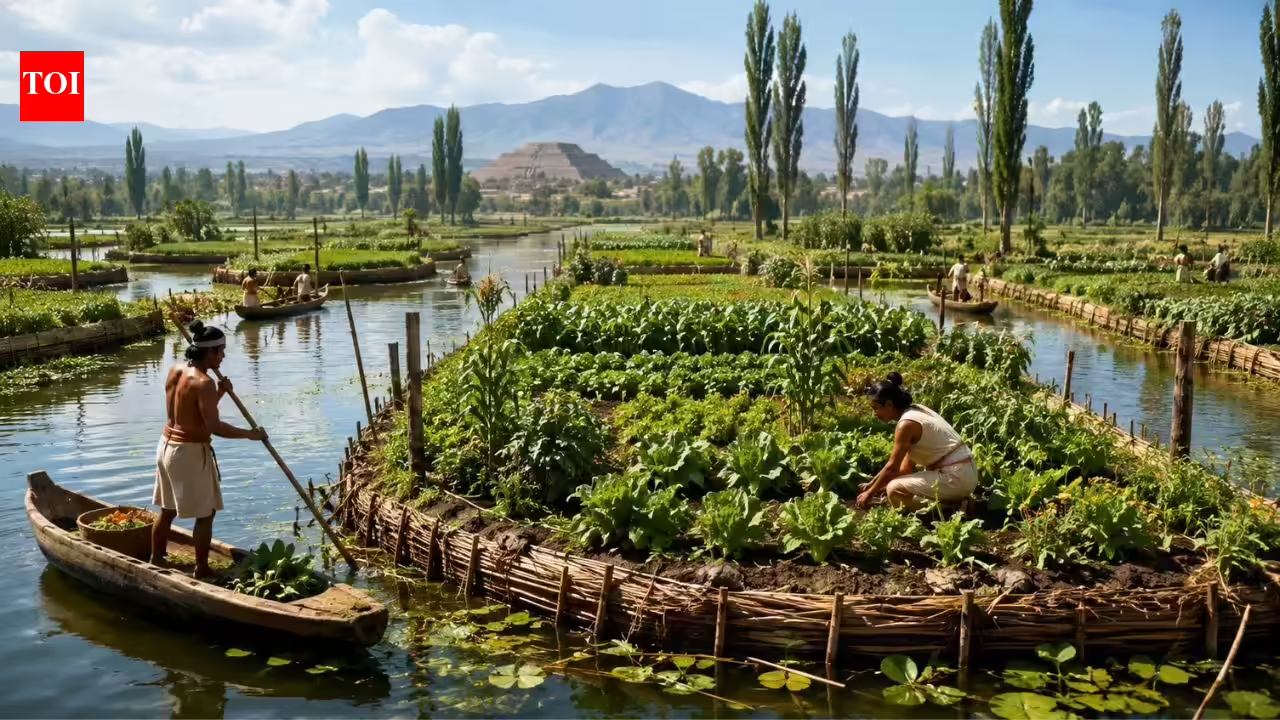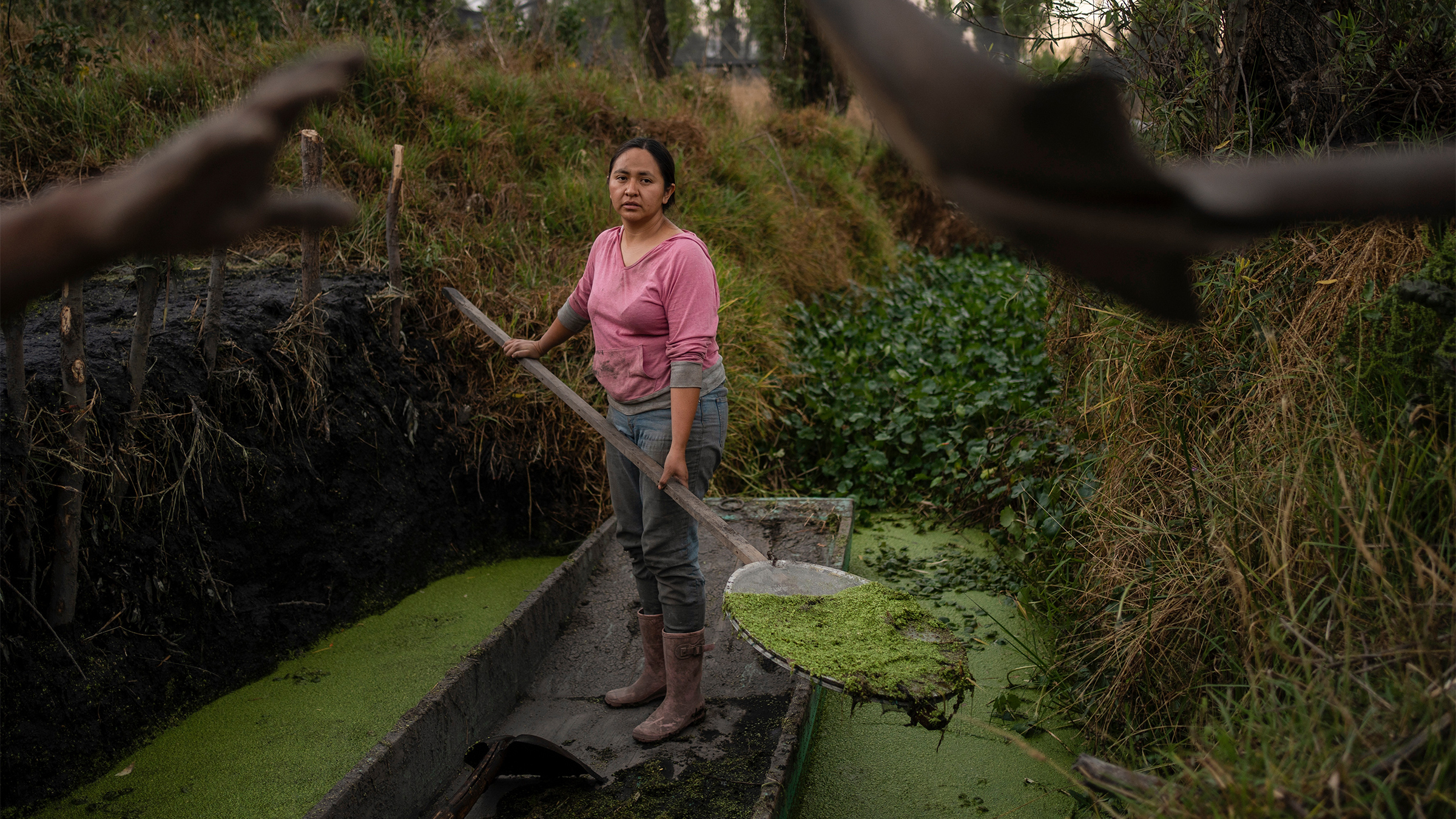
In Mexico, traditionally women did not inherit chinampas, island farms first built by the Aztecs thousands of years ago. The farming on such islands, which sit in Mexico City, has also traditionally been done by men.Today, women are buying up chinampas and doing sustainable farming, along the way helping to maintain ecosystems that are threatened by urbanization and water pollution.This wetland system is the last remnant of what was once the great Tenochtitlan, the capital of the Aztec Empire built on the lakes that once filled the Valley of Mexico.What remains of Xochimilco today represents only 3% of the original extension of those lakes. However, the chinampas are still key to the stability of the city.
This story is a collaboration between The Associated Press and Mongabay.
MEXICO CITY, Mexico — Jasmín Ordóñez looks out at the water as the wooden boat she is in crosses a narrow channel that connects a labyrinth of chinampas, island farms that were built by the Aztecs thousands of years ago.
“Let’s close our eyes and ask our Mother Water for permission to sail in peace,” she says as the boat moves slowly, in contrast to the frenetic traffic of Mexico City just a few miles away.
Ordóñez owns one of these island farms, first created with mud from the bottom of the lakes that once covered this area. When the boat arrives at her island, she proudly shows the corn and leafy greens she grows. Her ancestors owned chinampas, but she had to buy this one because women traditionally haven’t inherited them.