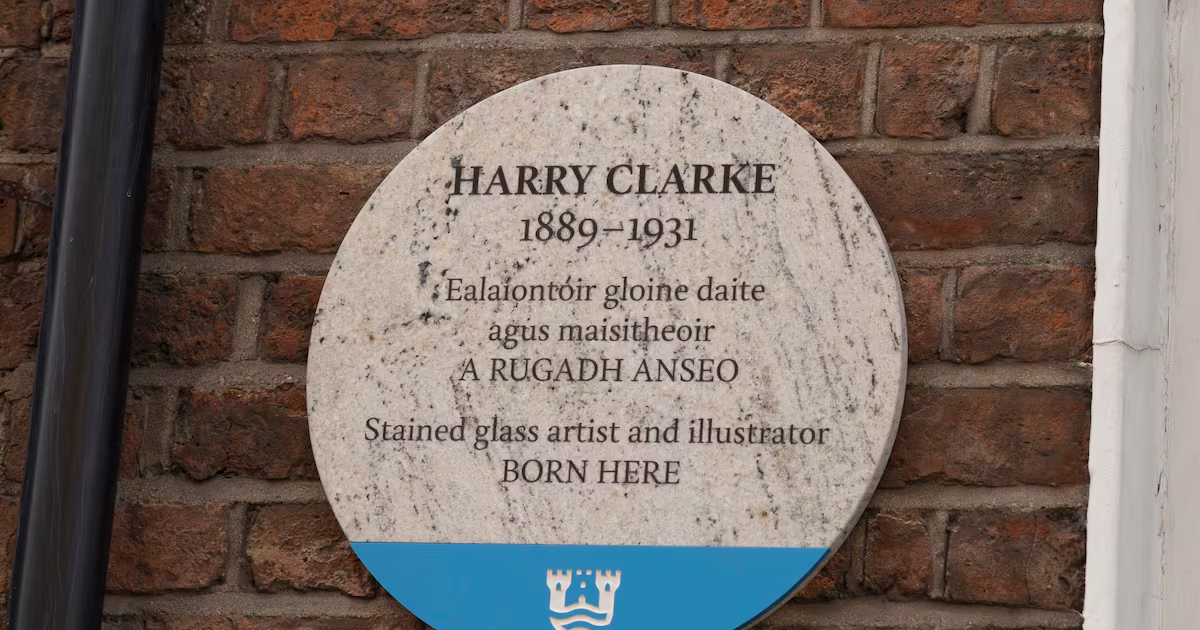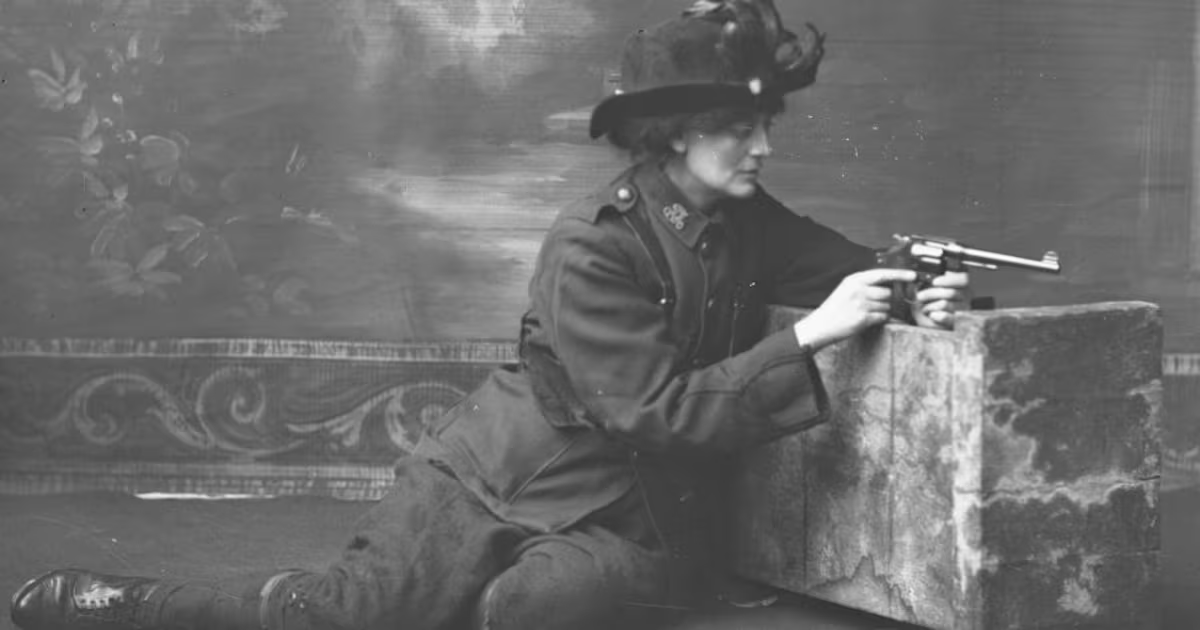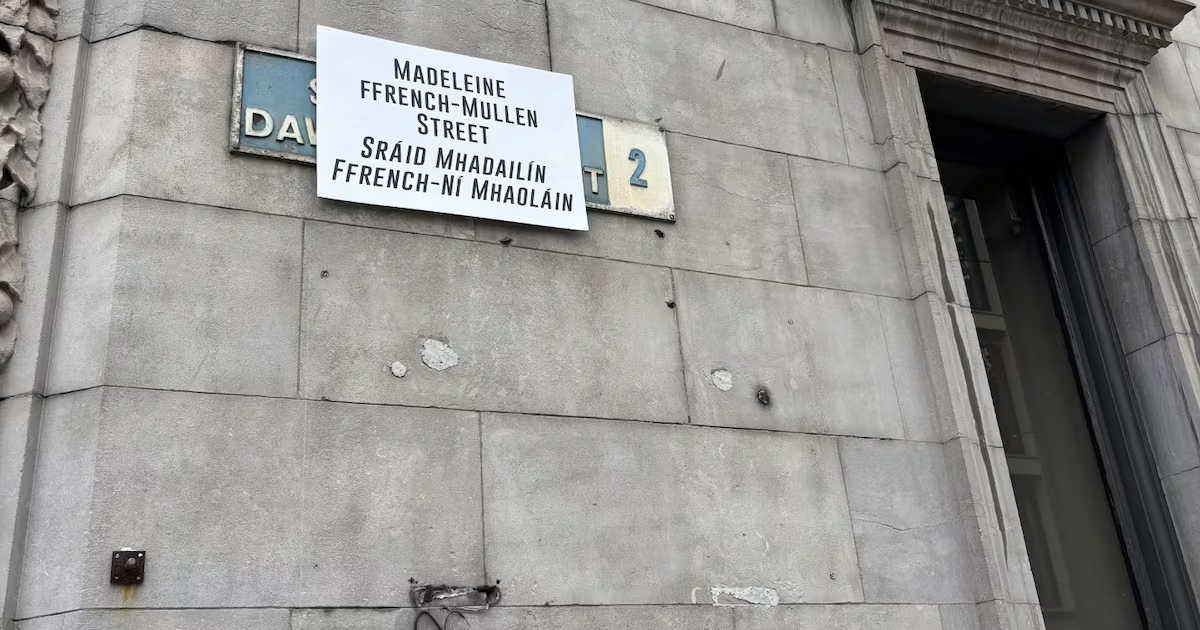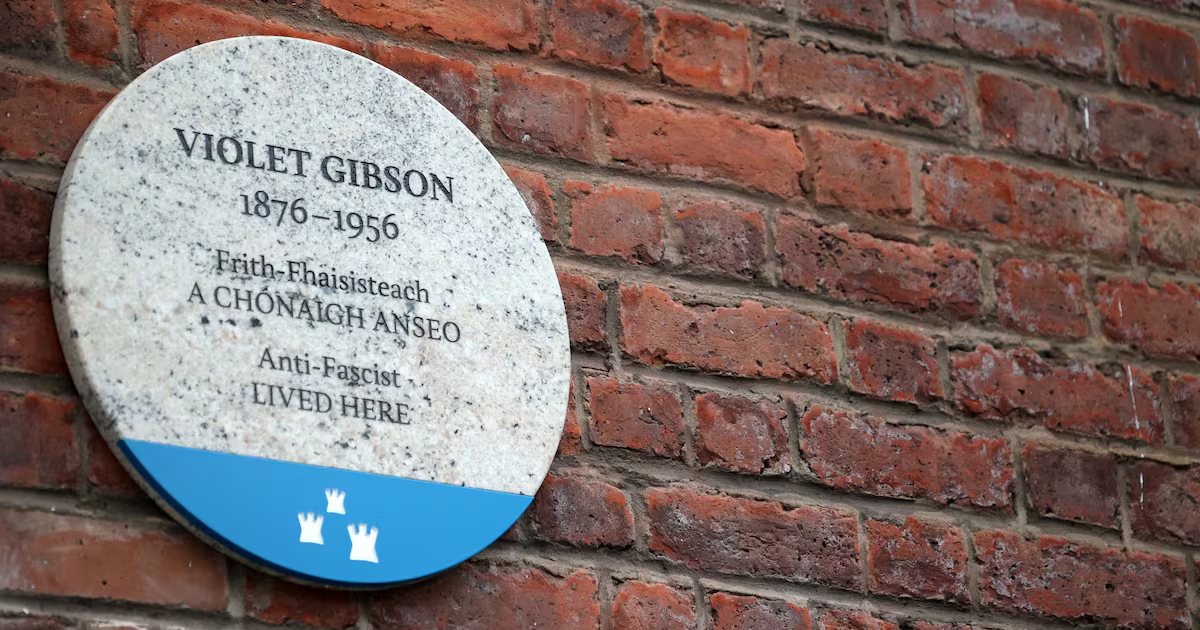
You can tell quite a lot about a society by the ways in which it pays tribute to those who have made a significant contribution to its progress. Some nations maintain elaborate honours lists recognising outstanding achievement or civic service. Others are quick to rename their major landmarks – airports, main thoroughfares, cultural institutions. Paris’s principal museum of modern art, the Centre Pompidou, opened in 1977, only three years after the death of the president whose name it bears.Ireland takes a more reticent approach. Unlike France or the US, the State is disinclined to honour its great political figures in this way. Éamon de Valera is conspicuous by his absence from Google Maps. Even Jack Lynch, a proud son of Cork who in another country might have had the city’s airport named after him, has only a traffic-choked tunnel.The authorities seem content instead to favour the celebration of artists, and writers in particular – figures who, whatever controversies they sparked while alive, have now been safely entombed in the comfortable embrace of the heritage industry.The most modest form of commemoration is the humble plaque. The Irish Times reported this week that Dublin City Council (DCC) has since 2015 erected 77 these circular granite markers across the city, commemorating a range of figures from Constance Markievicz to Phil Lynott. The council is struggling to redress the gross gender imbalance that has historically been a feature of these memorials. That will be a long process.DCC also has sensible rules about how much time should pass before a plaque goes up: a subject must be dead for 20 years, or have reached the centenary of their birth. If nothing else, that guards against anyone seeking to emulate current events across the Atlantic, where President Donald Trump is embroiled in a legal wrangle over his attempt to rename Washington’s Kennedy Center after himself. It may seem hard to imagine such a thing happening here. But in this era of the demagogue, everything is possible.
The Irish Times view on commemorating the past: which way to de Valera Street?
Ireland is reticent about memorialising its historical figures
330 words~2 min read