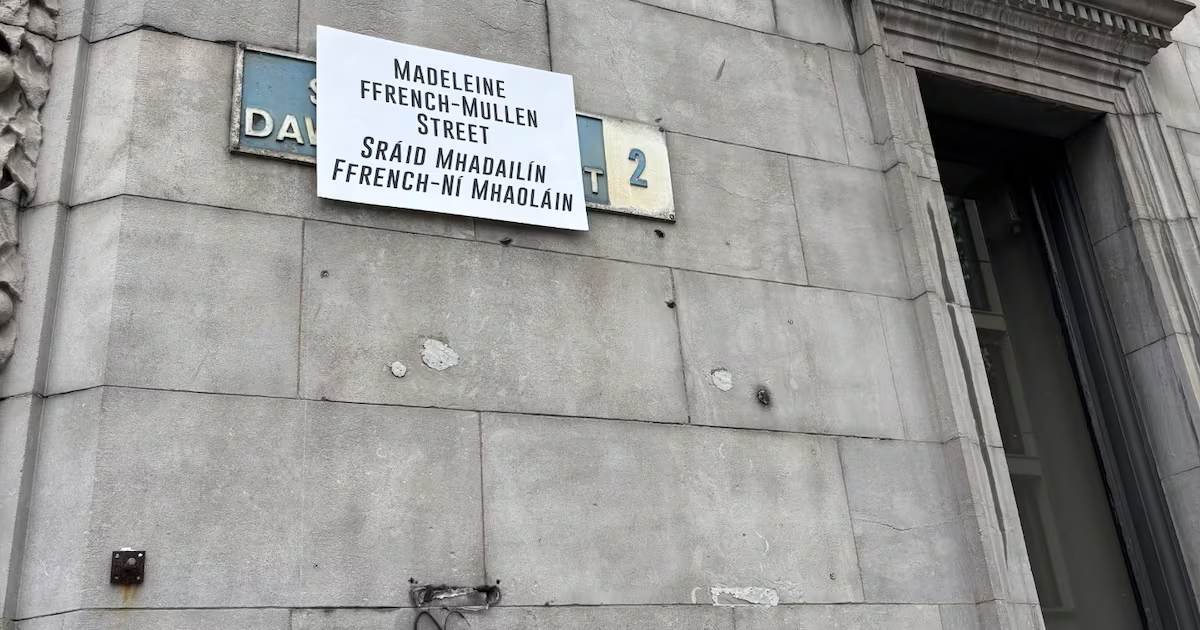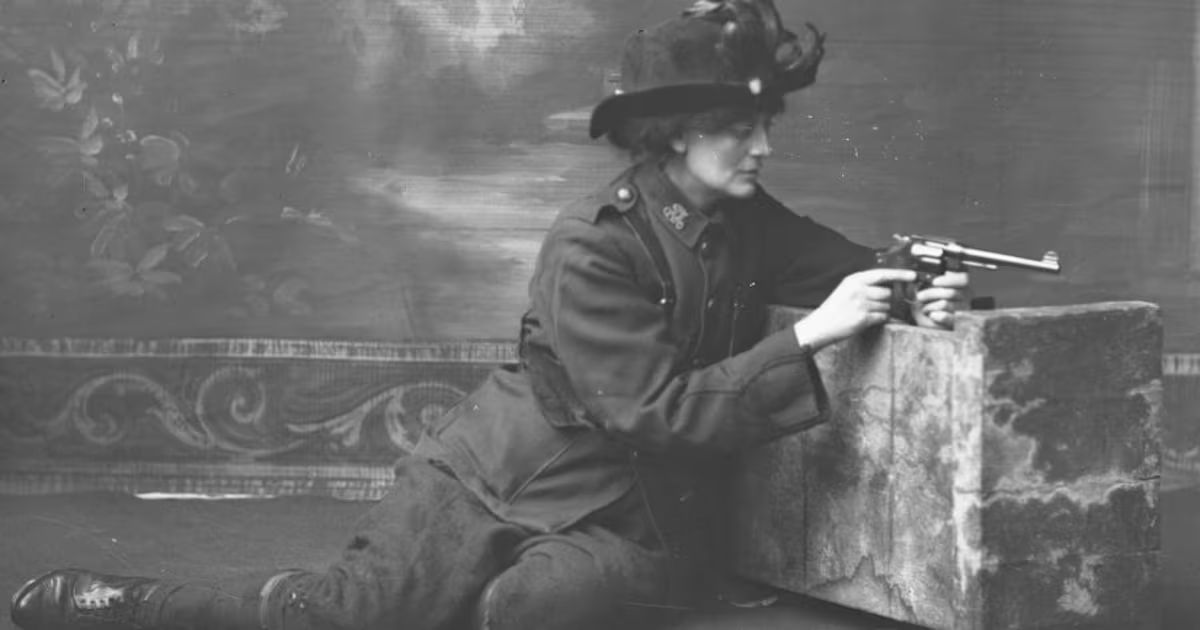
Dublin City Council is to commission a new monument honouring the women of Ireland’s revolutionary period, as part of a broader effort to address the historical underrepresentation of women in public spaces. The monument will honour women of the revolutionary period, from the 1914 lockout to the end of the Civil War in 1923, and will be located near the GPO in Dublin. “There are hardly any other statues of women at all,” Donna Cooney, councillor and chair of the commemoration committee, said. Speaking to The Irish Times, Cooney said the plan had been “a long time in the making” and had initially started with the intention to commemorate one woman, Constance Markievicz. “But we expanded that because there’s already a sculpture for her in Dublin ... She’s a wonderful person to commemorate but there are other women who may not be as well known who we want to honour too,” Cooney said. “We decided to expand it to women of the revolutionary period,” she said, adding the final list of names is not yet ready as it will be open to the artists involved to interpret, using historical information provided about women during that period. “It needs to be monumental in scale and a really high-profile location ... Initially we were being directed to other areas which didn’t have the scope to do what we wanted. We wanted a location where people will see all the time and get the profile it deserves,” Cooney said. The commissioning of the monument is the beginning of a four-phase programme aimed at increasing the visibility of women’s contributions to Irish history through public art, street names, plaques and commemorations. The first phase will include conducting a gender audit of all existing public art, street names, plaques and buildings. This will be followed by a phase involving a series of public lectures and community projects launched to surface and recover women’s histories not currently reflected in the public realm. The latter two phases will involve commissioning phases including permanent sculptures, murals and street naming. There will be a targeted focus on supporting Irish women artists at all stages of their careers and integrating educational resources for schools. The initiative is a collaborative endeavour across both Dublin City Council and cultural bodies including Dublin City Libraries and Archives and the Hugh Lane Gallery, among others. The number of places currently named after women in Dublin was “very little”, and the most well known are mythical characters such as the Molly Malone statue, Cooney said. As of a count in 2023, just 27 of the 936 streets in the city centre were named after women. Last year, Mary Lavin Place, a new square overlooking Dublin’s Grand Canal, became the first public space in the country named in honour of an Irish woman writer. “As new developments come up, we do say that we have a preference that it’ll be named after women. But it’s self-perpetuating because the majority of people that are well known in history are men. We want to change that,” Cooney said. There are several plaques honouring women upcoming that will be unveiled by the council in the near future. The council is finalising the details and couldn’t provide the list yet. However, Cooney said the council was also open to hearing from the public who may want to get in touch to suggest the names of women they would like to see commemorated by plaques. The suggestions of women’s names for these “need to be deceased by at least 20 years or have a centenary since their birth and have a connection to Dublin city”, she said. The effort to honour more women was not just taking place in Dublin, it was a countrywide effort in other cities, Cooney added, and around the EU, as there’s a “European-wide effort on this at the moment where we’re looking at representation of women in the public domain”. It was important to name more street names and monuments after women, Cooney said, as “if you don’t see that, then you don’t see yourself reflected, or in a role of leadership or great achievement”.
Dublin council to commission new monument honouring women of Ireland’s revolution
Move part of broader effort to address historical underrepresentation of women in public spaces
689 words~3 min read