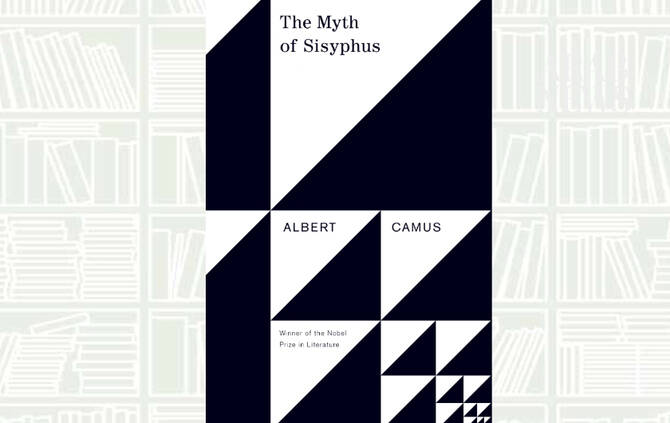
Author: Albert Camus
Albert Camus’ “The Myth of Sisyphus” (1942) is a short philosophical essay that uses an ancient Greek story to ask a modern question: How should we live when life does not come with guaranteed meaning?
Camus chooses the legend of Sisyphus, condemned to push a boulder up a mountain forever only to see it roll back down, as his central metaphor for human persistence in a world that does not offer final explanations.
Camus calls this condition “the absurd.” He describes it as a conflict between what we want from the universe — order, purpose, and reasons — and what we actually encounter: silence, randomness, and unanswered questions. His first demand is not dramatic. It is intellectual.
He asks the reader to acknowledge the absurd clearly, without denying it and without covering it with convenient certainty. In my view, the essay’s real achievement is that it turns this recognition into a practical stance rather than a mood.