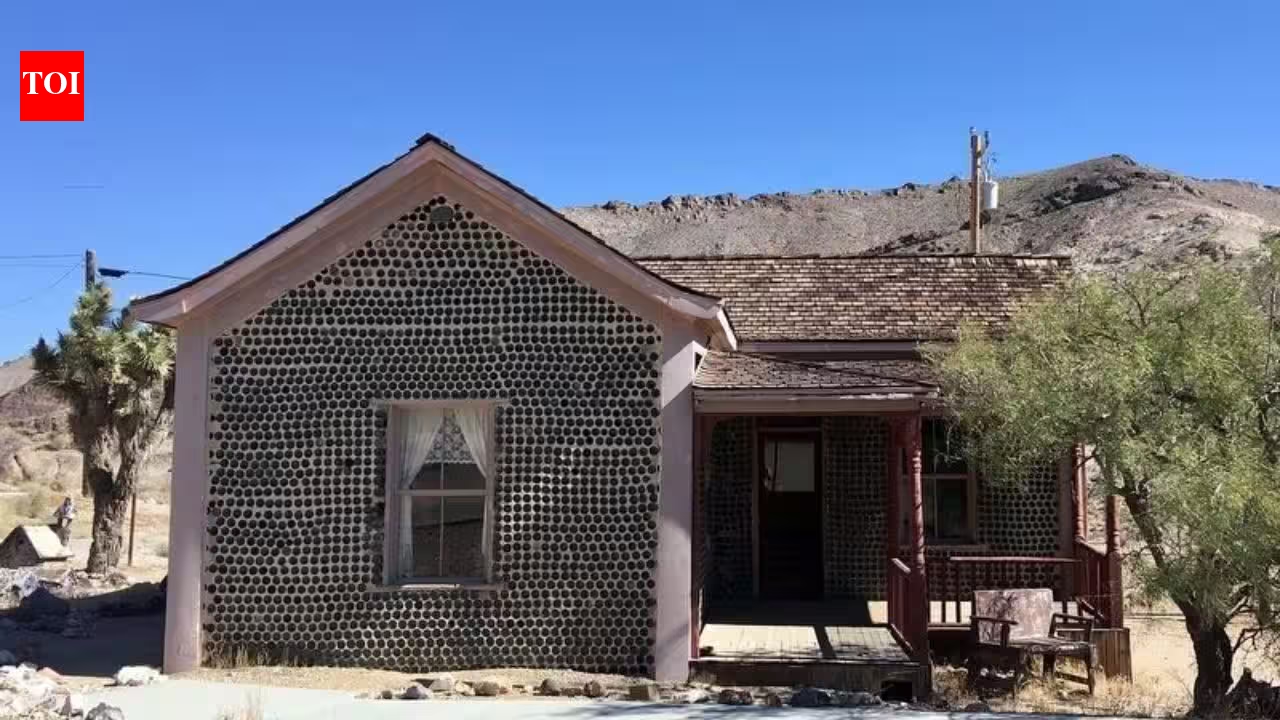
PC: HMDBIn the middle of Nevada’s desert, where timber was scarce and mining towns could disappear almost as quickly as they appeared, an unlikely building material began piling up in the streets of Rhyolite. Discarded glass bottles, emptied in the town’s saloons and homes, were usually little more than rubbish. Around 1905, the elderly miner began collecting the bottles, gathering tens of thousands in just a few months.According to the Human Metabolome Database (HMDB), by the time the house took shape, roughly 50,000 bottles had been worked into the walls of the three-room home. Set in mortar, their rounded glass bodies formed an unusual patchwork that was both practical and striking. Kelly’s house would go on to survive the collapse of Rhyolite, serve as a film location and shelter a family for decades, leaving behind one of Nevada’s strangest reminders of how a boomtown once lived and what it threw away.How Rhyolite’s bottle waste became Tom Kelly’s building materialRhyolite grew in the Bullfrog Hills after prospectors were drawn to the area by the discovery of gold. By the early 1900s, the settlement had developed quickly, with businesses, homes and drinking establishments appearing to serve the growing population.Building in the desert was not straightforward. Lumber was difficult to obtain, while the Joshua trees that grew locally were poorly suited to conventional construction. For Tom Kelly, who arrived in the area around 1905, the answer was already accumulating around the town.Glass bottles were being discarded in large numbers, particularly in a place with so many saloons. Kelly began collecting them and eventually found a way to turn the waste into walls.50,000 bottles became a three-room homeThe scale of the collection was considerable. Kelly gathered about 50,000 bottles in less than six months, using them as the basic material for a house in Rhyolite.The bottles were embedded in mortar, producing walls made up of rows of glass rather than conventional masonry. The completed building contained three rooms and included a porch, along with decorative details around the exterior. From a distance, it could resemble a small ordinary home. Up close, the construction method becomes unmistakable.Inside, the walls were finished with plaster, giving the rooms a more conventional appearance than the bottle-filled exterior suggests. For residents of a mining settlement still developing its streets and buildings, the finished house represented a surprisingly substantial home.Reportedly, the bottle house’s unusual appearance and isolated desert setting eventually caught the attention of Hollywood filmmakers. In 1924, Paramount Pictures used the building in Wanderers of the Wasteland, a film based on a novel by Zane Grey. Later that year, the house appeared again in The Air Mail. Filming took a toll on the structure, however. One of the production crews removed part of the rear wall to allow cameras and actors to work inside the house. Once production ended, the wall was rebuilt, and the company carried out basic repairs and stabilisation work to help preserve the building’s exterior. What had begun as an improvised home made from discarded bottles had, within two decades, become an unusual piece of scenery for Hollywood productions.A $5 raffle gave the bottle house its first family homeRather than selling the finished property in the usual way, Kelly held a raffle. Tickets cost $5, and the winning entry went to the Bennet family.The family lived in the bottle house for several years. By 1914, however, they had moved on, while the wider settlement was beginning to lose the population and activity that had made such a house possible in the first place.Rhyolite's fortunes changed rapidly. The mining boom did not last, and by 1920 only around 20 people remained in the town. The bottle house, meanwhile, had outlasted the period for which it had been built.Rhyolite had three bottle houses, but Kelly’s was the largestTom Kelly’s building is not the only bottle house associated with Rhyolite. Three such structures survived in the ghost town, each made by setting glass beverage bottles into different forms of mortar.What distinguishes Kelly's house is its size and the completeness of the original design. It was not simply a wall or small shelter assembled from whatever happened to be available. Kelly used the bottles to construct a proper three-room dwelling, then finished it with a porch and decorative exterior details.The glass also reflects the circumstances of the town itself. Thousands of bottles had accumulated because Rhyolite was a mining settlement with a large population and a thriving saloon trade. What had been rubbish became part of the town's architecture.
In 1905, a Nevada miner collected 50,000 discarded bottles in less than six months; he turned them into a three-room house
In the middle of Nevada’s desert, where timber was scarce and mining towns could disappear almost as quickly as they appeared, an unlikely building material began piling up in the streets of Rhyolite. Discarded glass bottles, emptied in the town’s saloons and homes, were usually little more than rubbish.
750 words~3 min read