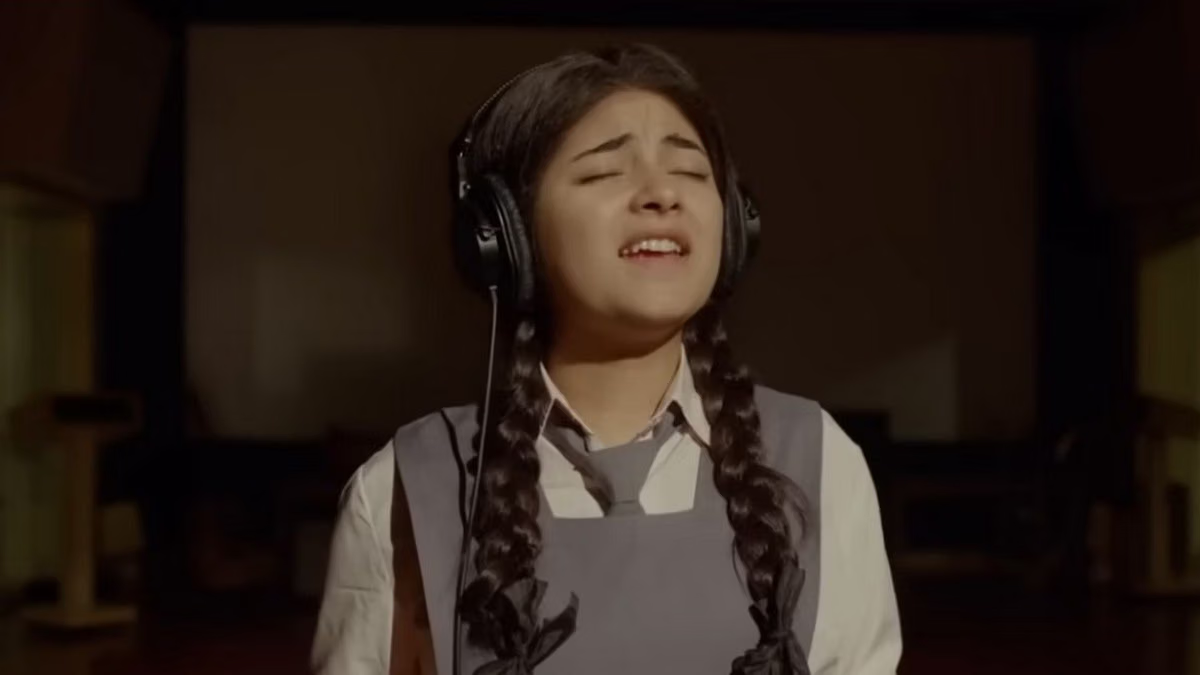
I still remember Zaira Wasim in the Hindi film Secret Superstar as Insia Malik, a 15-year-old schoolgirl from Baroda who dreams of becoming a famous singer. Unable to pursue that dream openly because of her abusive father and the strict patriarchal environment at home, she hides her identity behind a burqa and shares her music with the world.
The film made me happy at a very personal level. Bollywood has made countless films about patriarchy, but most of those stories place Hindu families and society at the centre. It is much rarer to see the realities of an Indian Muslim family explored in the same way. For me, Insia’s story was familiar, like many stories of women in my home. Trust me, many Muslim women watching it would recognise parts of that story from real life. Far more often than we would like to admit.That is why it feels particularly strange to watch Zaira Wasim now take such a different position on the public visibility of girls. The actor, who also starred in Dangal, recently criticised the J&K Waqf Board for allowing children, particularly girls, to perform publicly at an Independence Day event.
“Isn’t Waqf Board a religious body entrusted with serving the Muslim community, and ideally doing so while upholding Islamic values?” she posted on X.Wasim left acting and chose to live in a way that, to her, was more in accordance with her faith, even if that meant withdrawing from a public career that had given her enormous opportunities.That, of course, was her choice. While I disagree with such values, everyone has the right to choose their own value system. What they don’t have is the right to make that value system the standard for everyone else.Why shouldn’t Muslim girls perform?