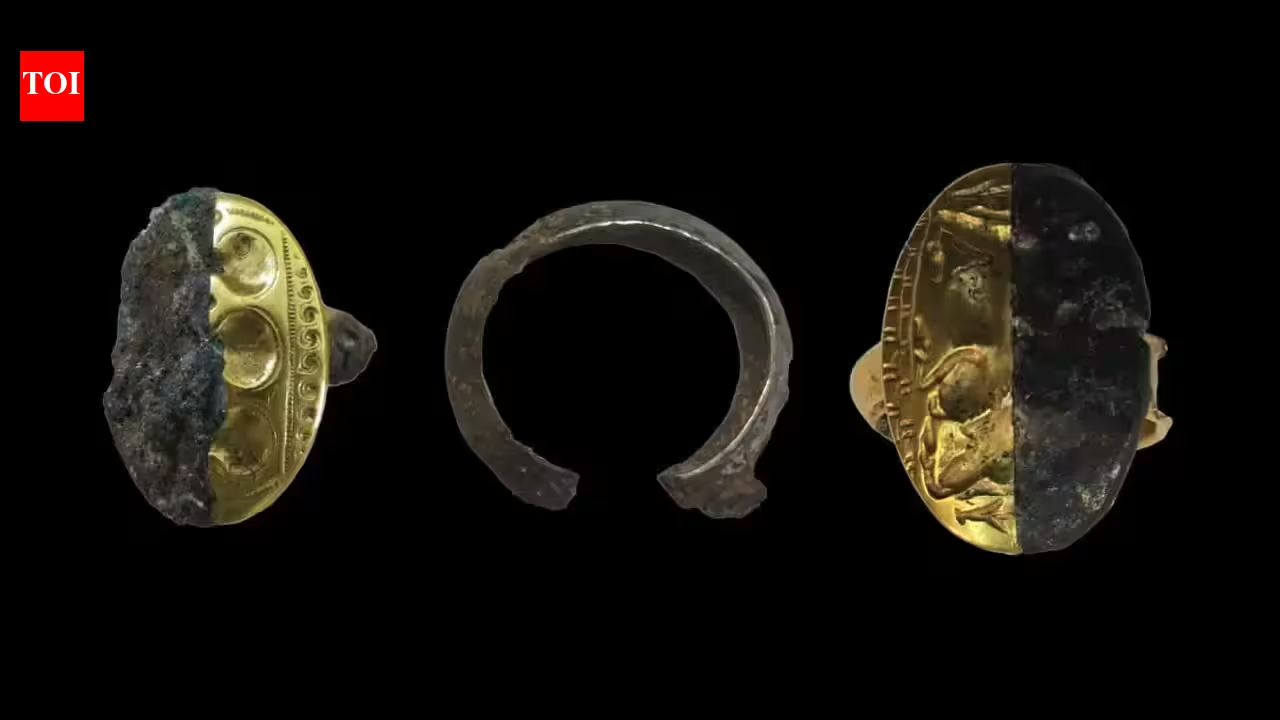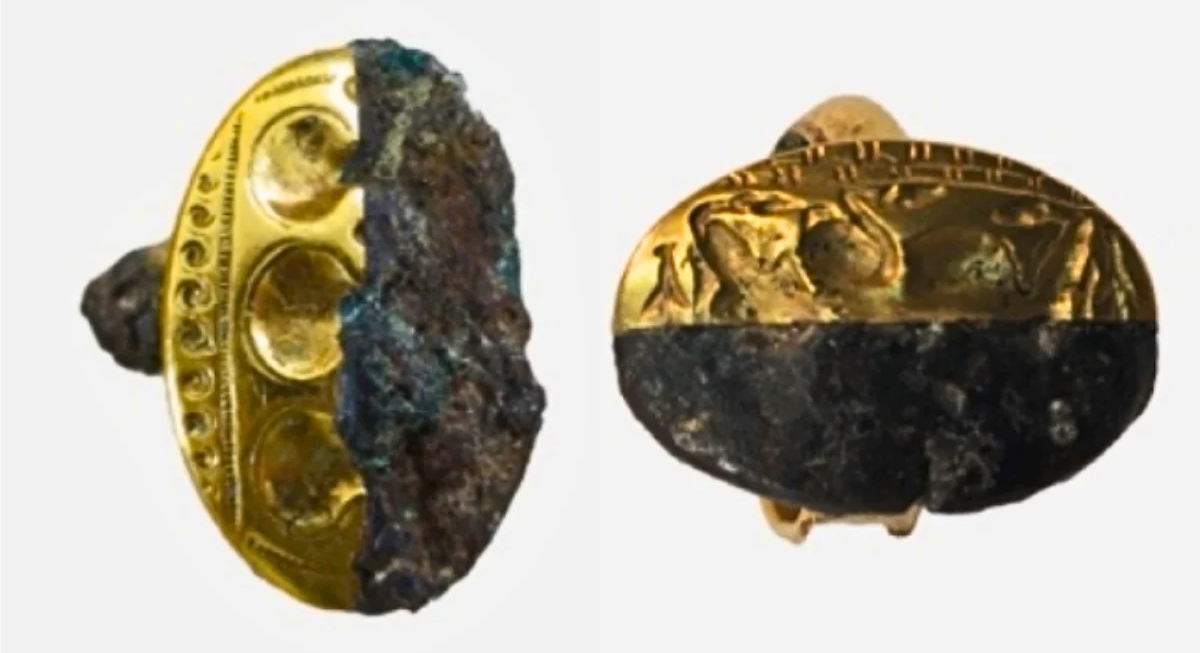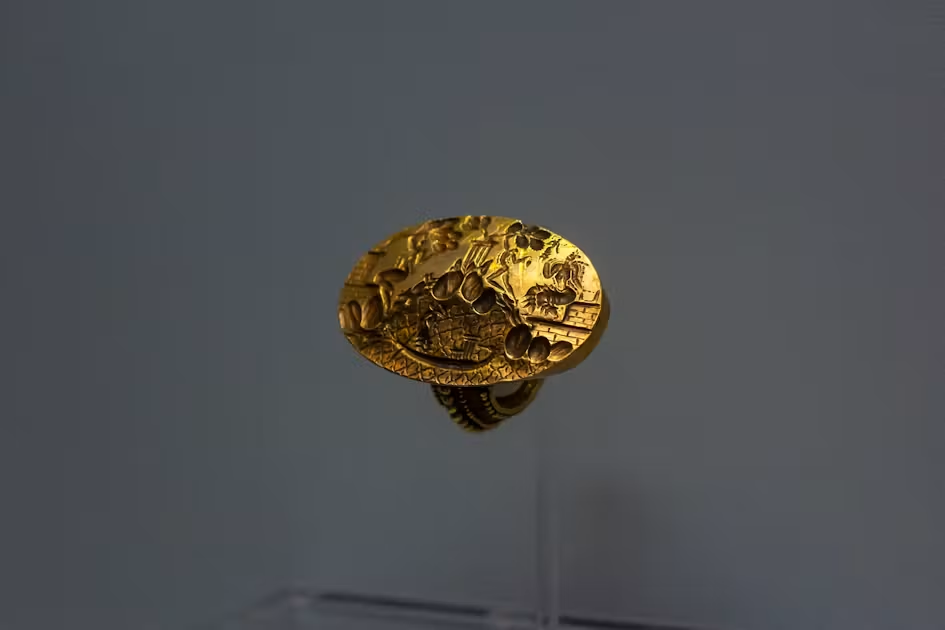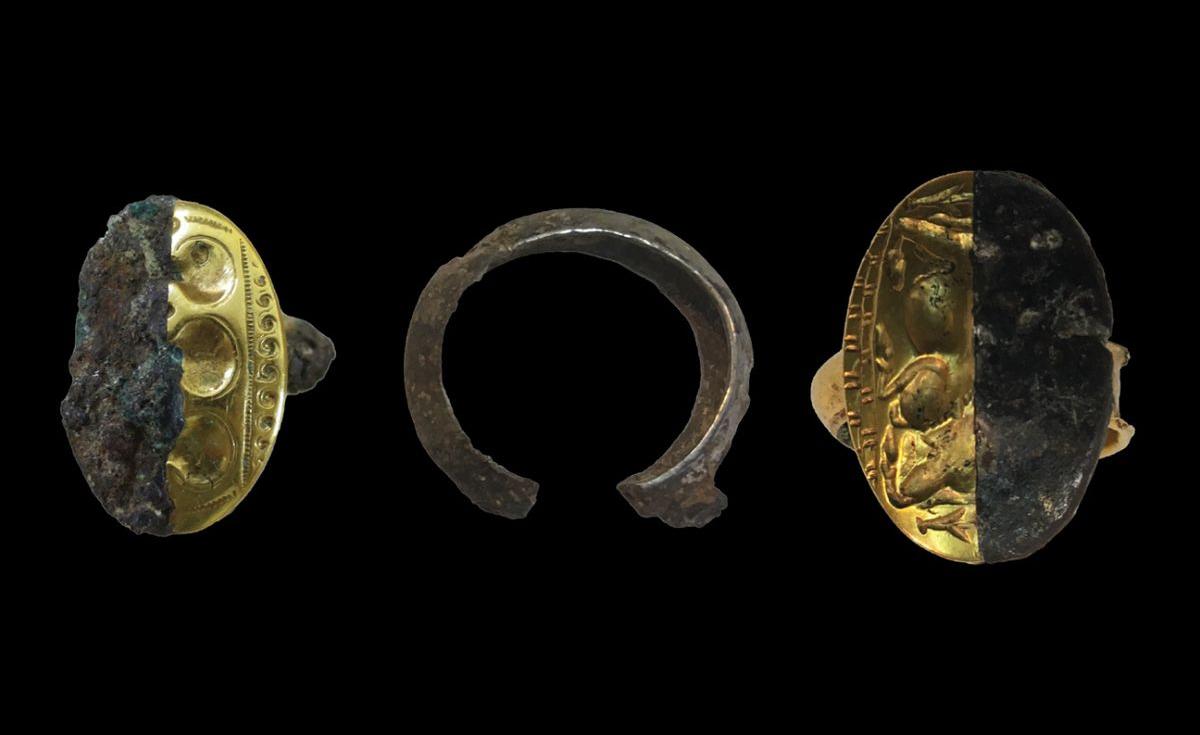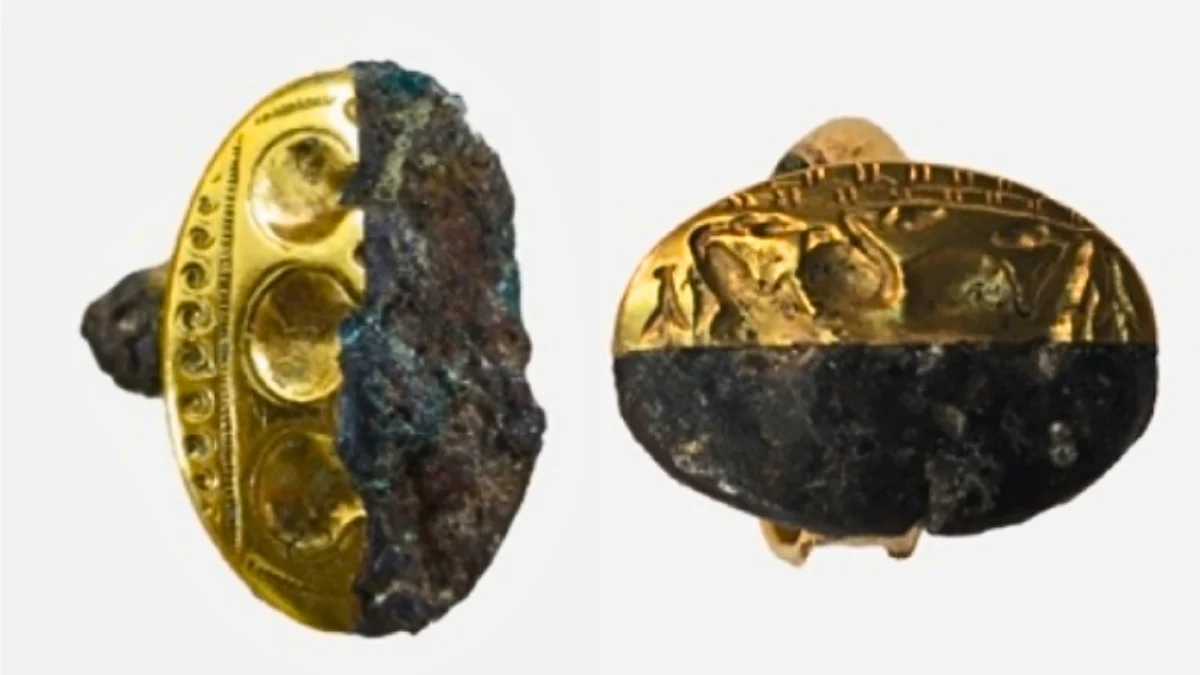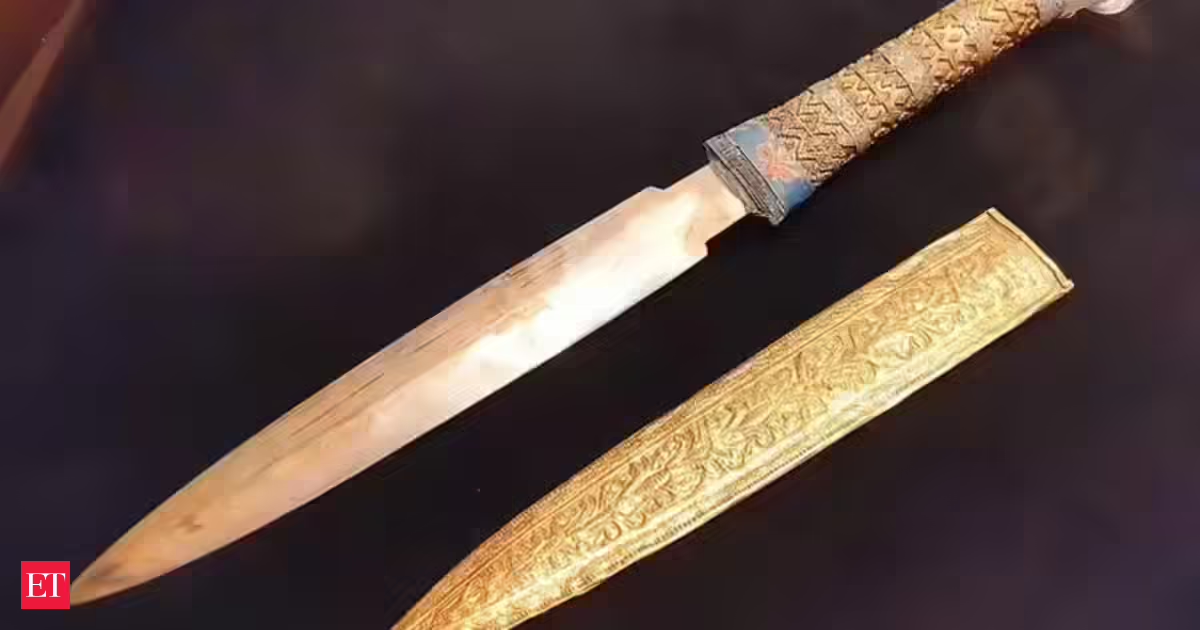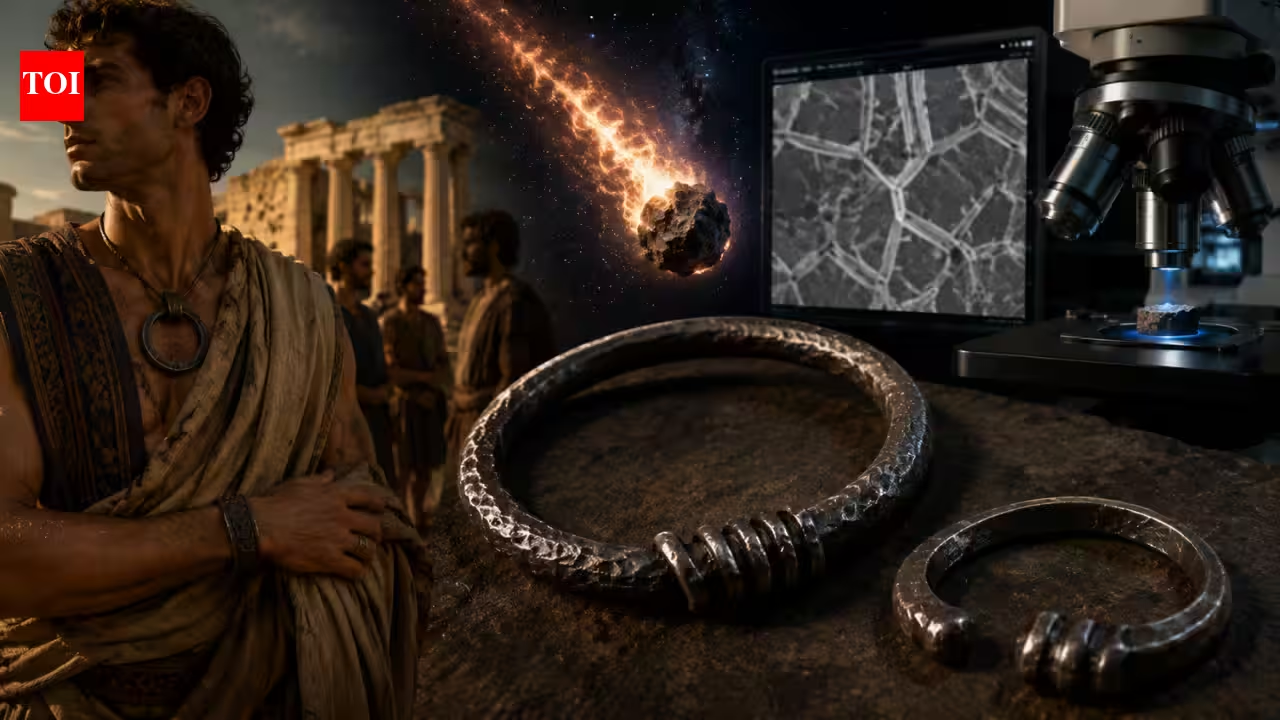
Image AI generatedAround 3,000 years ago, some of the most powerful people in the Greek world wore rings made from a material that had fallen from the sky. The unusual jewellery belonged largely to the Minoan and Mycenaean elite, and its metal was not produced from the ores being worked by early metalworkers. Instead, chemical clues preserved in the ancient rings point to iron that came from meteorites. A new study published in ScienceDirect, titled ‘Iron in Greece in the second millennium B.C.E.’, has now traced that extraterrestrial connection by examining the composition of 91 Bronze Age and Early Iron Age iron objects from across Greece, using portable X-ray fluorescence without damaging the artefacts. Thirteen rings contained significant amounts of nickel, a strong indicator of meteoritic iron, with nine judged very likely to have originated from meteorites. Yet the practice did not last. The use of this rare space-born metal declined around the time the Mycenaean palace system collapsed, leaving archaeologists with an ancient fashion whose disappearance remains unexplained.How meteoritic iron became valuable in ancient GreeceIron was still an unusual material in Bronze Age Greece. Most iron objects from the period were not made using the later methods that would become common during the Iron Age. Meteoritic iron was therefore particularly unusual because people could obtain workable metal without smelting an ore first. The researchers describe Bronze Age meteoritic iron as an exceptionally valuable material because artificially smelted iron was either absent or extremely rare at the time.The new study looked across mainland Greece, the Peloponnese, the Aegean islands and Crete. Of the 91 iron objects analysed, 13 contained significant amounts of nickel, an element that can help identify iron originating from meteorites. Nine of those objects were considered very likely to have a meteoritic origin, while another three were regarded as worthy of further investigation. All 13 were finger rings, rather than swords, tools or other everyday objects.How nickel revealed the meteoritic origin of ancient Greek ironThe key clue was hidden in the chemistry of the objects. Iron meteorites are naturally rich in nickel compared with iron produced from terrestrial ores. That makes nickel a useful marker when trying to work out where ancient iron came from, although corrosion and thousands of years underground can alter the original composition. Earlier research established that nickel can be lost preferentially from archaeological objects during burial, meaning even relatively small surviving quantities can still point towards a meteoritic source.To avoid damaging the valuable artefacts, Gounelle and Mantzourani used portable X-ray fluorescence, or p-XRF. The technique allowed them to examine the chemical composition of objects without cutting into them or removing substantial samples. That mattered here because many of the pieces were rare archaeological finds held in museums, where destructive testing would have been particularly difficult to justify.Where ancient Greek meteoritic iron rings were discoveredThe physical context of the rings adds another part to the story. Except for the ring discovered at the Anemospilia temple in Crete, the suspected meteoritic examples came from tholos and chamber tombs and were buried alongside other valuable objects. The researchers mention gold vessels, amber jewellery and stone seals among the associated finds. Most of the rings were bezel rings and combined the nickel-bearing iron with other metals, including gold, silver or bronze.That pattern is why the researchers suggest that meteoritic iron may have carried a meaning beyond its practical use. According to the study, the rings may have served as symbols of power among prominent members of Minoan and Mycenaean palatial society. The distinction between the rare nickel-bearing objects and the more common smelted iron is also important: during the Late Bronze Age, there was little overlap between the two, while smelted iron was generally used for less refined objects.Where did ancient Greeks get their meteoritic ironThere is still no definite answer to where the Greeks obtained the meteoritic iron. Meteorites were comparatively uncommon in Greece, which makes a local source less obvious. At the same time, Minoan and Mycenaean societies were connected to wider trading networks stretching towards Egypt and the Near East. The researchers therefore propose Egypt as one possible source for the raw material, partly because meteorites are more abundant in its desert regions.There is evidence that meteoritic iron was already being used elsewhere in the region. The study points to objects from Egypt and the Near East, including the finely made dagger found in the tomb of Pharaoh Tutankhamun. Egyptian meteoritic iron beads dating to around 3200 BCE have also been identified. The Greek rings therefore fit into a much wider Bronze Age history in which metal from meteorites was collected, traded and turned into objects of value.Why the use of meteoritic iron declined after the Mycenaean palaces fellThe strangest part of the story is what happened next. The use of nickel-bearing, presumably meteoritic iron declined roughly around the time the Mycenaean palaces fell. The researchers do not identify a single cause. Economic disruption, social or political changes, and interruptions to established trade networks are all possible explanations, while a much simpler possibility remains: the fashion may simply have faded.The timing matters because the decline of the meteoritic rings was moving in the opposite direction from the development of smelted iron. As knowledge of iron production expanded, the material no longer had to depend on a rare piece of metal that had fallen from the sky. According to the study, the use of meteoritic iron and the rise of smelted iron followed different trajectories, offering a glimpse of a period when two very different kinds of iron existed side by side.The rings leave behind an unusual archaeological record: objects made thousands of years ago from metal whose journey began beyond Earth. Their makers could not have known the modern chemical explanation for the nickel inside them, but they clearly treated some of these objects differently from ordinary iron.
In the 12th century BC, elite Greeks wore iron jewellery made from metal that fell from space; 3,000 years later, scientists traced its extraterrestrial origin
Around 3,000 years ago, some of the most powerful people in the Greek world wore rings made from a material that had fallen from the sky. The unusual jewellery belonged largely to the Minoan and Mycenaean elite, and its metal was not produced from the ores being worked by early metalworkers.
975 words~4 min read