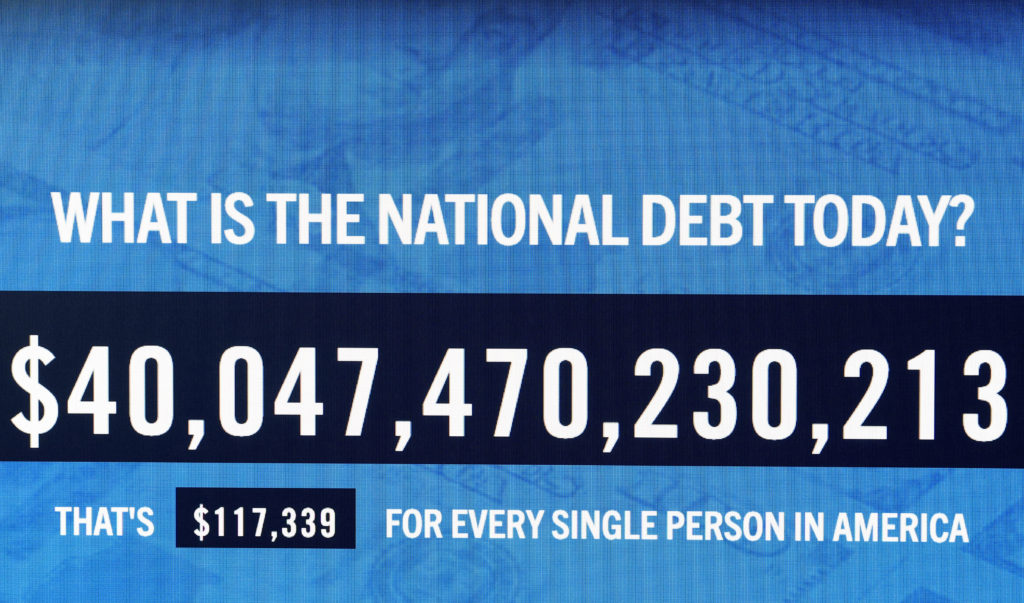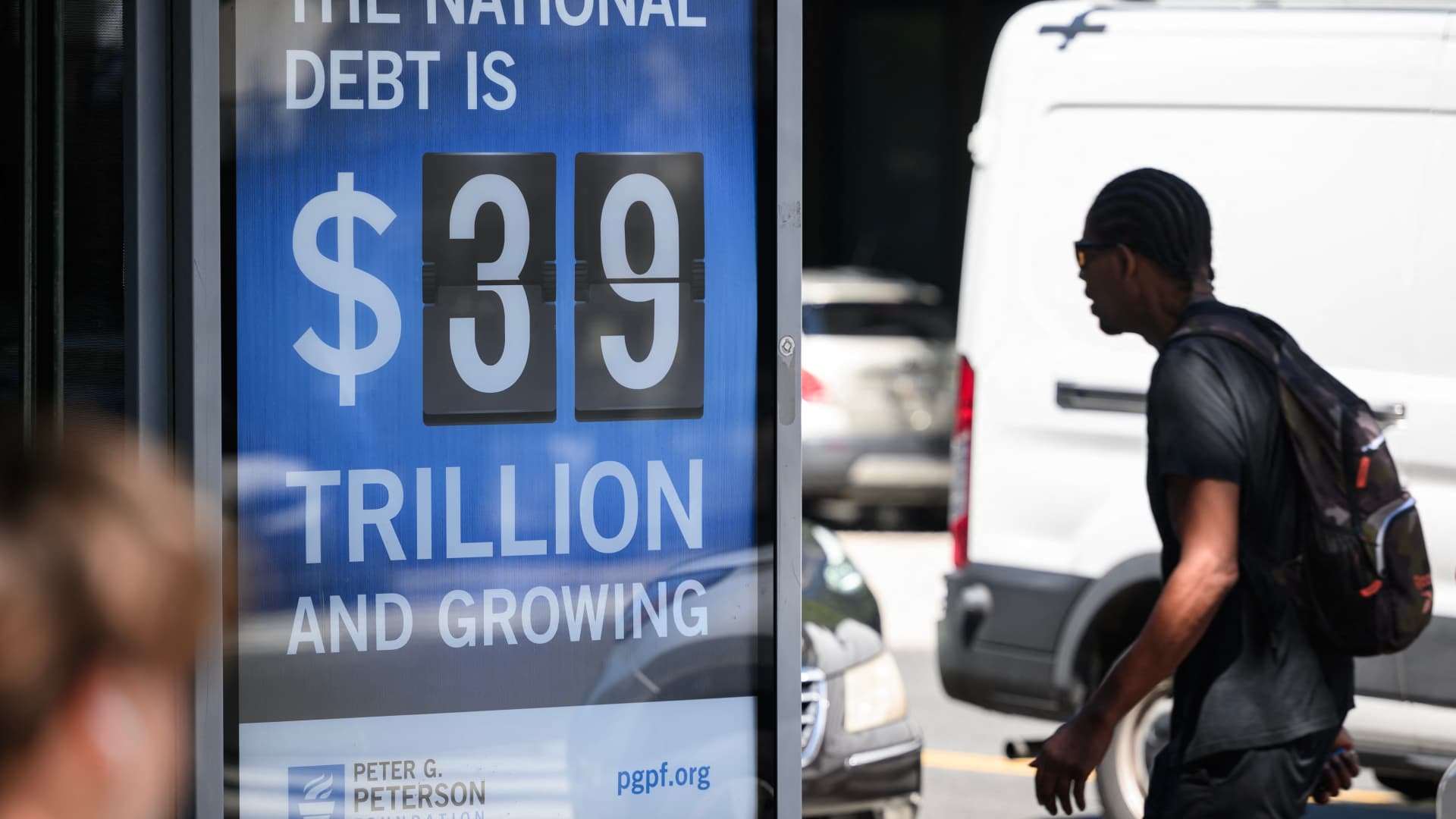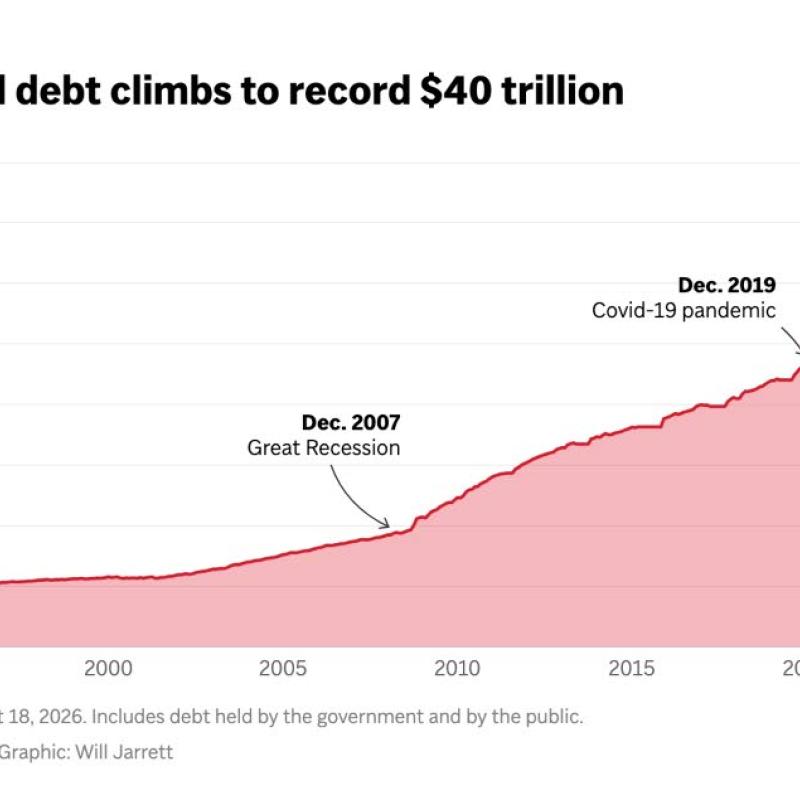
News that the national debt has risen above $40 trillion resonated like a ringing bell in my mind. It registered that America is 16 times deeper in its fiscal hole than it was when I first reported on this chronic ailment back in the late 1980s.I’ve just reread one of my dispatches from Wall Street to Fleet Street, written in early 1989, when the $2.6 trillion debt and related alarm over the $155 billion annual budget deficit were causing ructions between President George H.W. Bush and Federal Reserve Chairman Alan Greenspan.Bush had just taken office, elected on a promise not to raise taxes, and hoped the country’s economic growth would eliminate deficit spending by 1993. Greenspan said the president’s deficit-cutting plans were based on misguided assumptions.
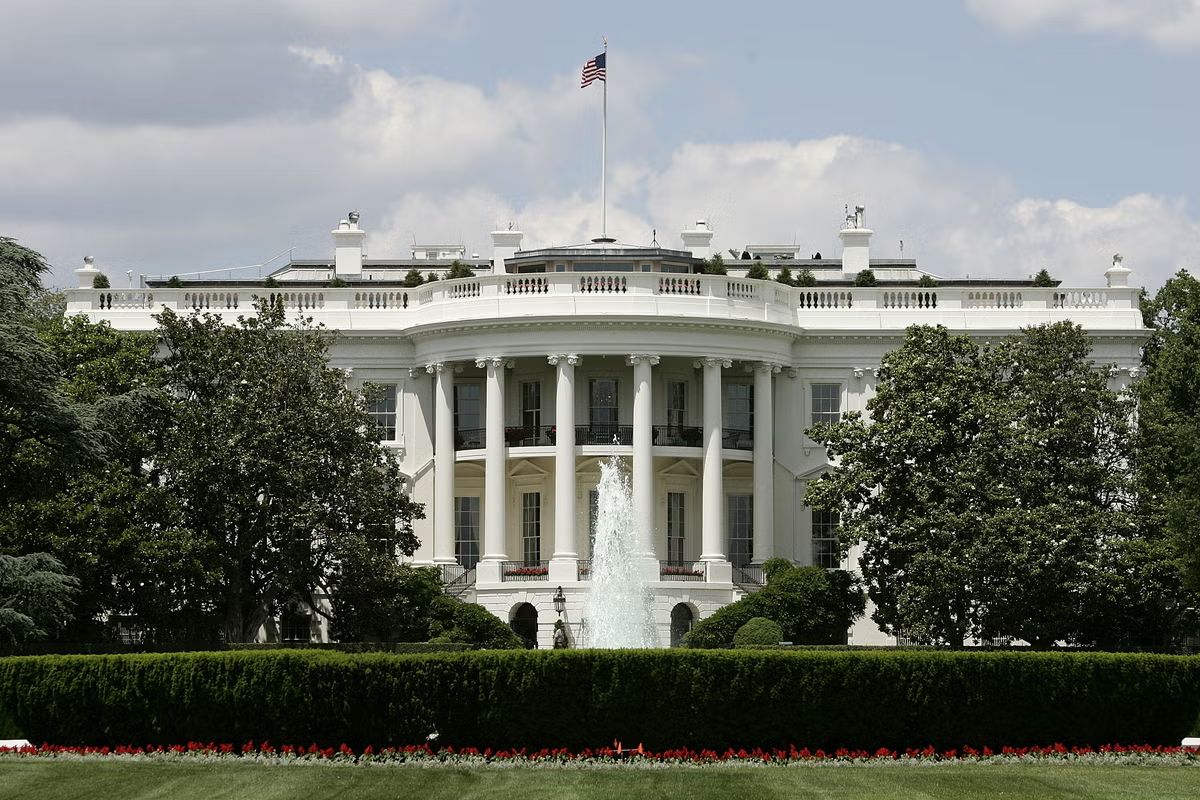
It seems almost quaint now, looking back on what was then regarded as a fiscal emergency. This July, deficit spending for the previous 12 months was $1.9 trillion; that’s $158 billion a month, slightly more than the sum by which we overspent in the whole year when Bush and Greenspan were arguing.It’s not just the numbers that make the comparison between then and now so striking. It’s also the attitude of the public and its elected representatives at both ends of Pennsylvania Avenue.Although Americans and their government were clearly living beyond their means in the last century, they at least recognized it as a problem. There was a widespread, if facile, feeling that “something must be done.” There was talk of a national debt summit.No such worry is detectable today either in the White House or on Capitol Hill. A few, still, small, voices of disquiet may faintly be heard here and there, but President Donald Trump is evidently uninterested in spending cuts, which are unpopular, and in Congress, the fight, if it can be called anything so vigorous, is not about cuts but about restraining spending growth.Out in election land, socialism is a rising tide, particularly among young voters who, because their economic prospects are not as good as those of their parents, increasingly want government to provide them with free stuff. But in America, as our 16th president noted, government is of, by, and for the people. So the feds pay for things, as magical socialist thinking desires, it means the people — all of us — are the ones who’ll be reaching into our wallets. The government is us, not someone else. It can’t give us anything of net value. All it can do is take money out of one of our pockets and put it back into the other.THE LEFTIST ‘OMNICAUSE’ LIES TO US EVERY DAY In a time of relative peace and abundant prosperity, we are overspending by as much as we did to win the war against Nazi Germany and Imperial Japan. It’s reasonable to rack up deficits in such a titanic struggle as that, but we now rack them up just to pay our day-to-day living expenses. There are 335 million Americans — each of us owes more than $119,000.That resonant clang of $40 trillion in debt should reverberate in all our heads, especially in the minds of those we elect to govern the nation on our behalf. As John Donne cautioned in 1623, “send not to know for whom the bell tolls, it tolls for thee.”