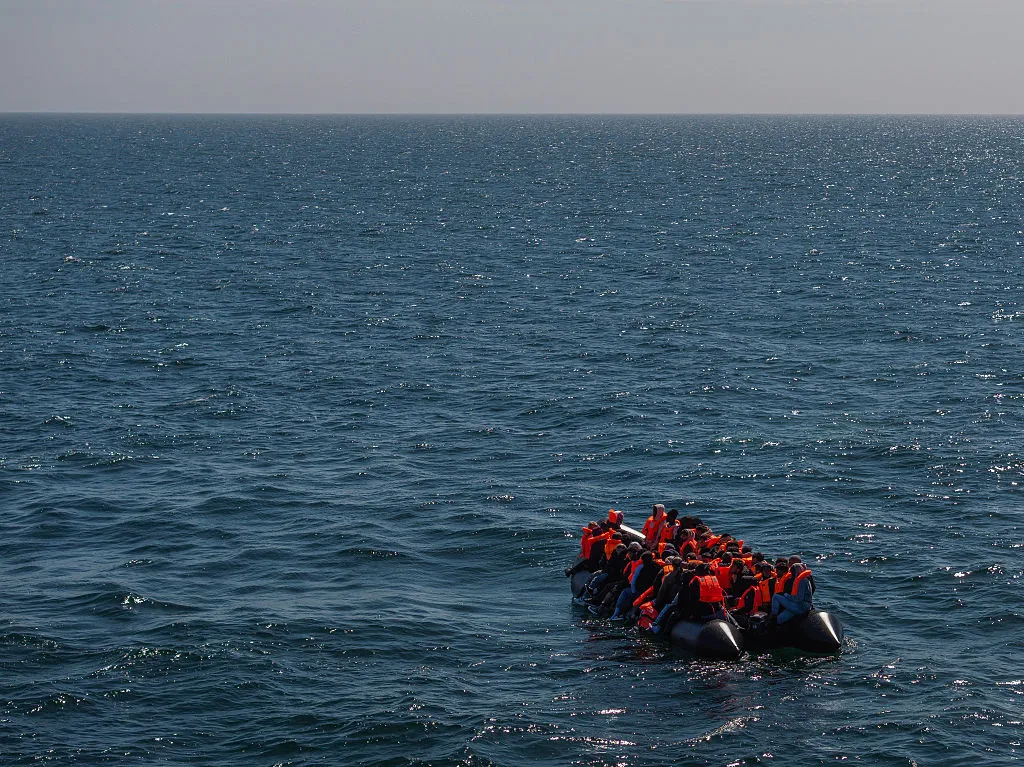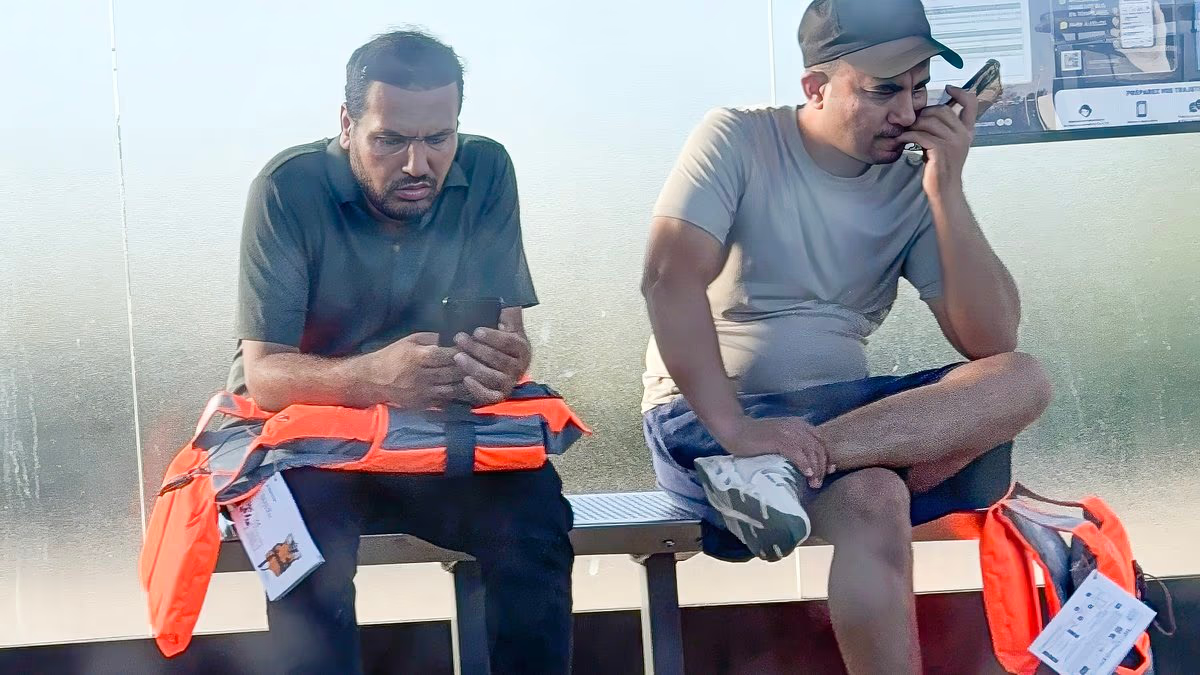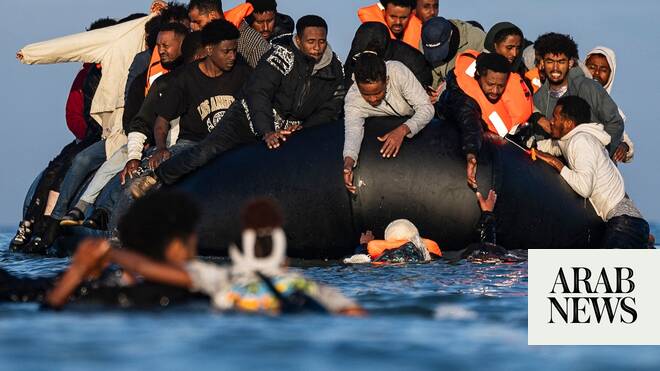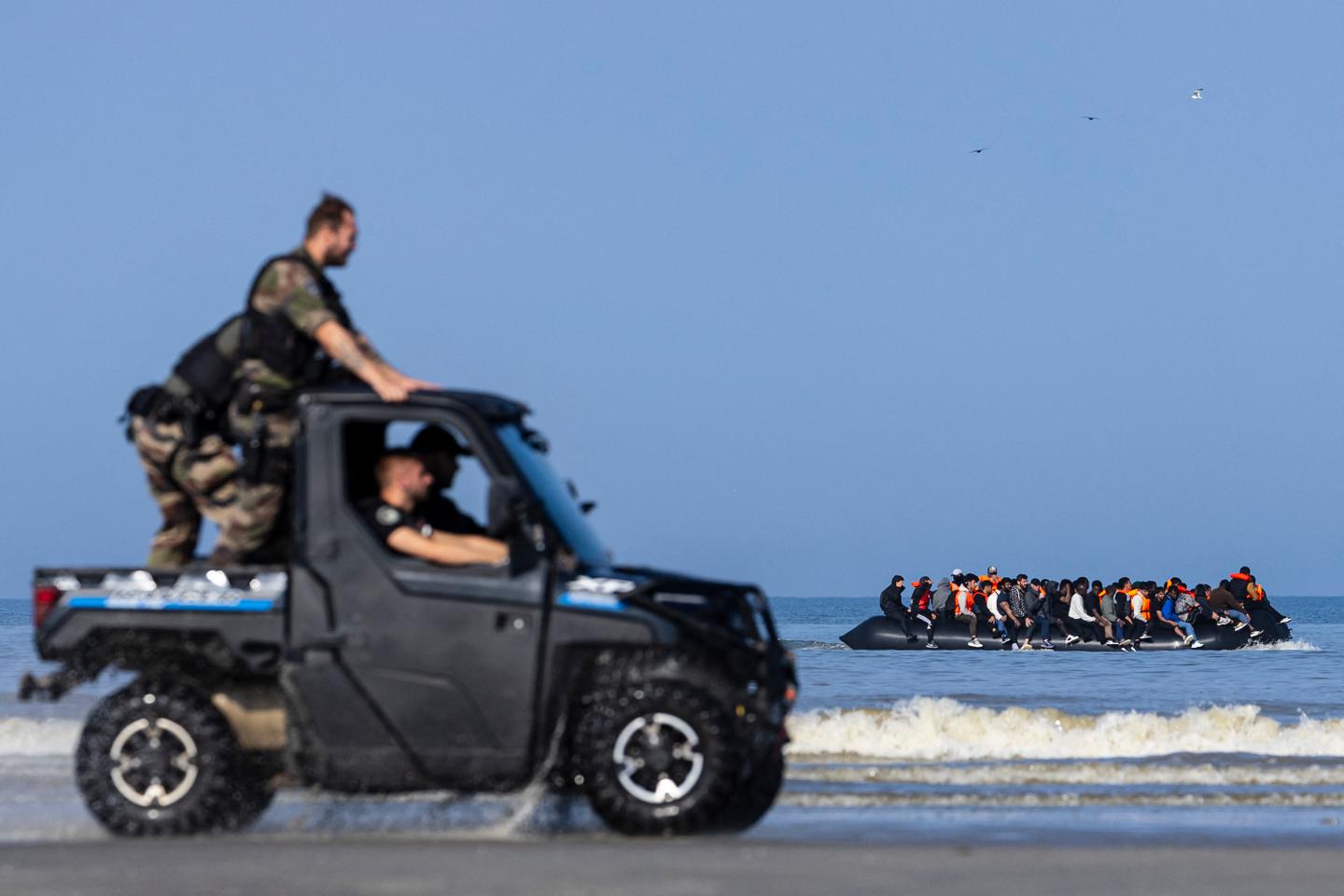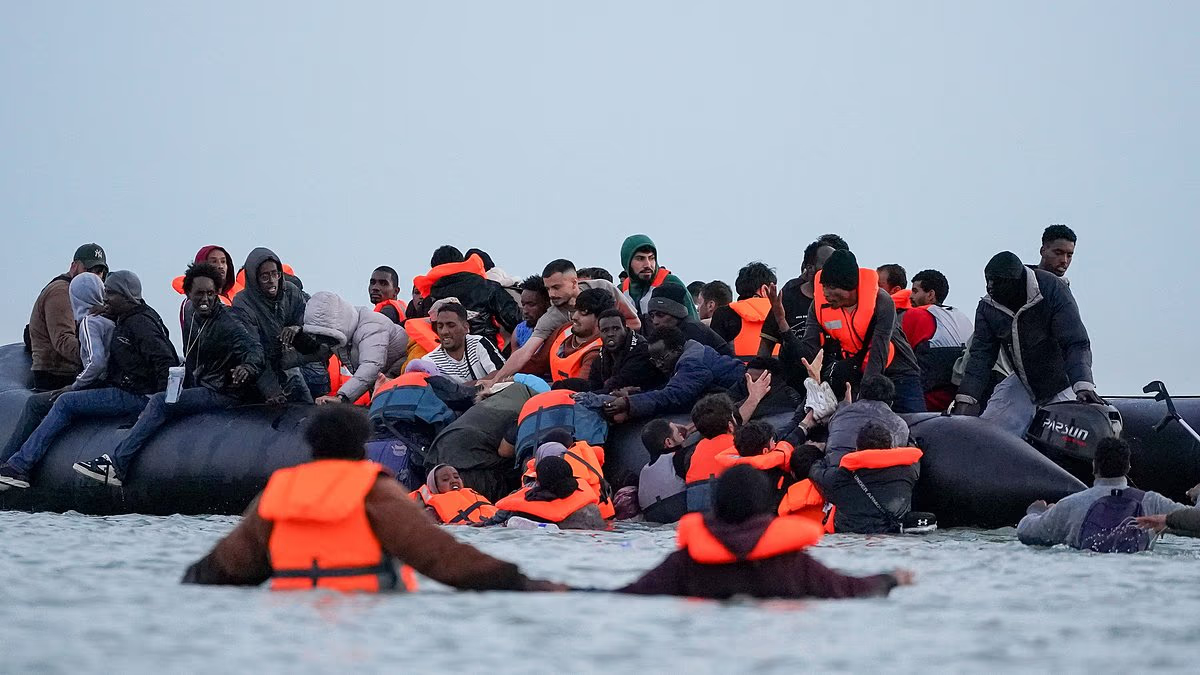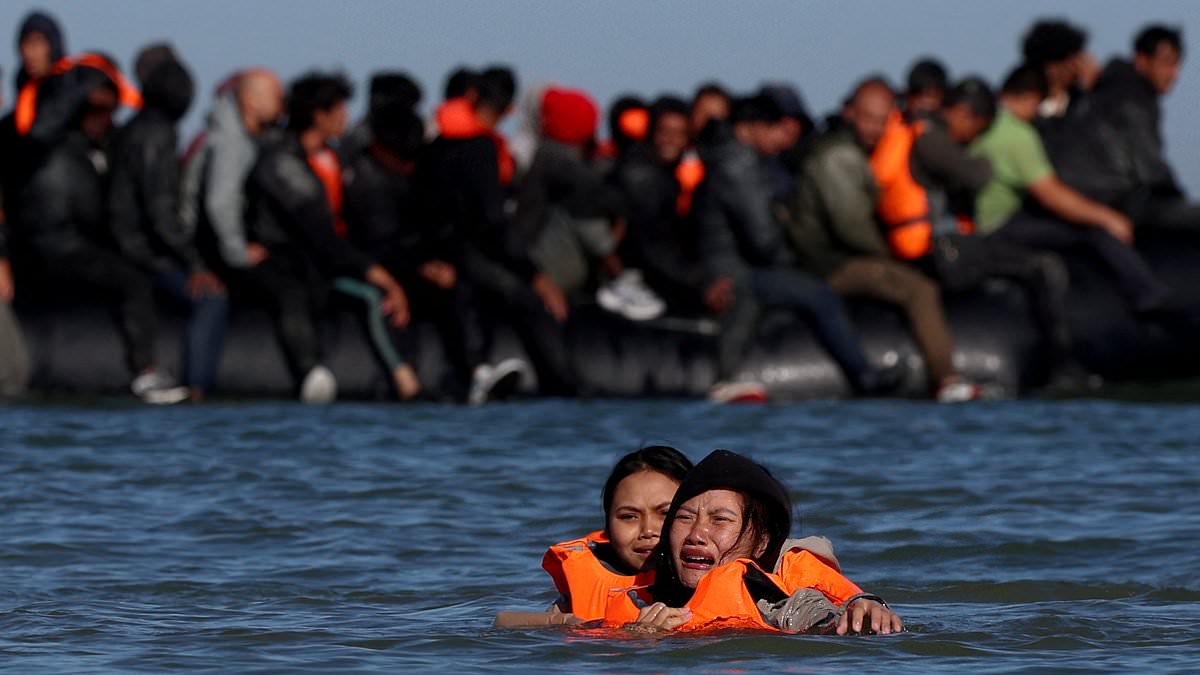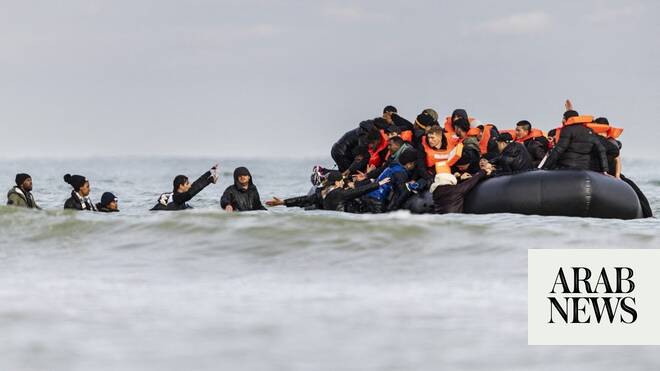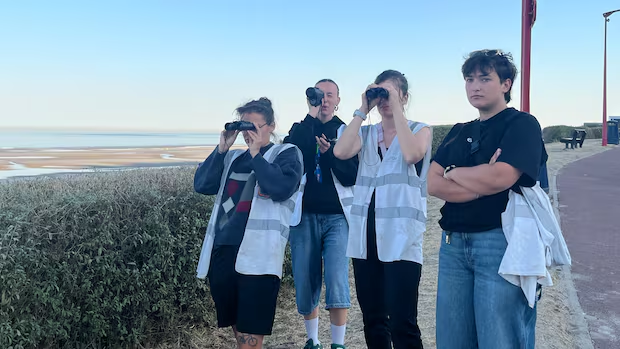
At dusk, as the solar eclipse cast a greyish tint over northern France last week, dozens of people packed a bus stop on the side of a highway, many of them carrying bright orange life jackets. Members of the group, which included women and some toddlers, said they'd been camping out in the nearby woods for months, waiting for a break in the wind and waves so they could try to board a boat to cross the English Channel. These days, they say, it's not easy to do. Several migrants CBC News spoke with said police had prevented them from crossing and in some cases, sprayed them with tear gas. For decades, the 40-kilometre stretch of coast between Dunkirk and Calais has been a waystation for migrants travelling through Europe, their numbers waxing and waning as conflicts, migration routes, weather and European policies change. But recently, despite a decrease in overall crossings, the boats have been carrying more and more migrants while taking longer and increasingly dangerous routes across the Channel. These developments come at a time of heightened debate about European migration, especially after tens of thousands of migrants rushed the Spain-Morocco border in the North African Spanish territory of Ceuta in late July.WATCH | On patrol with a migrant aid group in France:We went on patrol with a migrant aid group on the French coastAugust 19|Duration 2:15Aid groups say it’s getting more dangerous for migrants trying to cross the heavily policed English Channel from France into British waters. CBC’s Verity Stevenson went on patrol with Utopia 56 to see why the group says its mission is vital.U.K. politicians quickly turned their attention to migrants attempting to cross the Channel. Nigel Farage, leader of the anti-immigration Reform UK party, called for the Royal Navy to tow them back to France, though former Navy officers said that wasn't feasible. Analysis80 people died trying to get to Ceuta. In Europe, politics could eclipse the tragedyWho's behind viral online posts fuelling a crisis over migration in Europe?On Aug. 2, British Prime Minister Andy Burnham visited Dover, where many asylum seekers land in the U.K. He stopped short of making any policy announcements, but promised to be "relentless" in curbing the number of boats, while also citing the need for safer routes to reduce migrant-smuggling gangs.Fewer crossings mean bigger risksLast year, the U.K. announced it would increase its funding for French police operations to £662 million ($1.2 billion Cdn), which would also include deploying additional drones, helicopters and cameras to prevent people from crossing. Aid workers say the result is that Calais has become a kind of permanent border zone with police cracking down on departures and clearing informal settlements, chasing migrants between forests, dunes, train stations and beaches as they wait for any opportunity to cross.Between attempts to cross the English Channel, migrants often camp in makeshift settlements in wooded areas near Dunkirk and Calais. (Lyza Sale/CBC)By the end of July, about 14,200 asylum seekers had crossed the Channel, fewer migrants than the same time period in 2025 when 25,436 crossed.Volunteers with NGOs and citizen groups like Calais Appeal, an umbrella organization overseeing six groups providing support for migrants in Calais and Dunkirk, say efforts to deter migrants from crossing don't result in fewer people attempting the journey.VideoTitle: U.K. pledges nearly $200M Cdn to deter illegal migrants from crossing the English Channel‘Obviously cruel policies’: U.K.’s proposed asylum rules draw pushback from critics "People just find alternatives, taking more dangerous routes, longer routes; we have boats that are overly crowded," said Salomé Brun, speaking to CBC News on a recent visit to the old warehouse where Calais Appeal operates. Though the dinghies migrants use are typically referred to as "small boats," it's a moniker that no longer fits as they increase in size.French volunteer rescue organization SNSM Berck-sur-Mer made sure all 230 people aboard a dinghy crossing the English Channel earlier this month were safe. (SNSM-Berck-sur-Mer/Facebook)Last Monday, a record 230 people made it to the U.K. in one "mega-dinghy," as some in the British media called it. The week before, 173 asylum seekers were rescued by French authorities after the ship's engine caught fire, and in late July, the U.K. Home Office confirmed 165 people had arrived in one boat."The risks to which smugglers expose migrants remain very high," a spokesperson for France's Maritime Prefecture for the English Channel and the North Sea wrote in an email to CBC News.AudioSpain’s mass border breach fuels anti-migrant backlash12 migrants dead after boat tears apart in English Channel, authorities sayIt noted that 2,231 people had been rescued in the first seven months of 2026, often with the help of citizen volunteer sea rescue organization SNSM Berck-sur-Mer. To evade police, the spokesperson said, smugglers are now employing a new "taxi boat" tactic that involves launching inflatable vessels about eight to 10 metres long from a point far removed from gathering areas. The smugglers then skirt the coast to pick up passengers near the shore.From left, volunteer Violette Vancoillie, advocacy co-ordinator Angèle Vettorello and volunteer Charlotte Lacaille patrol Équihen-Plage, a beach in Neufchâtel-Hardelot, France, earlier this month. They're with Utopia 56, a group helping migrants stranded after failed crossings of the English Channel. (Lyza Sale/CBC)Humanitarian efforts run by citizens, volunteersLast Friday, CBC News joined Angèle Vettorello as she drove her white van to Neufchâtel-Hardelot, a town some 50 kilometres south of Calais. It's become a popular departure spot for migrants, despite how much further it is from Dover. Vettorello works for Utopia 56, a volunteer group that patrols France's northern coast and nearby transit stations, helping migrants after failed crossings leave them stranded. Though calm seas offered perfect departure conditions, the beach Vettorello's team visited in Neufchâtel-Hardelot that day was nearly deserted after a fire broke out days earlier in a wooded area near the dunes where migrants had been camping. At the nearby Dannes-Camiers train station, about 10 weary men were resting. After a failed crossing attempt in Dunkirk, they'd trekked for hours to Neufchâtel-Hardelot only to find the beach blocked by police because of the fire.Police patrol the beach in Neufchâtel-Hardelot last Friday as maintenance workers groom the sand. (Lyza Sale/CBC)The men accepted small meals of rice and beans from Vettorello's group of volunteers. Two retired women volunteering for a local organization arrived to distribute dry shampoo and disinfectant wipes. To Vettorello, this reliance on citizen groups is the result of underfunding of rescue and humanitarian operations."It's obviously not enough," she said. "The French rescue boats are not ready to welcome more than 100 people on board after a shipwreck."Desire for safety keeps migrants moving Mohammed, 35, was one of those resting at the train station, trying to figure out where to go. He fled Gaza in 2023 and has been trying ever since to reach his brother, who's lived in London since 2019. CBC News is not using Mohammed's full name because he fears being deported.He described journeying through 13 countries, detailing how he spent months hiding in Libya due to their agreement with the European Union to prevent migrants from travelling to the continent. In Croatia, he says he was arrested three times trying to cross into Slovenia.Mohammed, who left Gaza in 2023 and is trying to meet up with his brother in the U.K., spent last Friday resting at France's Dannes-Camiers train station after a failed attempt at crossing the Channel in Dunkirk. (Lyza Sale/CBC)When asked about the conditions that caused him to flee Gaza, Mohammed would only say that Israeli soldiers had beaten him and that he'd lost his family.He says he keeps going because he's heard "the U.K. is safe."Though many migrants have the same view of the U.K., the topic of immigration there is a polarizing one. Successive recent governments in Britain have taken steps to make the country as unappealing to migrants as possible, while far-right activists have used social media to stoke anti‑immigration sentiment and fuel massive protests.Some of that animosity has found its way across the Channel, with authorities in the north of France noting in January that far-right British activists had been coming to the coast for months to intimidate and harass migrants and humanitarian groups.AnalysisFrom riots to 'regularization,' U.K. and Spain show opposing attitudes to migrantsWhy Spain is aiming to regularize half a million undocumented migrantsVettorello and Brun say the activists accused them of encouraging migrants to go to the U.K., but Vettorello says that's false and that their goal is to help migrants understand the hazards they could face on their journey."We don't know … what pushed them here and why they want to cross," she said. "What we are trying to do is to make them aware of the risk."'For me, those are lives being saved'In Ambleteuse, a small coastal community some 30 kilometres south of Calais, Mayor Stéphane Pinto has spent years watching the crossings become increasingly dangerous and dealing with the aftermath when they go wrong.Pinto told CBC News he understands the migrants who try to make the trip because his own grandfather left Portugal to fight with the allies during the Second World War., and was warmly received by France.Still, he says he's supportive of efforts by authorities to stop boats from leaving the coast. "For me," he said, "those are lives being saved."Stéphane Pinto, the mayor of Ambleteuse, a small community 30 kilometres south of Calais, worries that migrants are taking too much of a risk by crossing the channel from his town, and says he sees efforts to stop them as saving lives. (Lyza Sale/CBC)In 2024 — a particularly deadly year on the Channel — Pinto received a 2 a.m. call from firefighters informing him eight men had been found dead on the beach after trying to cross.Pinto says it took him months to recover emotionally from seeing the body bags carried to the community hall. "It was like — bam! — being hit on the back of the neck," he said of the shock he felt. But he says their deaths also made it clear to him that as long as there are wars and climate change, migration will continue, and the responsibility for managing it goes beyond France and England."It really goes right to the highest level. Governments, international bodies need to mobilize to find solutions," he said. "We have to stop hiding from the truth: this migration issue is only going to intensify."
In northern France, beaches turn to border zones as migrants wait months to cross the English Channel | CBC News
As European countries tighten their borders, migrants hoping to claim asylum in the United Kingdom are spending months along France’s northern coast waiting to cross the English Channel — and taking longer and increasingly dangerous routes when they do.
1,728 words~8 min read