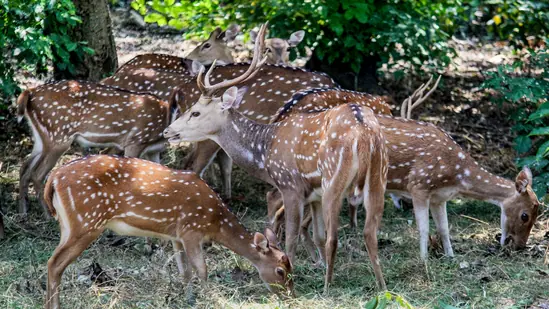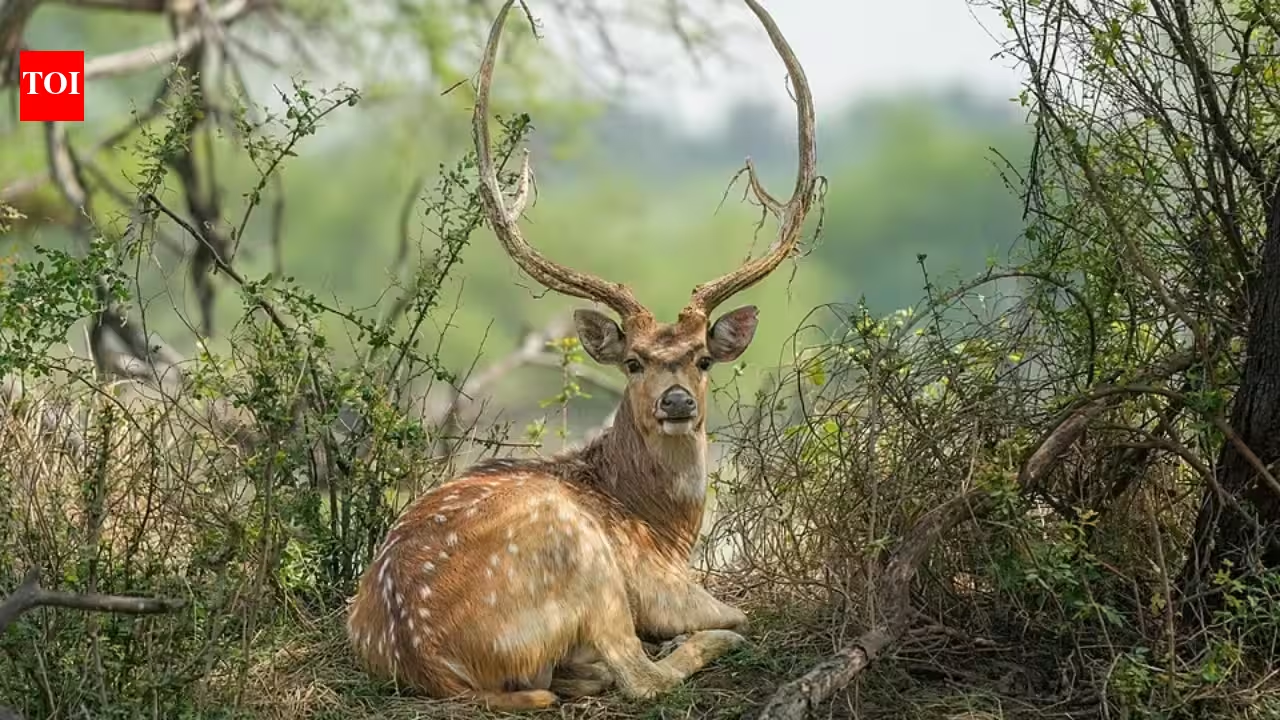
Axis deer, also know as Chital in Keoladeo National Park. Image credits: Wikimedia Commons.In 1932, Texas landowners introduced axis deer from the Indian subcontinent into the state and initially kept the animals behind high fences as a new hunting attraction. However, nearly a century after their initial release, the animals have outgrown their borders, thus transforming a localised introduction into a dominant wildlife population across most of the Texas Hill Country. According to data monitored by the Exotic Wildlife Association, thestatewide population of both managed and free-roaming axis deer has expanded significantly from historical baselines, reaching an estimated total of up to 125,000 animals.Moving out of fenced ranches to the Edwards PlateauThe original ambition behind the introduction was part of a broader Texas tradition of bringing non-native game animals onto private properties. Texas Parks & Wildlife records identify 1932 as the year axis deer were first released in the state by Richard Friedrich on the Bear Creek Ranch in Kerr County. The initial breeding pairs were sourced alongside other exotic wildlife through coastal ports and zoological supply networks, and some were sent to the San Antonio Zoo. The deer were attractive candidates for private ranches because they were well suited to the Hill Country’s mixture of open grassland, brush and wooded areas. Axis deer, also known as chital, are native to India and have a reddish-brown coat marked with white spots that they retain throughout their adult life.For decades, private ranches continued to stock exotic animals behind high fences; however, fences did not always manage to contain them. The Texas Parks & Wildlife notes that axis deer and other introduced ungulates were either released deliberately or escaped their confinement and eventually became established across major parts of Kerr, Bandera, Edwards and Real counties. Notably, in accordance with the Texas State Historical Association, the largest concentration of this species developed in the Edwards Plateau. Agencies now study these animals partly because of their potential competition with native wildlife and their impact on rangeland.A deer population that behaves differentlyAxis deer have several biological characteristics that shed light on their success rate in Texas. Researchers claim that the animals are primarily grazers, feeding heavily on grasses but also consuming forbs, sedges and woody browse. The species is generally found in herds ranging from a few animals to more than 100 and can reproduce during most of the year. In Texas, while most fawns are born between January and April, births can occur in other seasons as well. These flexible feeding habits can, however, bring them into competition with native white-tailed deer.A study published in the Journal of Fish and Wildlife Management found that free-ranging axis deer had expanded substantially across the Edwards Plateau. The historical survey data indicates that by 1994, Texas hosted an estimated 23,000 free-ranging axis deer, alongside 29,000 individuals maintained on high-fence ranches. This historical baseline footprint has expanded dramatically over the last three decades. Escaping containment at a steady rate, the species grew to heavily saturate its primary regional strongholds and spill into adjacent territories.Axis deer, also know as Chital in Keoladeo National Park. Image credits: Wikimedia Commons.The ecological concern is not just the number of animals, as several studies have cited that axis deer can consume substantially more forage than an individual native white-tailed deer, thus potentially increasing pressure on vegetation when populations become dense. Researchers have issued warnings that large axis populations can reduce the availability and hamper the quality of forage and may also affect agricultural land, especially in areas where livestock and wildlife depend on the same vegetation.Furthermore, a 2025 Texas A&M AgriLife Extension circular names chital deer among the most abundant and widespread exotic species in the state. While these animals remain managed on many enclosed estates, free-ranging populations now occur throughout the Edwards Plateau and northern South Texas Plains. This geographic spread has created a profound split-status framework: inside a high-fence perimeter, the deer is legally classified as private property and a lucrative commercial asset; the moment it escapes onto open range, it becomes an unregulated invasive threat. Texas addresses this paradox by delegating the ecological burden to the private sector, thus imposing no state bag limits or closed seasons on open range to incentivize year-round culling. Because the state classifies the species as invasive, unconfined axis deer have no state protection. However, this lack of biological protection does not exempt hunters from state authority, as Texas tightly enforces standard hunting licenses to maintain sovereign oversight over public safety corridors and the use of weapons, while landowner permissions protect private property boundaries during open-range culling operations.Therefore, what began as a managed population on an enclosed Kerr County estate has transformed into a permanent, highly aggressive management crisis across the central and southern plains. The animals’ flexible foraging habits, year-round reproduction, and rapid adaptation mean that their presence on the open range requires a permanent, highly vigilant containment and culling strategy rather than passive acceptance into the native ecosystem.
In 1932, Texas ranchers introduced axis deer from India for fenced hunting; the deer later escaped and spread across the Edwards Plateau
In 1932, Texas landowners introduced axis deer from the Indian subcontinent into the state and initially kept the animals behind high fences as a new hunting attraction. However, nearly a century after their initial release, the animals have outgrown their borders, thus transforming a localised introduction into a dominant wildlife population across most of the Texas Hill Country.
825 words~4 min read