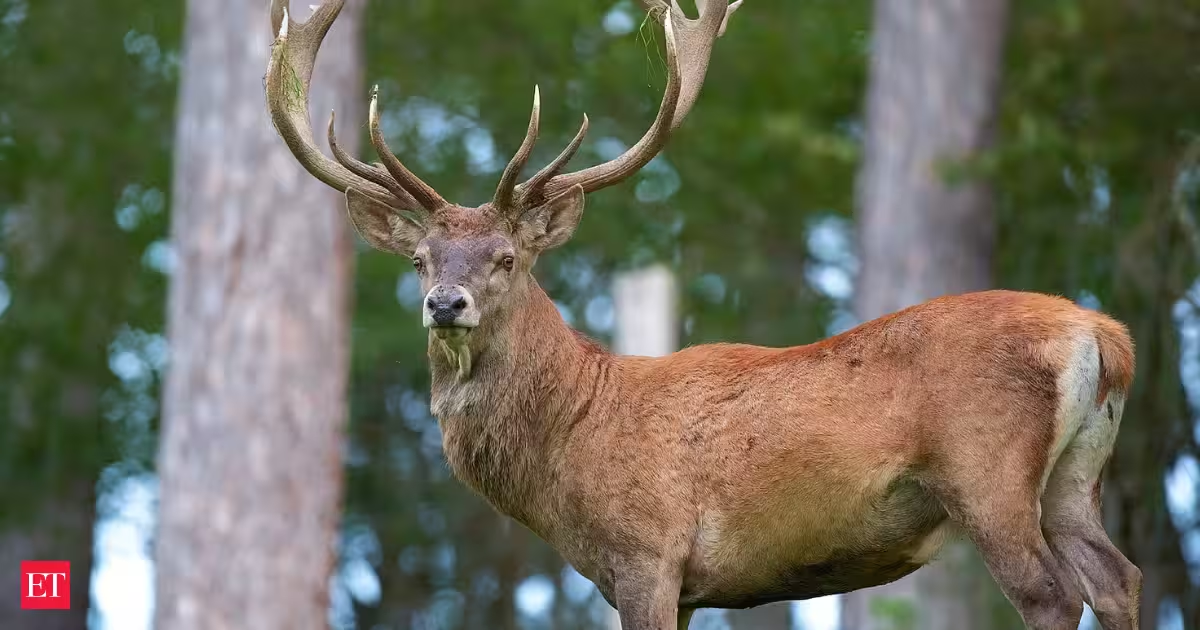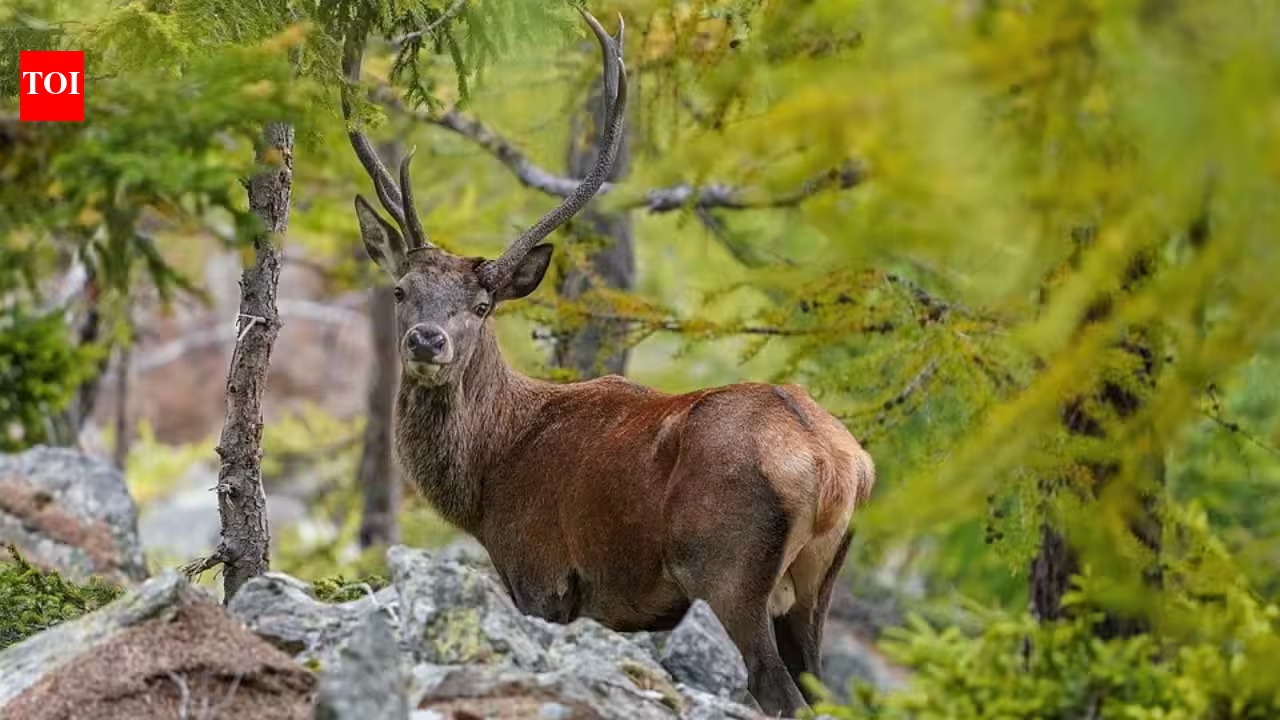
A wild red deer. Image credits: Wikimedia CommonsWhat began as an aristocratic gift intended to enhance New Zealand’s hunting grounds eventually became a major ecological management challenge. According to Te Ara - The Encyclopedia of New Zealand, the first successful introduction of red deer occurred in 1861, when Lord Petre sent three deer from England to Nelson. Following the introduction, the animals flourished in New Zealand’s predator-free forests and mountains, where abundant vegetation and the lack of large mammalian herbivores allowed them to expand rapidly. Over the following decades, repeated introductions transformed red deer from a prized animal for sports into one of New Zealand’s most invasive mammals, thus majorly altering native ecosystems.An experiment that reshaped the country’s ecosystemAccording to Te Ara, acclimatisation societies and wealthy landowners introduced deer to bring British sporting traditions to New Zealand. Notably, while the three animals gifted by Lord Petre marked the first successful introduction in 1861, additional shipments followed over the next six decades. Between 1861 and 1919, more than 250 red deer were released at various locations across New Zealand, thus establishing breeding populations in both the North and South Islands. Interestingly, as the country had no native land mammals apart from bats and lacked large predators capable of controlling deer, populations increased at a pace rarely seen anywhere else.Wild red deer. Image credits: Wikimedia CommonsAccording to New Zealand’s Department of Conservation, red deer browsed heavily on seedlings, shrubs and forest understorey vegetation, which prevented many native trees from regenerating. Furthermore, continuous browsing altered forest structure, reduced biodiversity and made some habitats more vulnerable to erosion and invasion by non-native plants. Scientists now regard red deer as one of the major browsing mammals responsible for long-term changes to the country’s unique ecosystems, many of which evolved without hoofed herbivores.From protected animal for sports to costly pestFor many years, the animal remained legally protected because it was valued by recreational hunters; however, as populations increased during the early 20th century, attitudes toward deer shifted. According to Te Ara, widespread forest damage prompted the government to begin deer control programmes during the 1930s. By the 1950s, professional government cullers were operating across remote mountain ranges and forests. Notably, their efforts intensified rapidly, with annual kills reaching around 50,000 deer, while 1957 recorded around 62,500 removed. However, despite the large-scale operation to control the population, deer remained abundant across most of New Zealand because of their high reproductive rates and the vast areas they occupied.According to Te Ara, the economics of deer management changed again in the 1960s and 1970s, with advances in helicopter hunting initially accelerating commercial venison harvesting, dramatically reducing wild populations in many regions across the country. Furthermore, entrepreneurs began capturing live deer to establish farms, laying the foundations for New Zealand’s internationally recognised deer-farming industry. Therefore, instead of viewing deer solely as pests, the country increasingly treated them as valuable livestock while continuing to control wild herds in ecologically sensitive areas. New Zealand is one of the world’s largest producers of farmed venison and velvet antler despite conservation agencies continuing to suppress unmanaged wild populations.According to Te Ara, the species highlights how introducing animals for recreation can generate unintended ecological consequences that might persist for generations. Notably, while modern deer farming has transformed the animal into a valuable agricultural resource, wild deer still continue to threaten native forests through browsing and habitat degradation, thus requiring ongoing management.
In 1861, an English lord sent three red deer to New Zealand for sport; the animals later multiplied into a costly pest
What began as an aristocratic gift intended to enhance New Zealand’s hunting grounds eventually became a major ecological management challenge. According to Te Ara - The Encyclopedia of New Zealand, the first successful introduction of red deer occurred in 1861, when Lord Petre sent three deer from England to Nelson.
566 words~3 min read