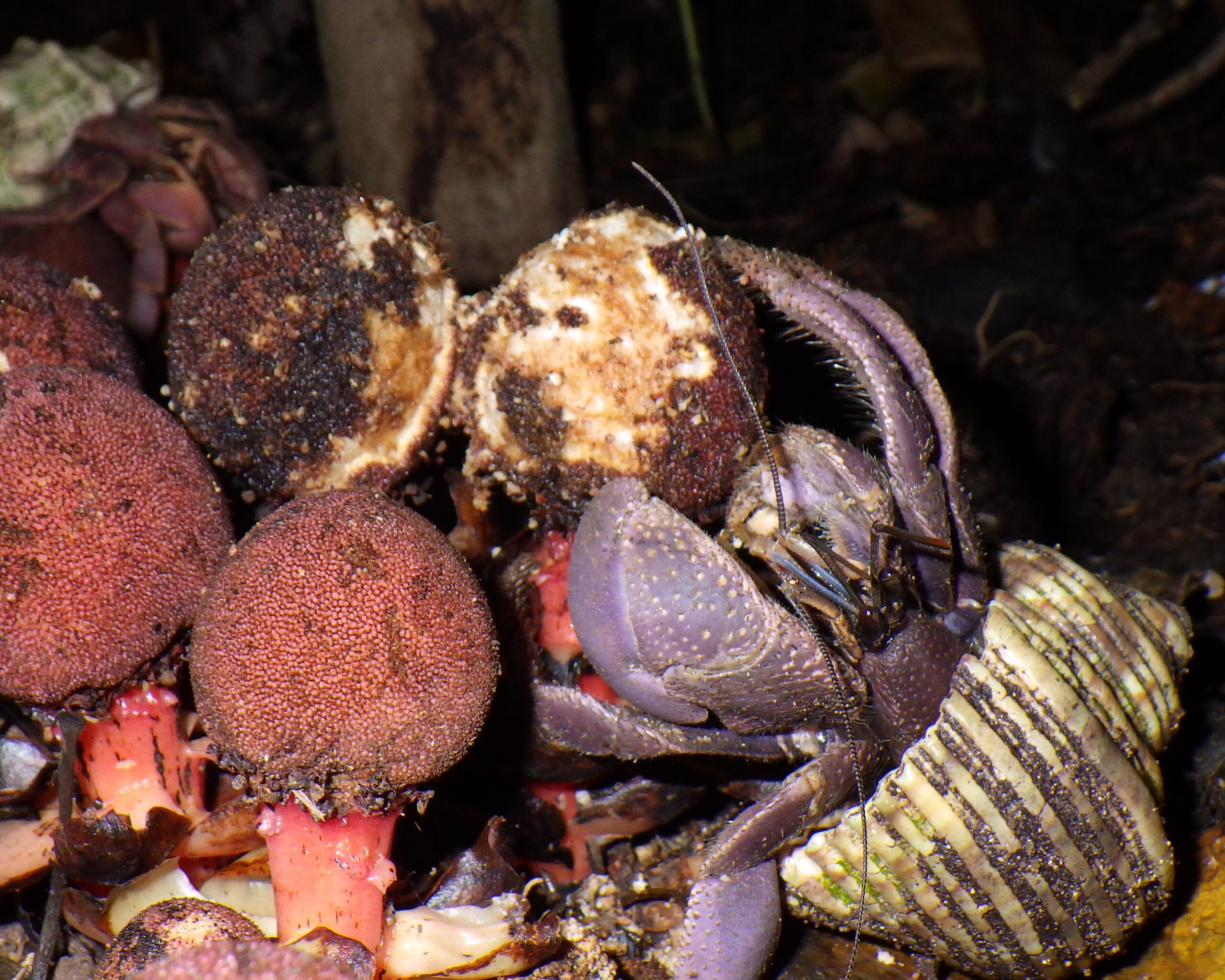
In the humid, coastal forests of Japan’s Ishigaki Island, near Okinawa, a parasitic plant relies on some unusual allies to spread its seeds: land hermit crabs and cockroaches, according to a recent study.
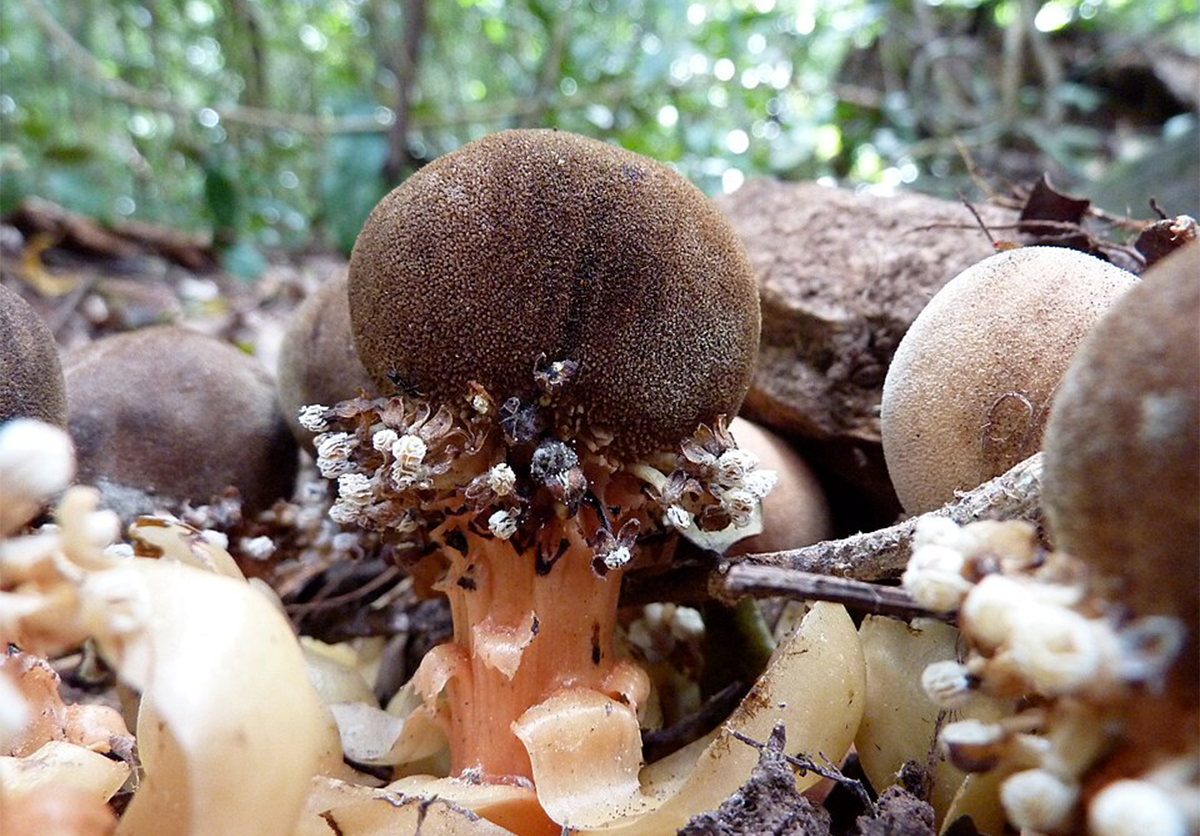
The plant, fungus root (Balanophora fungosa), is non-photosynthetic, meaning it lacks chlorophyll and can’t make its own food. Instead, it grows as a parasite on the roots of trees in island forests across Asia, Australia and the Pacific. The mushroom-like plant has fleshy, dull-colored fruits with millions of seeds inside.
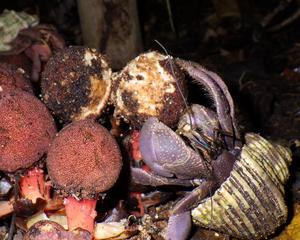
Previously, scientists have suggested that gravity might be helping disperse those seeds. But in the latest study, researchers found that on Ishigaki, the seeds are primarily dispersed by the land hermit crab (Coenobita brevimanus) and the Australian cockroach (Periplaneta australasiae).
Initially, study author Kenji Suetsugu, a professor of biodiversity and ecology at Kobe University, Japan, told Mongabay by email that he expected ants to be the primary dispersers, due to the plant’s detachable fruit layer. To test this, he conducted “exclusion experiments” by covering some plants with mesh nets that allowed tiny ants inside but kept larger animals out. However, the fruits inside these ant-only nets went completely untouched. So Suetsugu set up a waterproof digital camera about 20 centimeters (8 inches) from the plants.