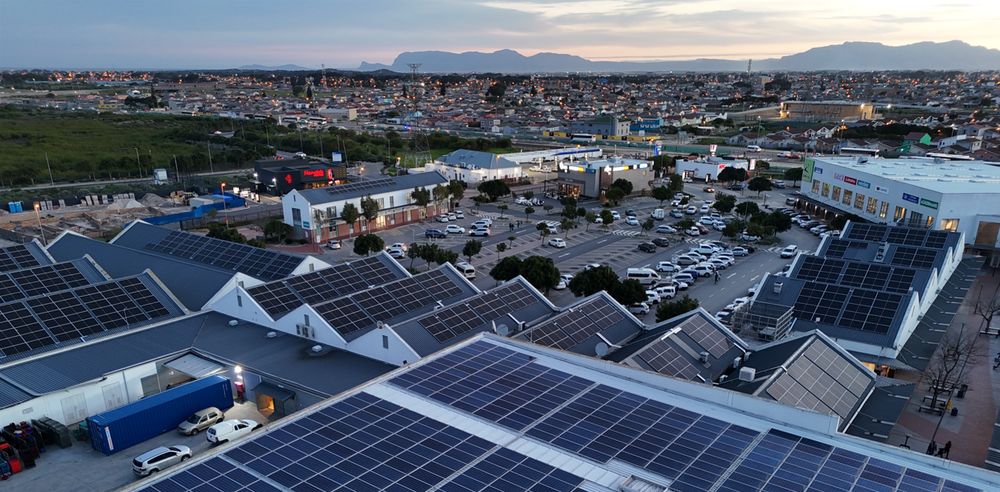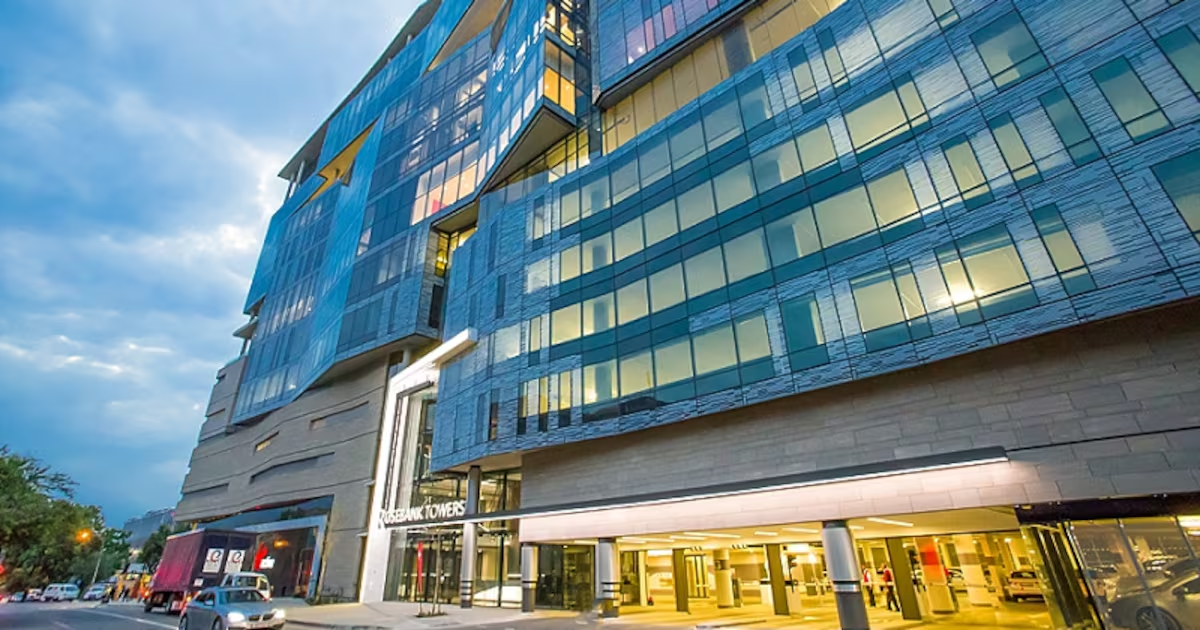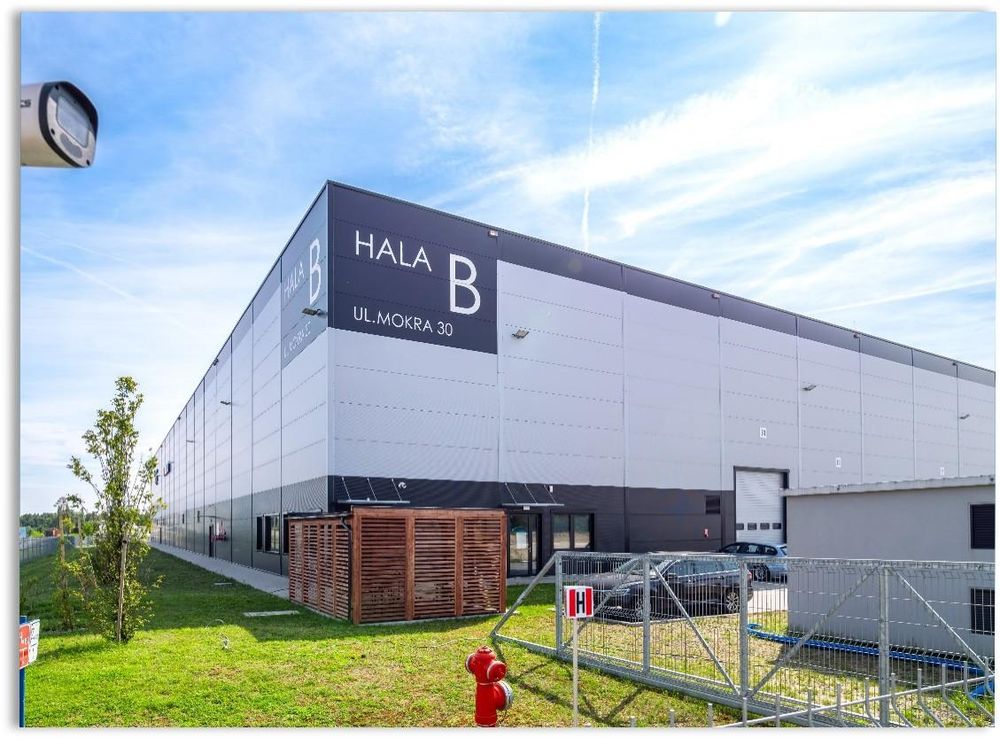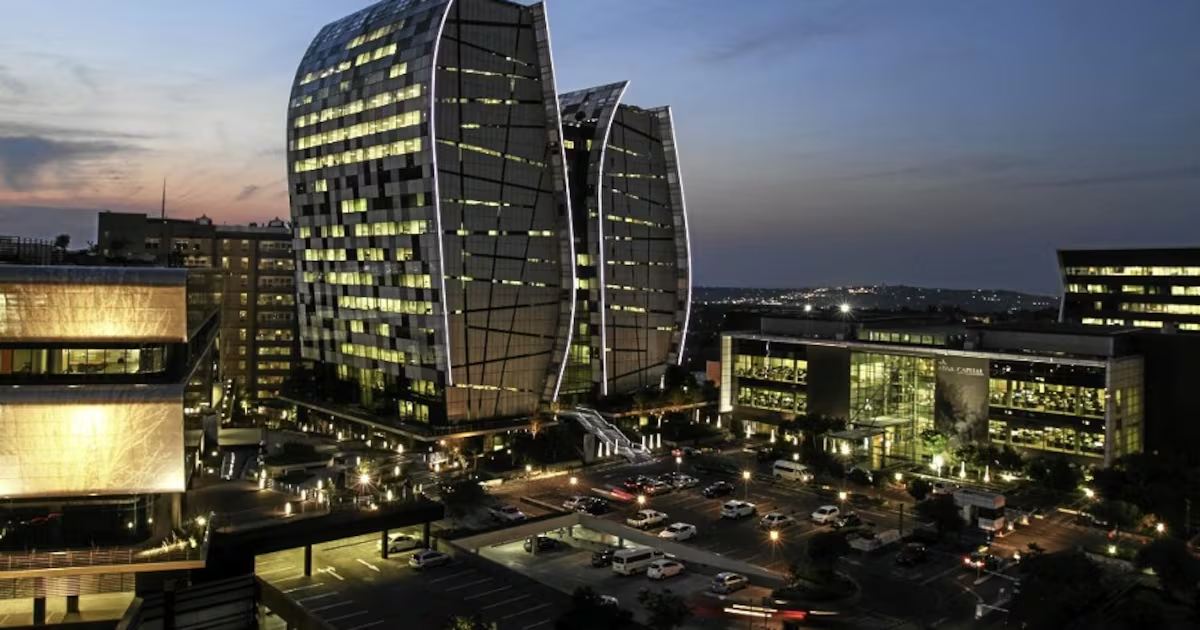
For nearly half a decade South Africa’s listed real estate sector was trapped in an exhausting narrative of self-justification. Investors, scarred by post-pandemic devaluations and a punishing global rate-tightening cycle, repeatedly asked the same weary question: has the bottom finally been reached?Today, that question is obsolete. The more compelling story on the JSE is not that property has survived its trial by fire, but how aggressively it is using its recovery to reshape South African equity capital markets.The post-pandemic era was defined by balance sheet triage. Management teams slashed debt, sold noncore assets and executed ruthless operational discipline. Survival was the primary key performance indicator. Fast forward to 2026, and the conversation has shifted dramatically. Despite persistent geopolitical friction in the Middle East and fluctuating global rate expectations, South African listed property companies are now raising and deploying capital from a position of strategic strength.Financial markets frequently generate noise. Share prices swing on macro sentiment, and short-term valuations rarely tell the full truth. However, equity capital issuance provides an unvarnished signal. Secondary market trading reflects opinion; committing fresh primary capital demonstrates genuine conviction. By that metric, the sector’s turnaround is one of the most compelling JSE stories of the year. In 2021-25, the sector raised roughly R18bn in equity directly on the JSE. Much of that early funding went towards balance sheet repair. But the nature of issuance in 2026 has fundamentally evolved. In the first seven months of this year alone, South African property counters secured R6.8bn in new equity on the JSE through transactions by Spear, Fairvest, Vukile, Fortress and Hyprop. A further R7.9bn was raised on the London Stock Exchange by dual-listed players Sirius, Supermarket Income and Hammerson, bringing the total new equity raised by property companies to R14.7bn.These transactions were all primary issuances to fund growth pipelines or specific acquisitions. They were executed at an average discount of just 3.7% to spot prices, with four issuers securing pricing at a premium to their 30-day volume-weighted average prices. Order books were multiple times oversubscribed, drawing robust support from specialist property funds, generalist domestic funds and international funds. When capital raises for entities such as Fairvest and Hyprop are upsized after launch due to overwhelming demand, it signals an unequivocal shift: institutional investors are once again eager to fund growth, not just underwrite repair. This resurgence was made possible, in part, by several years of focused asset recycling. Between 2021 and mid-2026 listed property companies realised close to R45bn from asset disposals, residential sales and portfolio exits. Growthpoint alone generated about R7.6bn between financial 2021 and 2025, while Fortress disposed of R3.2bn over two financial years. For most, what began as a defensive plan to protect liquidity evolved into a proactive strategy. Today, property executives use asset sales not as an urgent degearing mechanism but as a deliberate capital allocation tool to fund high-yielding developments (such as retail logistics) and renewable energy initiatives such as solar and backup water. The broader significance of this shift has gone largely unnoticed: real estate has quietly dominated JSE equity capital market activity. Of the nine equity transactions executed on the JSE during the first eight months of 2026, five originated from the property sector. Equity markets are inherently selective, funnelling liquidity toward sectors offering visible earnings, management credibility and clear upside. That the real estate sector accounts for the lion’s share of JSE equity raising in the year to date proves its rehabilitation is complete. The sector is no longer a passive passenger on the South African corporate landscape; it is driving primary capital formation.Of the nine equity transactions executed on the JSE during the first eight months of 2026, five originated from the property sector. Equity markets are inherently selective, funnelling liquidity toward sectors offering visible earnings, management credibility and clear upside. This is not merely a play on interest rates. While lower borrowing costs provide a welcome tailwind, this cycle is built on stronger structural foundations. Dominant retail assets are generating trading densities well above pre-pandemic levels, resulting in exceptional year-on-year distributable income growth.Balance sheets carry lower leverage, and capital allocation frameworks are significantly more sophisticated than they were a decade ago. Global uncertainty has paradoxically heightened the sector’s appeal. Amid global market volatility, institutional investors are actively seeking resilient, high-quality, income-generating assets with visible cash flow profiles. Quality is being rewarded. The market is ignoring speculative vehicles and directing capital toward platforms with scale, discipline and clear operational execution. This is clear when looking at the likes of Fortress, Vukile and Sirius.If the past five years were defined by balance sheet repair, the next five will be defined by capital deployment. The easiest gains from post-crisis valuation reratings are behind us. Future outperformance will depend entirely on management teams’ ability to allocate fresh capital accretively, execute disciplined acquisitions and maintain balance sheet integrity.For years, South African listed real estate was treated as a peripheral asset class. Today, it stands as one of the corners of the domestic market demonstrating true dynamism. The sector has moved beyond questions of survival; strategic expansion is now firmly under way.• Rowson is senior transactor: equity capital markets, and Tlhabi transactor: real estate corporate finance, at RMB.
JAMES ROWSON AND OFENTSE TLHABI | SA listed property’s return to capital market relevance
Reits such as Spear, Fairvest, Vukile, Fortress and Hyprop raise R6.8bn in new equity on the JSE
864 words~4 min read