Story audio is generated using AI
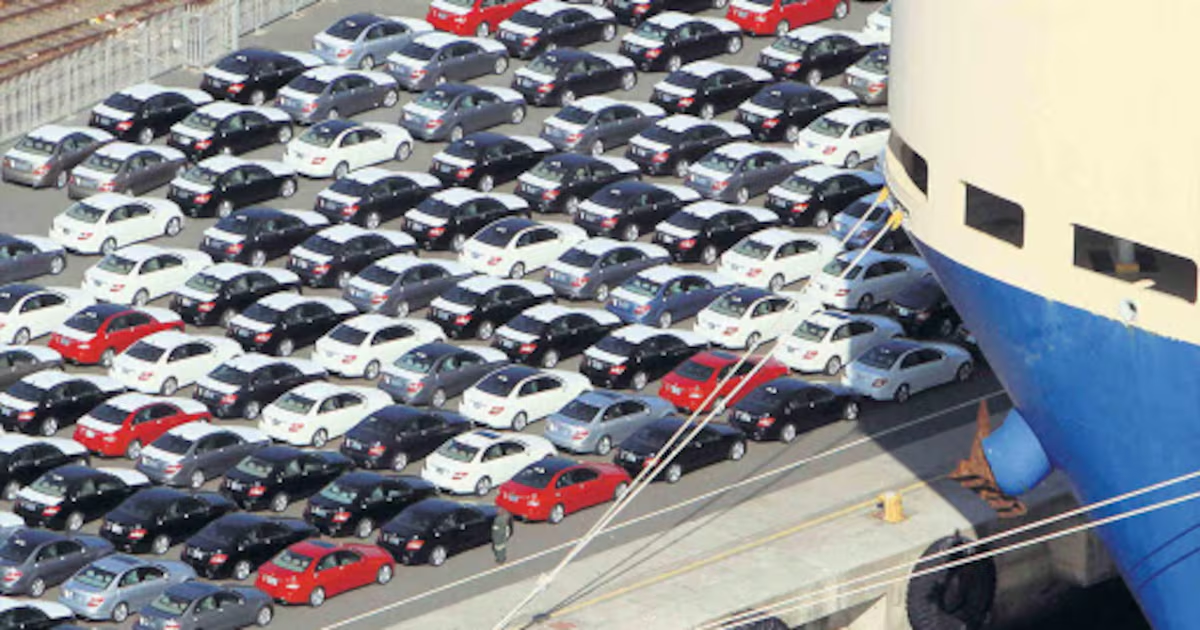
Transnet Port Terminals (TPT) is set to report record vehicle handling volumes in its annual results, driven by a robust new-vehicle market in South Africa.Cheaper and popular Asian brands have flooded the local market, resulting in more activity at the country’s ports.TPT’s 2025/26 preliminary results for the year ended March show that it handled a total of 910,424 fully built units in the period, comprising 52% exports, 42% imports and 6% transshipment.“Germany is the largest consumer of South African exports, followed by the UK and France. South Africa receives the highest number of imports from India, followed by China and Japan,” TPT CEO Jabu Mdaki told Business Day.Beyond TPT’s efforts in growing volumes and offering an efficient service, there are many activities under way in the vehicle sector — including new vehicle exports and the return of some automotive manufacturers such as Tata and Geely to the South African market.Data collated by the Bureau for Economic Research shows that South Africa’s vehicle trade deficit with its key Brics trading partners, China and India, reached R90bn last year, with the deficit with China coming in at R57.7bn.Transnet has, over the past three years, put a big push into improving its operational performance and, in turn, its financial performance following years of underperformance and underinvestment.Mdaki said TPT, the custodian of South Africa’s eight ports, was well set in its recovery, with revenue up 22%.“The container backlog that made headlines and left many South Africans wondering whether their goods would arrive on time is now at zero. Vessels are berthing on arrival across our 15 sea-cargo terminals nationwide, with no interruptions,” Mdaki said.“We have consistently invested an average of R4bn a year in new equipment, with this investment set to continue. These improvements have consequences far beyond our terminals.“South Africa has, for the first time, overtaken Spain to become the world’s largest citrus exporter. The delayed Tippler 3 project at Saldanha’s bulk terminal has finally been commissioned, helping to secure the country’s iron ore export capacity. South Africa remains the world’s largest exporter of manganese and chrome, with handling rates continuing to improve.”We have consistently invested an average of R4bn a year in new equipment, with this investment set to continue. These improvements have consequences far beyond our terminals.— Jabu Mdaki, TPT CEO The Port of Durban, the crown jewel in South Africa’s port network, has been ranked as the world’s most improved port in the latest rankings compiled by the World Bank and S&P as green shoots from Transnet’s turnaround emerge.Durban’s sister ports, Ngqura and Port Elizabeth, made it to the top 10 of the most improved ports globally. But Durban was the star, with its performance surging by 479 points in 2025 and improving South Africa’s competitiveness.However, the Port of Cape Town ranked as the world’s worst-performing.Transnet said in May its ports handled more than 300-million tonnes in the 2025/26 financial year, its best performance in 15 years and an indication that the freight and rail entity’s recovery efforts are bearing fruit.Transnet reported a 9% increase in vessel traffic.Cargo volume throughput at the eight commercial seaports, which are indispensable to South Africa’s trade with the rest of the world, increased 4.2%, the strongest growth since the 2011/12 financial year.Mdaki said TPT was on a journey of reinventing itself for growth.“Every day, the scale of our responsibility is enormous. Annually, we handle an average of 2,400 cargo ships, 55,000 trucks and 430 cargo trains carrying commodities that ultimately reach shops, businesses and homes across South Africa, as well as markets in more than 160 countries,” he said.“This is why businesses that underpin the functioning of an economy cannot simply be allowed to fail. The recovery requires leadership, investment, accountability, partnerships, and, above all, people who understand the importance of the work they do.”Business Day