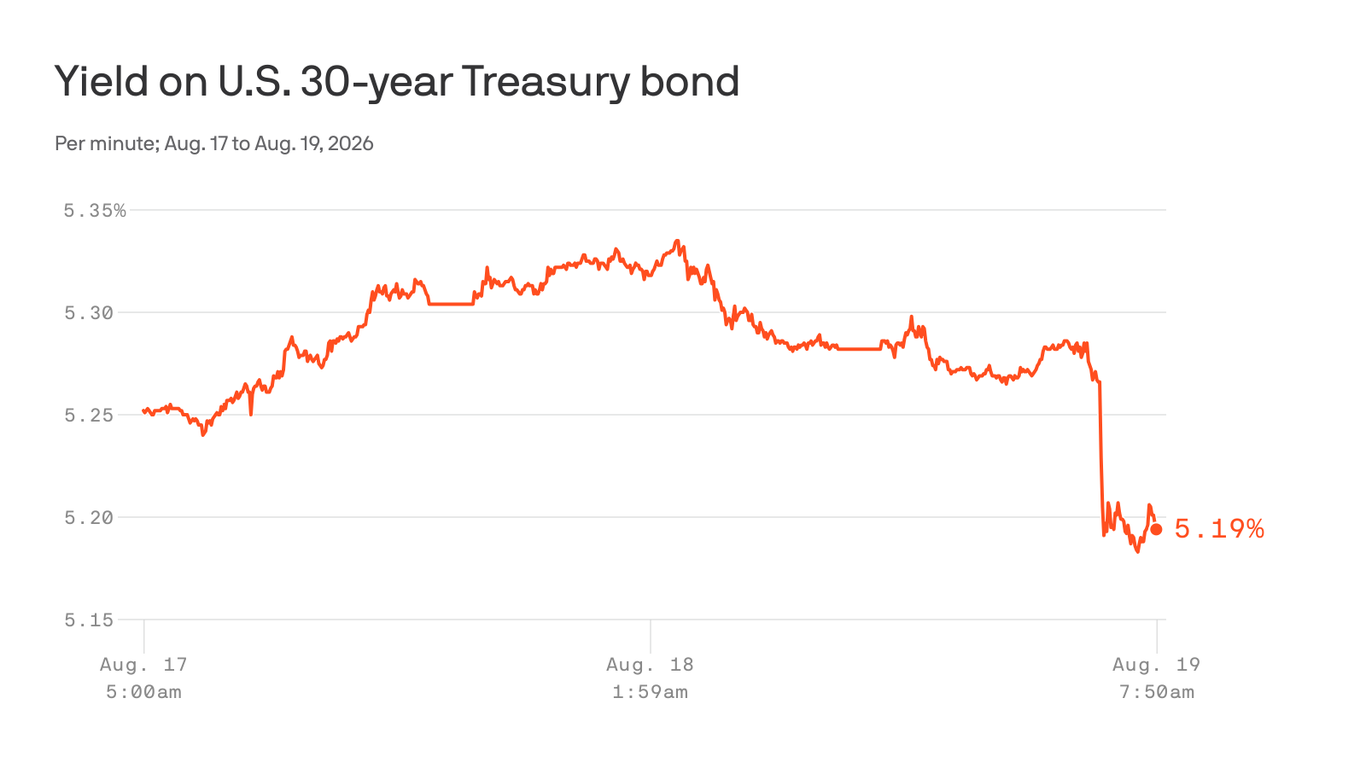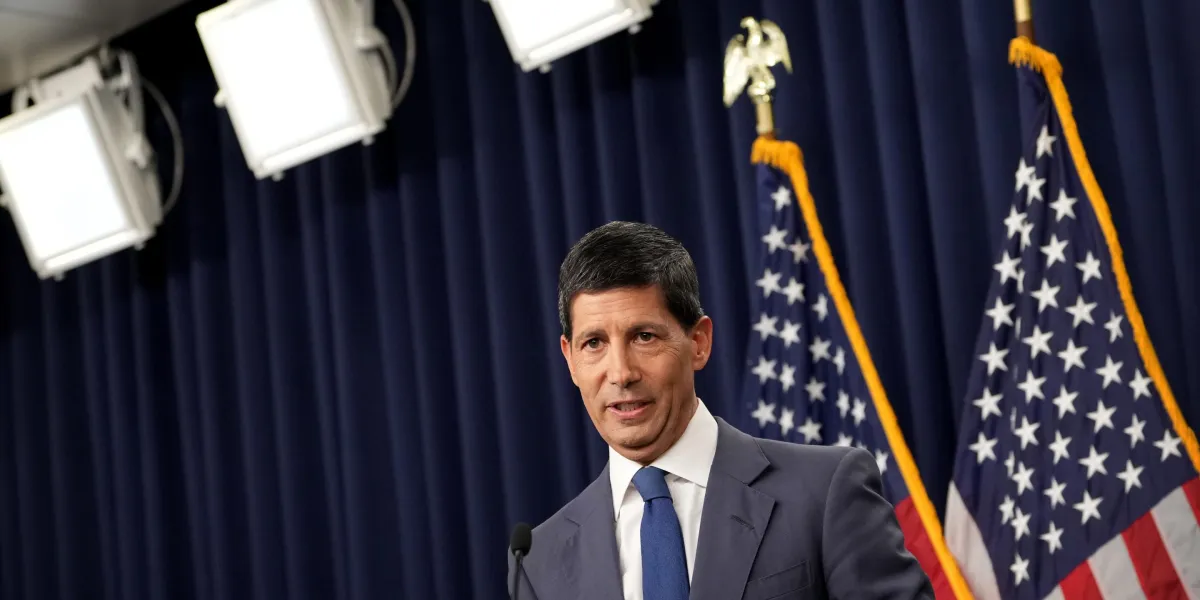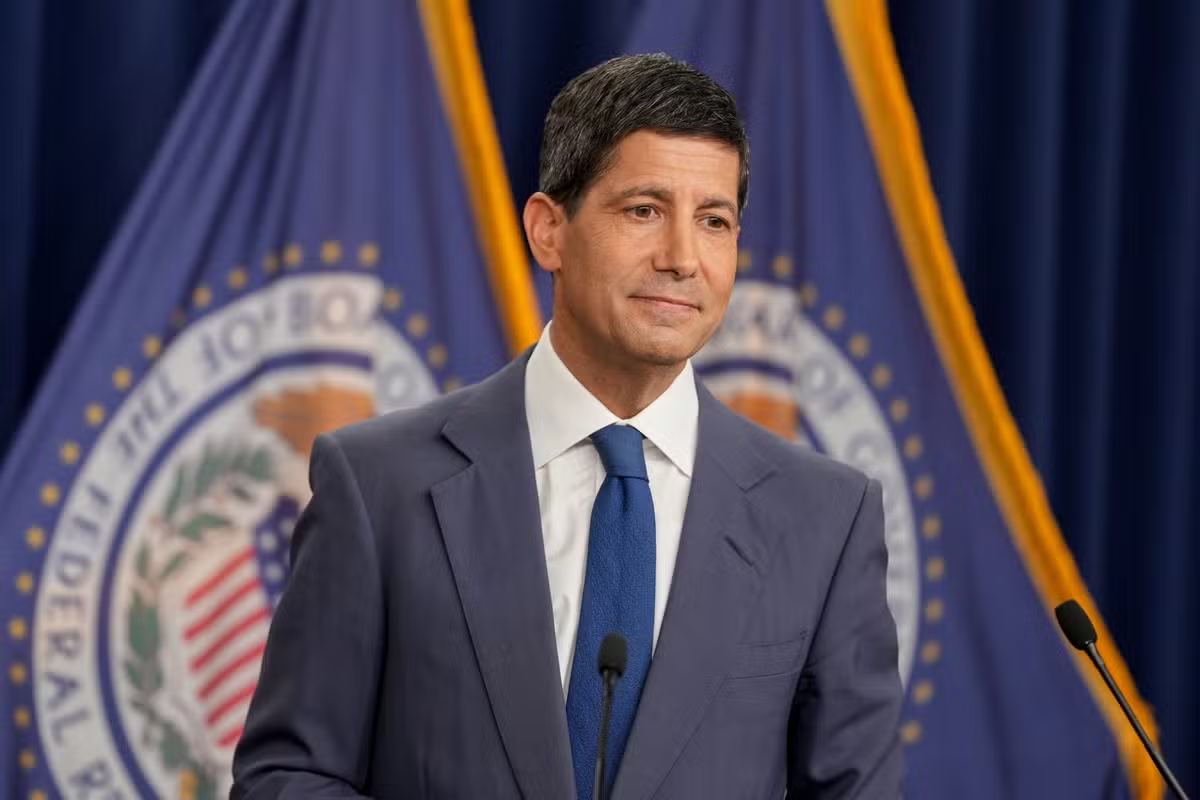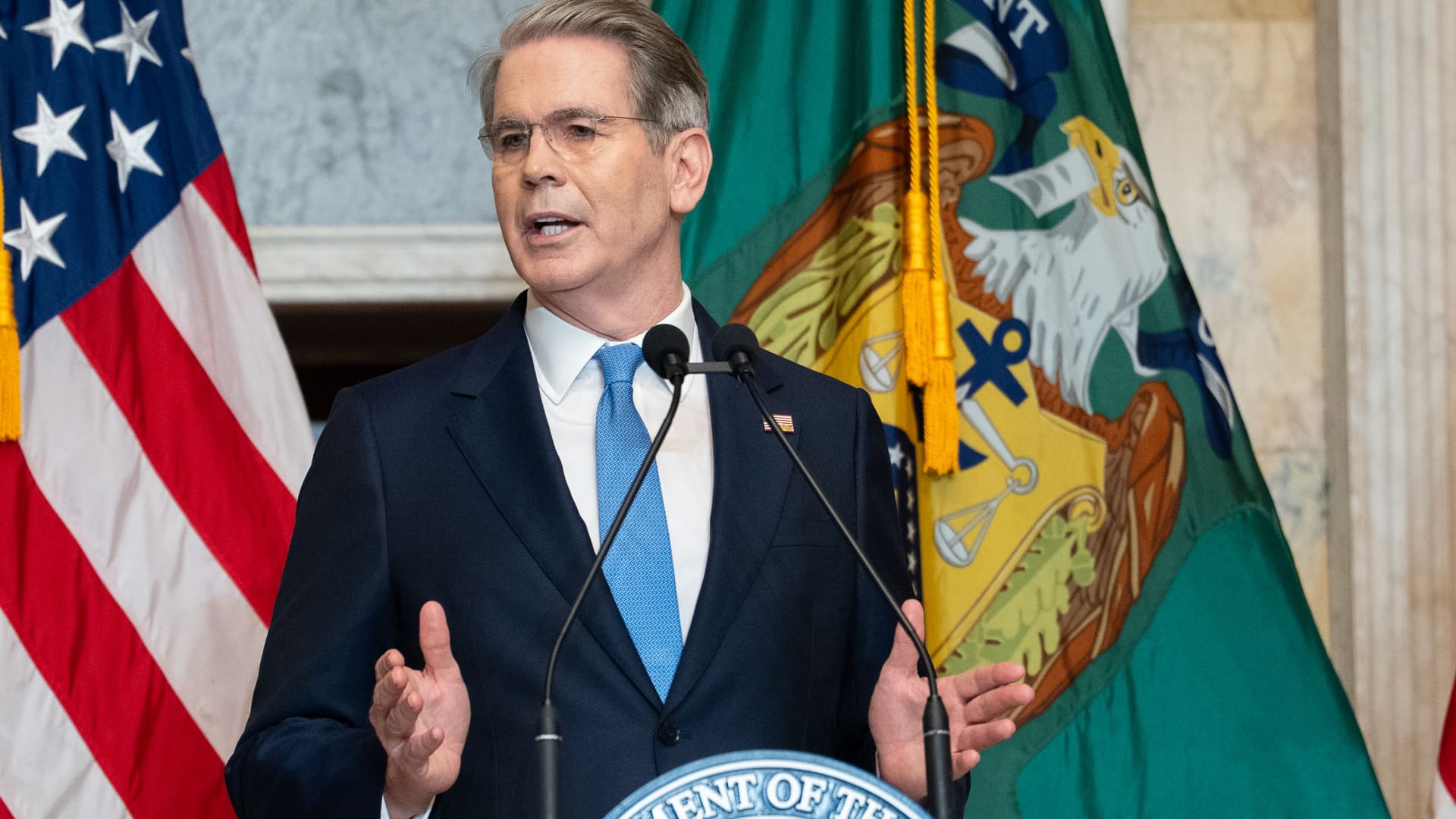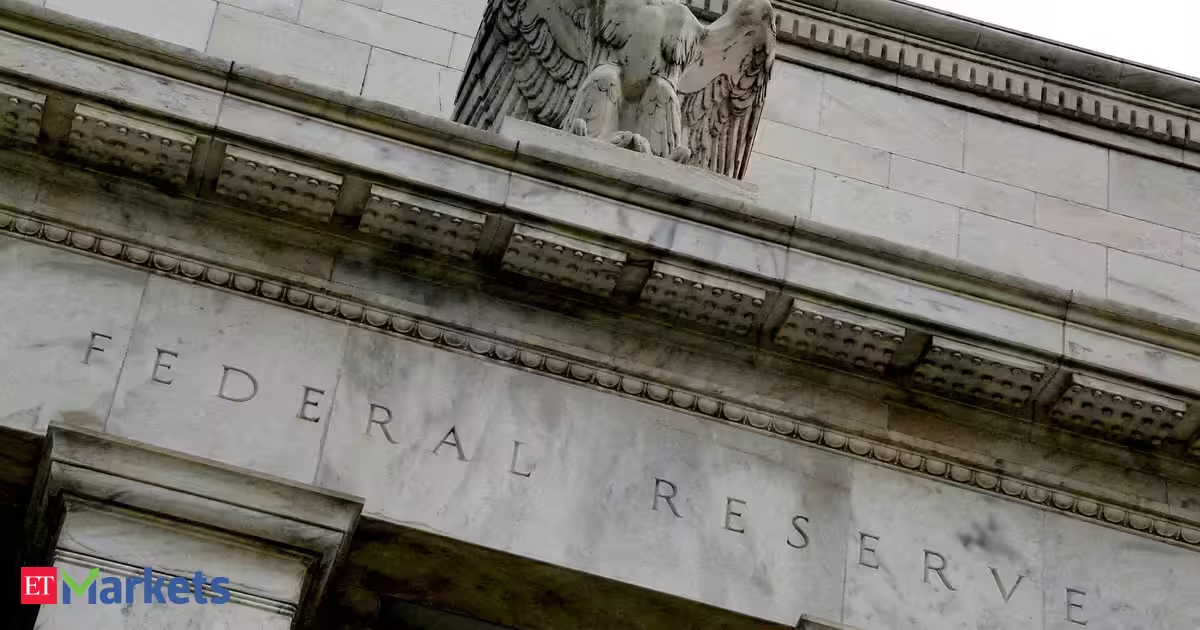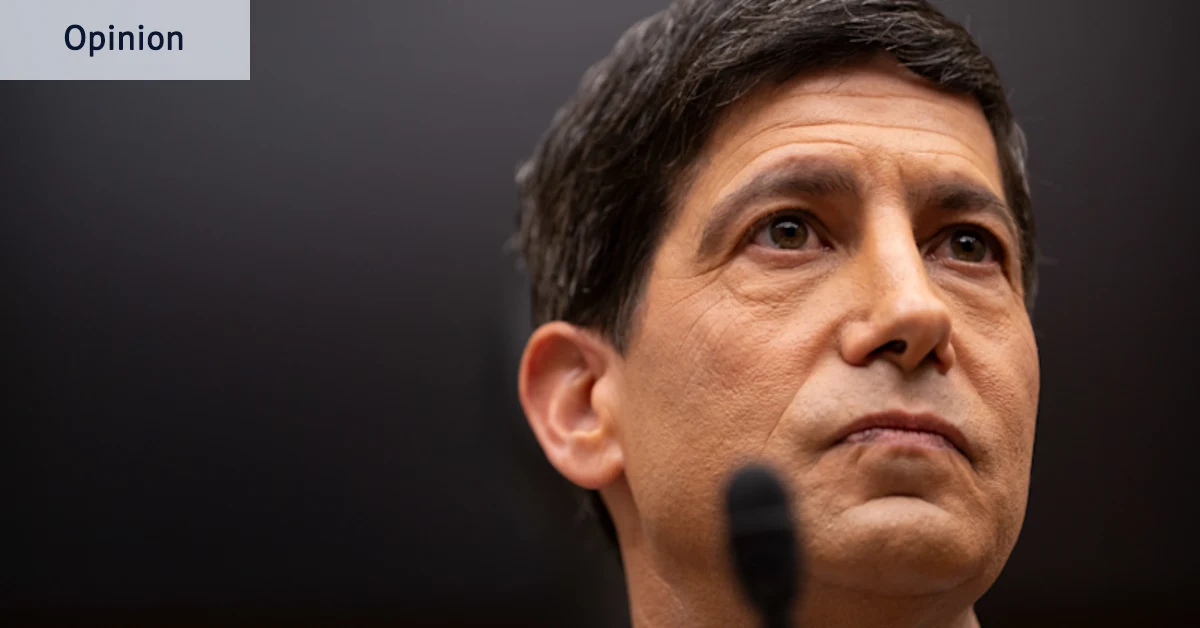
WASHINGTON - Two US Federal Reserve officials expressed caution on Aug 20 when asked how the Treasury Department’s debt management changes could affect the US central bank’s monetary policy choices.“We focus very simply on the labour market and on inflation, independently set monetary policy, independent of debt management or fiscal policy,” St Louis Fed president Alberto Musalem told CNBC when asked about Treasury’s decision on Aug 19 to shift to a more aggressive pace of buybacks of longer-term government debt.Long-term Treasury yields recently spiked on concerns about the US government’s rising debt, inflation that remains stubbornly above the Fed’s 2 per cent target and the implications for investment flows.The impact of the Treasury’s intervention appeared short-lived, as yields rose again on Aug 20 after dropping sharply on Aug 19.Speaking separately to CNBC on Aug 20, Treasury Secretary Scott Bessent said part of the push for a bigger buyback is about signalling that “yields don’t reflect the underlying fundamentals” of the economy.The intervention creates potential challenges for the Fed because of the possible confusion in financial markets as to which institution is the main driver of financial conditions.While easing financial conditions, all else being equal, the Treasury’s move could lead to friction with a Fed that may yet raise rates to help cool inflation.Bessent on Aug 20 downplayed any conflict and said any Fed rate decision is completely separate from what the Treasury is doing.And in terms of anything that might impact the US central bank’s balance sheet, the two institutions “would work together if there was any change in the (Fed) balance sheet, and we... would adjust to any kind of run-off (of bonds) that they’re doing,” the Treasury Secretary said.If financial conditions are now supportive of economic growth and not working to lower price pressures, Treasury’s intervention, to the extent that it engineers a sustained drop in yields, would move markets even further from where the Fed would like them to be.And that scenario would, in turn, bolster the case for raising the central bank’s benchmark interest rate.Musalem, who thinks the Fed should have raised rates rather than kept them steady in the 3.50 per cent to 3.75 per cent range at its July 28-29 meeting, suggested he was leaning towards a hike at the Sept 15-16 meeting.He noted that “financial conditions are pretty accommodative here.”‘These are early days’Speaking to Bloomberg Television, San Francisco Fed President Mary Daly said current long-term bond yields do not “give us a lot of signal about what we should do in the policy adjustments or the policy calibration for the Fed”.Daly said she thinks Fed policy is a “good place”, while adding that she is watching longer-dated bonds to see what they imply for the outlook.She noted that she strongly supported the Fed’s decision to leave rates unchanged in July.Asked whether a shift in Treasury debt issuance to more short-term debt could create issues for how the Fed conducts monetary policy, she said: “These are early days, and I wouldn’t want to be pre-emptive in sort of discussing those types of things until we’ve had a chance to think through those issues.”More issuance at the front end could put upward pressure on market rates, creating technical challenges for how the central bank manages interest rate policy.The Fed’s rate-control system depends on influencing money market conditions to manage interest rates by way of a series of tools and liquidity facilities.Daly added that the key issue for the Fed is less about the “mechanics” of how it achieves its inflation and employment mandates than its commitment to do so and ability to achieve them. Reuters
US Fed officials tread carefully after Treasury’s bond market intervention
The intervention creates possible confusion as to which institution is the main driver of financial conditions. Read more at straitstimes.com. Read more at straitstimes.com.
600 words~3 min read