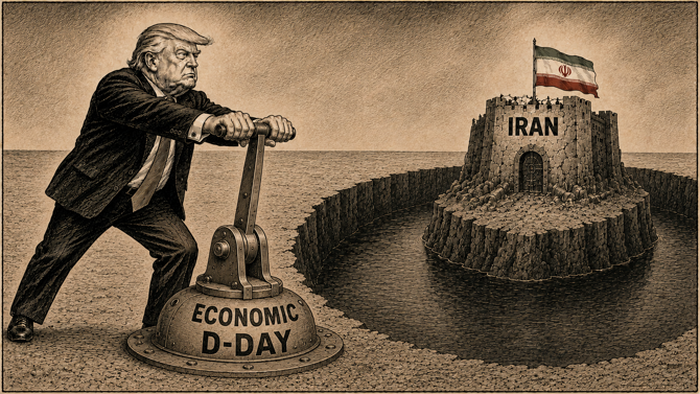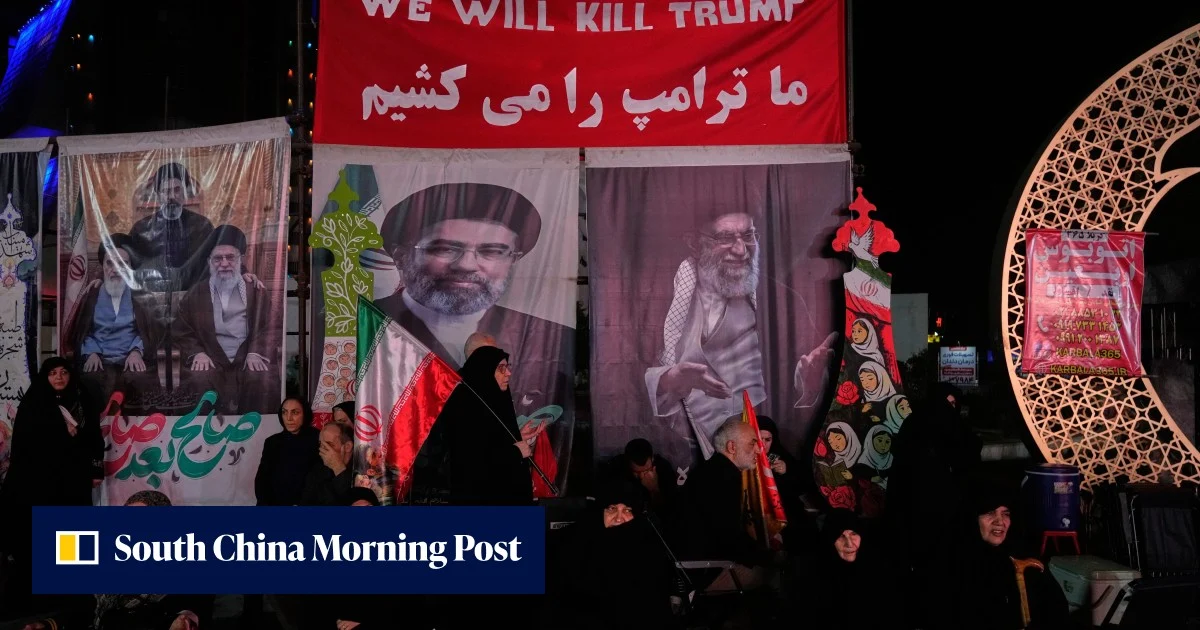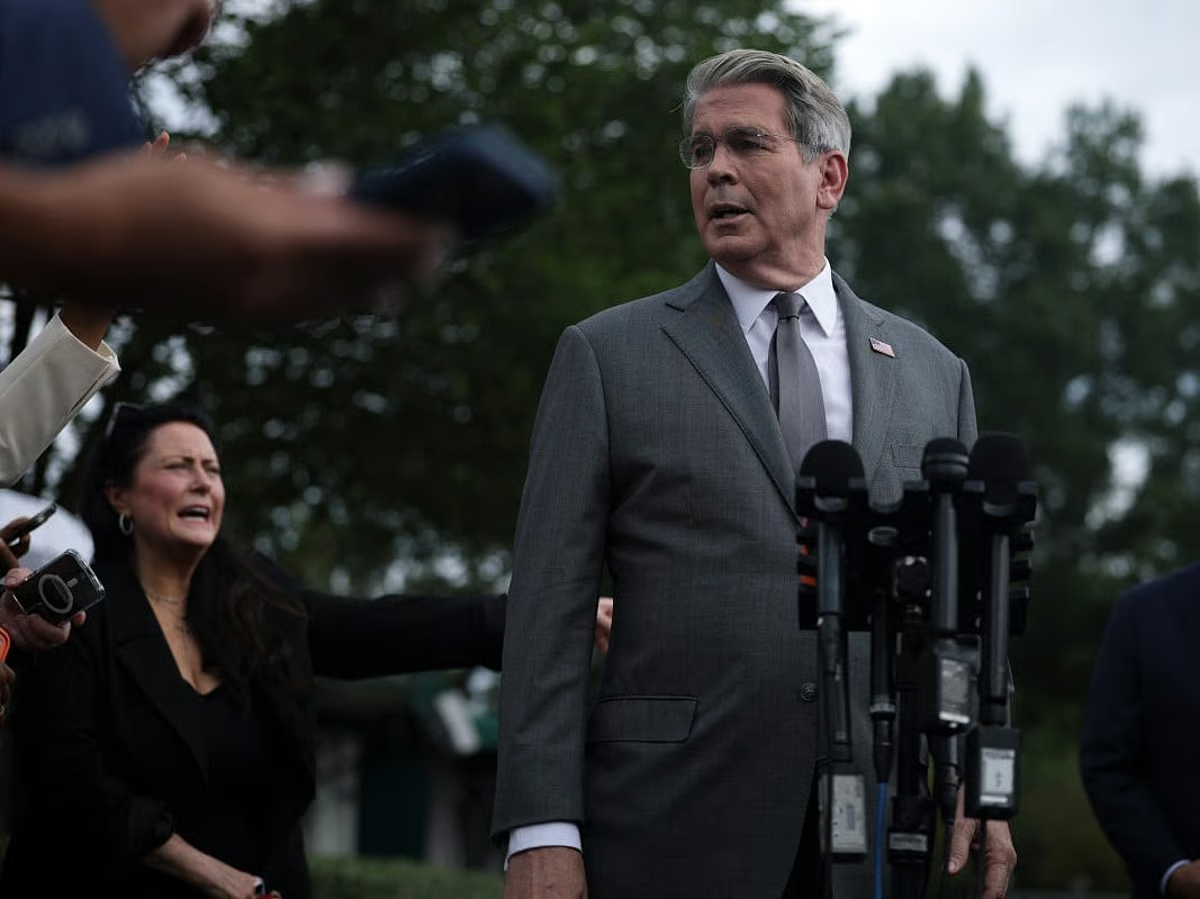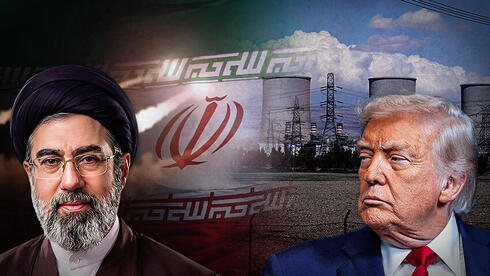
Trump declares ‘Economic D-Day’ on Iran as Treasury chief vows tougher measures Monday; mediators say Tehran may endure, while experts warn repression could keep public pain from forcing concessionsU.S. Treasury Secretary Scott Bessent said Thursday that the Trump administration’s new economic campaign against Iran is ultimately intended to bring down the Islamic Republic, as Washington prepares what it says will be an unprecedented new round of sanctions alongside its naval blockade.Bessent said the measures would be detailed at a news conference Monday and described the strategy as a combination of the blockade and what he called the toughest sanctions ever imposed on a country. “It is going to work in Iran and we are going to collapse this regime,” Bessent told CNBC.'We are going to collapse this regime' (Video: CNBC)The declaration is significant because President Donald Trump himself has not explicitly said regime collapse is the objective, leaving unclear whether Bessent’s unusually blunt wording represents formal administration policy or his own description of the expected outcome.Trump on Wednesday announced what he called an “ECONOMIC D-DAY,” promising economic warfare and isolation against Iran on an unprecedented scale and threatening consequences for countries, companies and institutions that continue providing Tehran with an economic lifeline.The new campaign is expected to target not only Iran but third countries that continue trading with it, including through oil purchases, financial transfers and sanctions-evasion networks.Bessent said it was time for U.S. allies and other countries to decide whether they would cooperate with Washington’s campaign. He indicated that the Treasury Department and wider U.S. government would use their enforcement powers against entities that continue enabling Iranian trade.The strategy effectively puts governments and businesses around the world on notice that maintaining commercial links with Tehran could expose them to U.S. economic penalties.GalleryUS Treasury Secretary Scott Bessent (Photo: AP Photo/Jacquelyn Martin)One of the biggest unresolved questions is China. Beijing remains Iran’s most important oil customer, purchasing more than 80% of Iran’s seaborne crude in 2025, according to Kpler data cited by Reuters. But when Bessent was asked whether Washington would also punish China for continuing to do business with Tehran, he declined to give a direct answer, saying some conversations were better conducted privately.He nevertheless pointed to Beijing’s dependence on Persian Gulf energy supplies, arguing that China has a strong interest in helping restore normal traffic through the Strait of Hormuz. “Keep in mind that the Chinese get 50% of their energy from inside the Gulf,” Bessent said, adding that cooperation with Washington would therefore serve Beijing’s own interests.The dilemma is considerable. Punishing Chinese trade with Iran could intensify pressure on Tehran, but it could also reopen economic confrontation between Washington and Beijing after Trump reached agreements that had eased previous trade tensions.The economic campaign comes as China maintains close strategic ties with Iran, with reports in recent weeks also raising questions over possible military assistance to Tehran.Despite Washington’s rhetoric, many analysts doubt that even a combination of a naval blockade and severe secondary sanctions can quickly force Iran’s economy, or its political system, to collapse.Iran has endured extensive U.S. sanctions for decades and entered the latest conflict already suffering from deep structural economic problems. The International Monetary Fund expects Iran’s economy to contract by 5.4% this year. The Wall Street Journal reported that annual inflation is now running above 80%, while shortages and rapidly rising prices are eroding living standards.Iran’s oil revenues have also been hit particularly hard. According to Capital Economics data cited by the Journal, Iranian oil exports fell from about $4.5 billion in June to close to zero in July after the U.S. reimposed its blockade. The pressure is severe. But economic pain does not necessarily translate into political capitulation. Instead, Iran is increasingly reorganizing its economy around endurance rather than recovery.(Photo: shutterstock, AP/Alex Brandon, AP/Francisco Seco)According to the Wall Street Journal report, officials in mediating countries also “warned their American counterparts that Iran has lived under sanctions for years, and that betting on Tehran compromising because of economic pressure is unlikely to produce results.” Instead, they said Iran is expected to escalate its attacks in order to raise the cost for Washington and its allies. Iranian officials have already warned this week that if the blockade is not lifted within “weeks,” Tehran will trigger renewed regional escalation. And if Iran can survive longer than Washington expects, the Journal wrote, it will have even less incentive to give up the leverage it derives from threatening the movement of ships and tankers through the Strait of Hormuz, “prolonging the deadlock and the risk of renewed fighting.”Hadi Kahalzadeh, a research fellow at the U.S.-based Quincy Institute and a former official in Iran’s Social Security Organization, told the newspaper: “This pressure will gradually move Iran from a resilient economy that absorbs shocks to a survival economy that continues to function but steadily loses its ability to recover.” At the same time, he said, “repression and the structure of the state make it difficult for that pain to translate into pressure strong enough to change national security decisions.”Tehran's street (Photo: Majid Asgaripour/WANA (West Asia News Agency) via REUTERS)The Iranian regime, meanwhile, continues to issue defiant and combative messages. The Foreign Ministry in Tehran said: “The U.S. economic sanctions against Iran, which have targeted the basic human rights of every citizen, are an example of economic terrorism and a crime against humanity.” It added: “Sanctions and economic pressure are the other side of the coin of war and military aggression. While condemning the U.S. action, the Foreign Ministry emphasizes that Iran is steadfast and determined when it comes to defending its security and national interests and confronting military, economic, political and psychological attacks and pressures. Iran will use all means and capabilities to repel the Zionist-American enemy and defend its national interests.”Iranian Deputy Foreign Minister Kazem Gharibabadi said: “They claim Iran is facing collapse, and yet they are begging for help from all their allies. The problem lies in miscalculations. Military warfare failed. Now they have given the next failure the name economic warfare.”Iranian Deputy Parliament Speaker Hamid-Reza Haji Babaei added: “State institutions are working around the clock to plan and manage an all-out war on two fronts: economic and cultural.”Iranian Foreign Minister Abbas Araghchi also wrote on X: “The so-called ‘Economic D-Day’ is a distraction from America’s own crisis: unprecedented debt and soaring interest costs. Doubling down on failed policies will only bring another defeat, and hostility from Iranians. U.S. economic terrorism threatens the global economy and sovereignty around the world.”Despite the Iranian responses and the effort to project “resilience,” the growing economic pressure on Iran is clearly taking a toll. President Masoud Pezeshkian has repeatedly warned about the consequences, although it is unclear how much real power he holds in the current regime, where hard-line Revolutionary Guard generals wield significantly more influence than before.Pezeshkian has repeatedly said that Iran must end the current situation of “neither war nor peace.” Iranian media reported in late July that he met Supreme Leader Mojtaba Khamenei and discussed citizens’ livelihoods, foreign currency management and the energy sector.But he, too, is of course not speaking about the possibility of surrender. His deputy, Mohammad Reza Aref, recently said: “The enemy is trying to compensate for its military defeat through economic pressure. Just as we defeated the enemy in the last two wars through cohesion and national unity, we will be able to overcome it in the economic war.”
Iran shifts to ‘survival economy’ as US vows to ‘collapse the regime’
Trump declares ‘Economic D-Day’ on Iran as Treasury chief vows tougher measures Monday; mediators say Tehran may endure, while experts warn repression could keep public pain from forcing concessions
1,233 words~6 min read