In the current epoch of Artificial Intelligence, the industry remains singularly preoccupied with the "Model" — obsessing over the raw parameter scales of the latest LLMs or the specific benchmark performance of a new transformer variant. However, at Informatiqs, we shift the lens. We recognize that sustainable enterprise value is rarely derived from the model in isolation; instead, it emerges from the high-stakes architectural decisions and systemic orchestration that define its environment.
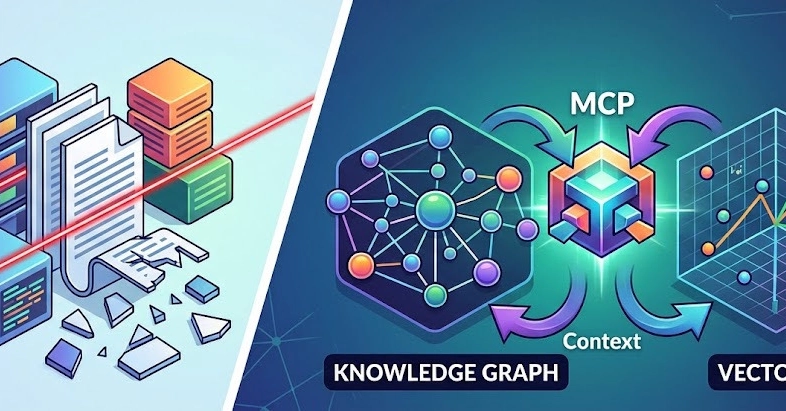
As we launch our inaugural edition, we dissect a critical technological nexus: the convergence of Graph Neural Networks (GNNs), Generative AI, and the industrial-grade infrastructure of Google Cloud Platform (GCP). We argue that for complex enterprise datasets, the transition from flat vector embeddings in latent space toward non-Euclidean, graph-based relational intelligence is the primary differentiator for the next generation of resilient AI applications.
1. The Scientific Foundation: Exploiting Relational Inductive Bias
Traditional Deep Learning architectures, such as Convolutional Neural Networks (CNNs) for images or Transformers for text, primarily operate on data structured as sequences (Euclidean space). While exceptionally powerful, these structures often fail to capture the topological nuances of real-world systems like supply chains, molecular structures, or fraudulent transaction webs where data is inherently non-Euclidean.