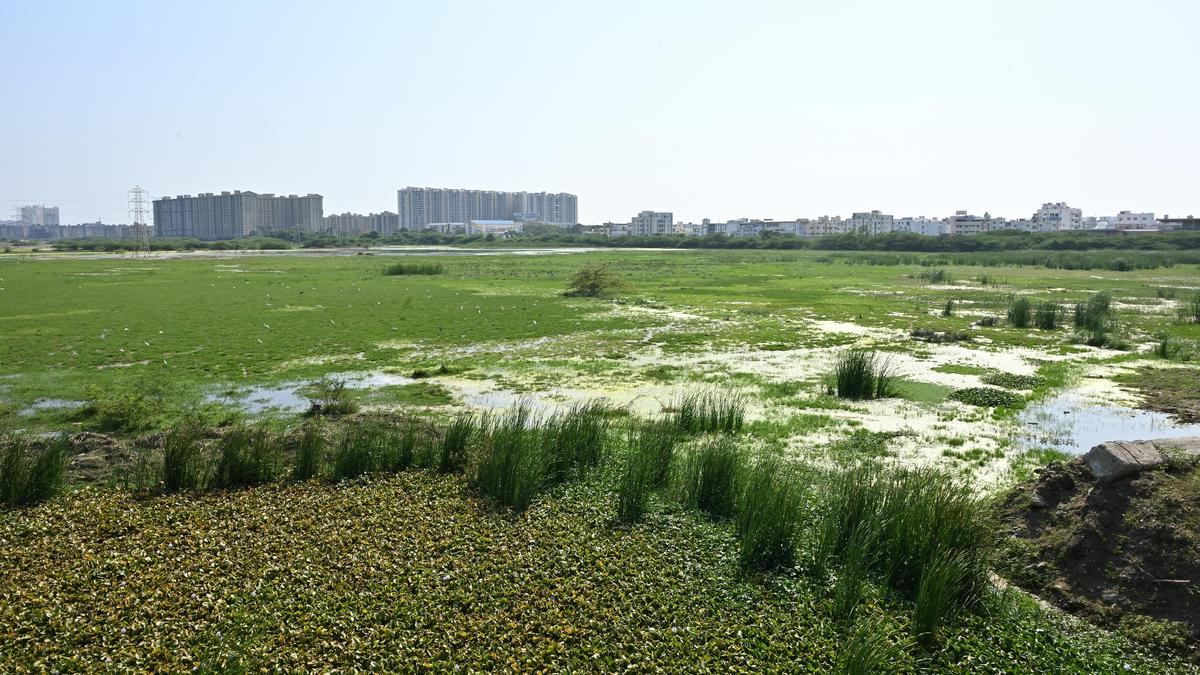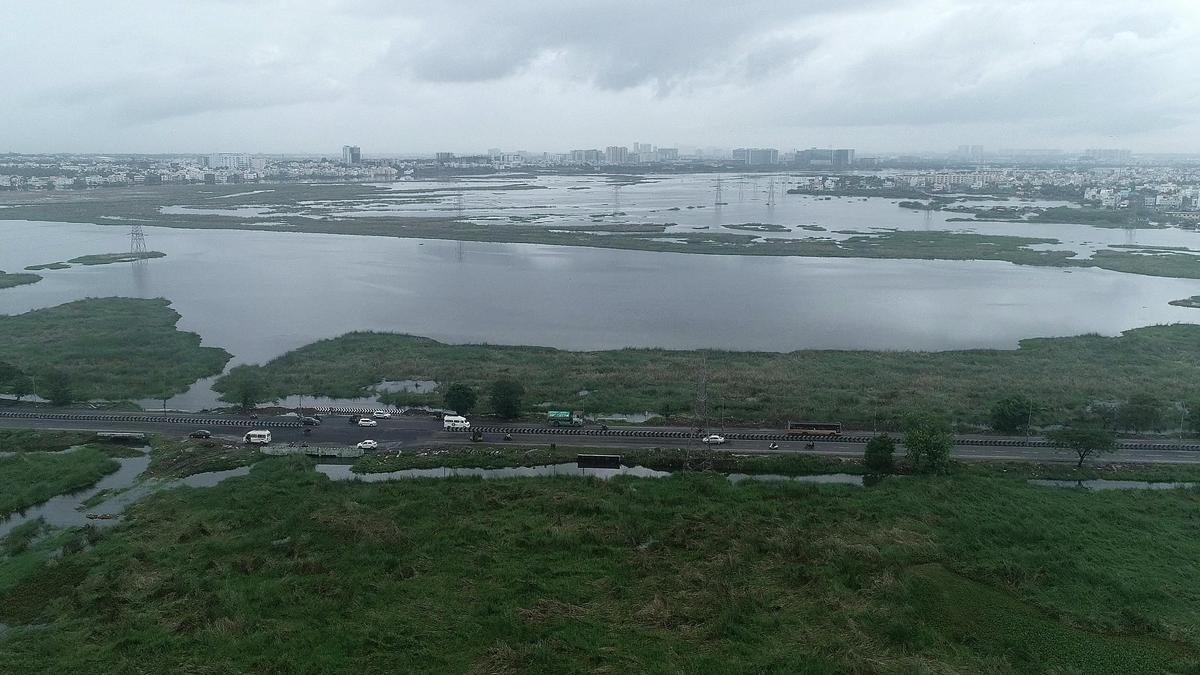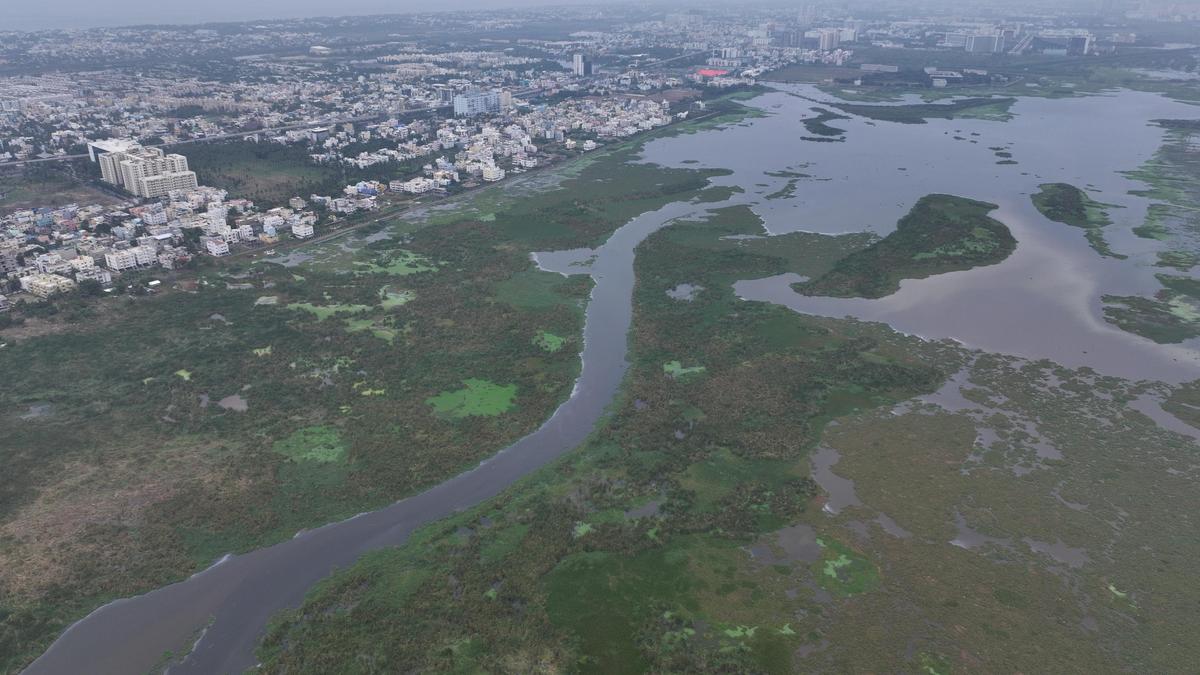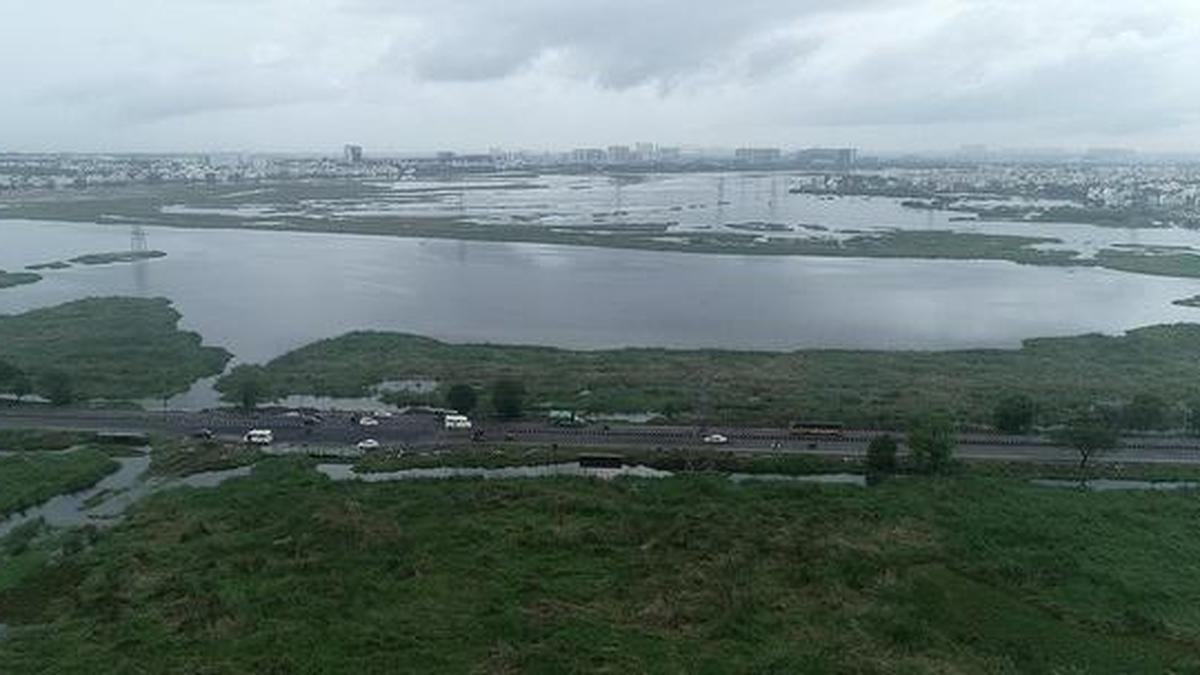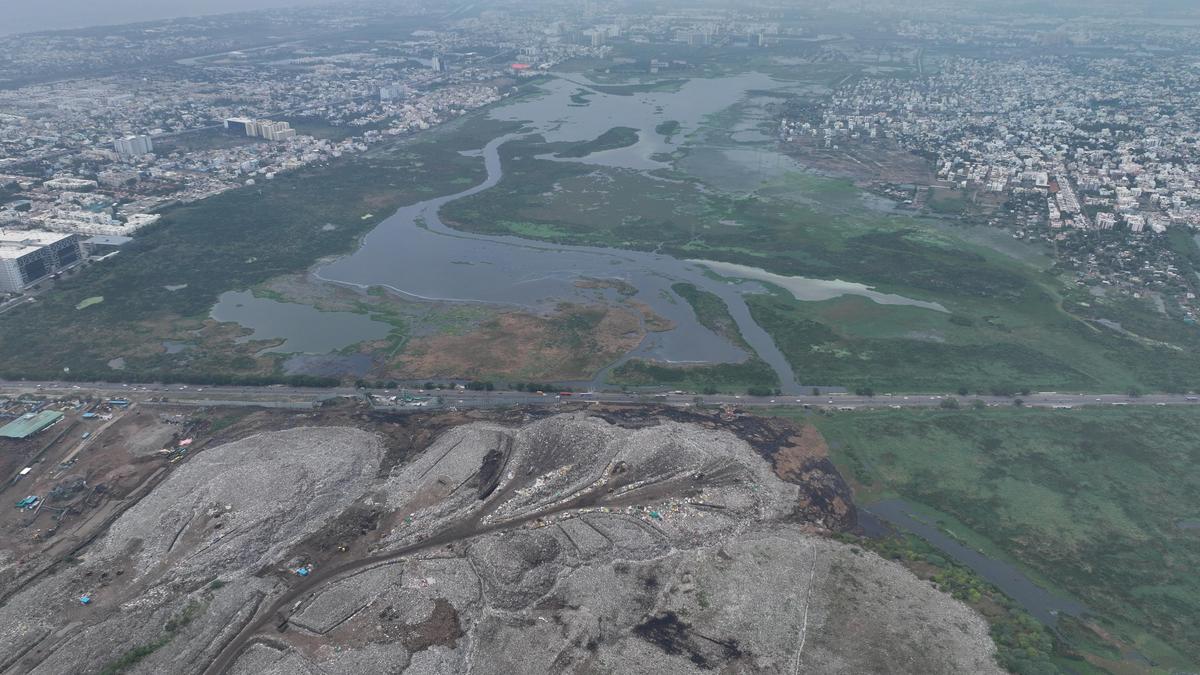
The NCSCM’s report says the variation in the proposed ZoI shows the heterogeneous character of the wetland-urban interface and supports a site-specific approach.
| Photo Credit: JOTHI RAMALINGAM B
In what could give hope to thousands of property owners around the 1,247.54-hectare Pallikaranai marshland in Chennai, the Tamil Nadu State Wetlands Authority (TNSWA) on Thursday (August 20, 2026) told the Madras High Court that construction of buildings can be regulated and need not be necessarily banned in the ‘zone of influence’ (ZoI) encircling the wetland.First Division Bench of Chief Justice Sushrut Arvind Dharmadhikari and Justice G. Arul Murugan was also told that the National Centre for Sustainable Coastal Management (NCSCM) had come up with a plan for delineation of an interim ZoI until the final ZoI could be determined after conducting thorough scientific studies regarding site specific hydrological and land use characteristics.As per the NCSCM’s report, the width of the interim ZoI could be fixed at zero metres from the existing Pallikaranai wetland boundary for a distance of 30.14 km out of the total boundary length of 77.85 km. The width could be fixed between zero and 20 metres for a length of 16.16 km, 20 to 50 metres for a length of 3.20 km, 50 to 100 metres for a length of 3.80 km and above 100 metres for a length of 24.55 km.“Thus, approximately 46.30 km (59.5%) of the analysed boundary has a proposed Interim ZoI width within 0-20 m, whereas approximately 24.55 km (31.5%) has a proposed Interim ZoI width exceeding 100 m. This substantial variation quantitatively demonstrates the heterogeneous character of the wetland-urban interface and supports a variable-width, site-specific approach rather than a uniform-distance ZoI,” the report read.It was filed in response to a batch of writ petitions filed by the Confederation of Real Estate Developers Association of India (CREDAI)- Chennai chapter and many others challenging a blanket ban imposed by the National Green Tribunal (NGT) on construction of new buildings for a uniform distance of 1 km around the existing boundaries of the Pallikaranai marshland.