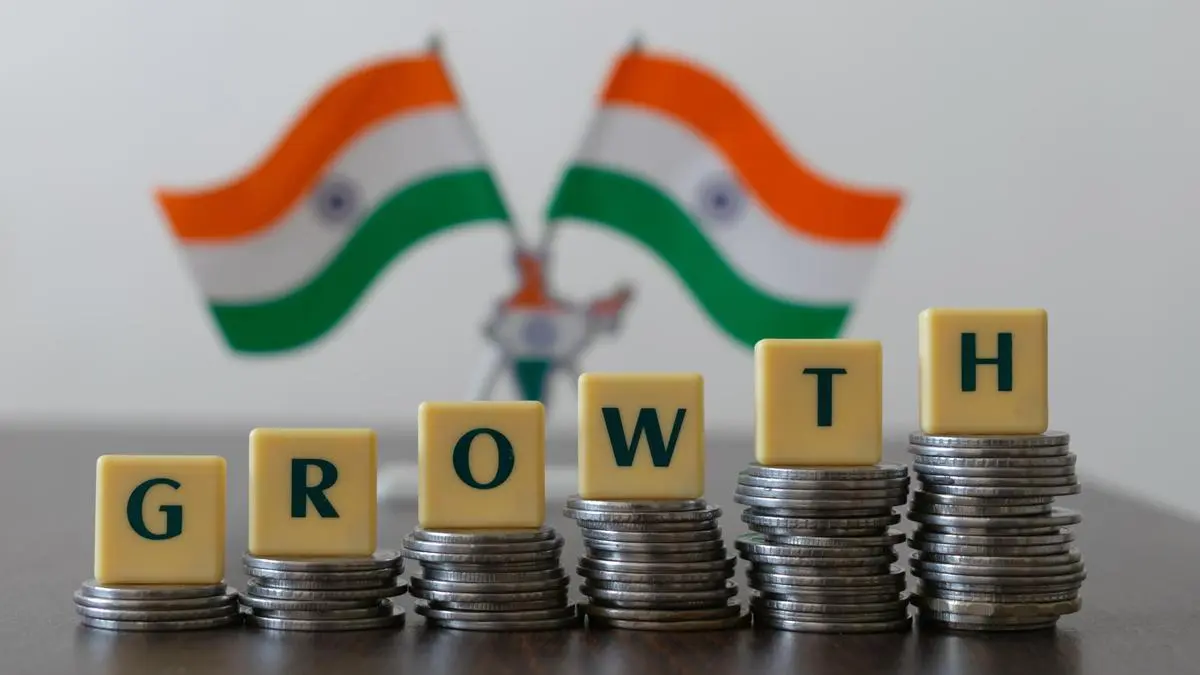
India stands at a distinctive moment in its economic trajectory, with the scale, capabilities and global relevance to become one of the most consequential growth markets of the coming decade. With India projected to contribute roughly 20% of the world's economic growth over the next 15 years, the central question today for businesses is how to leverage the compounding advantages that India offers.The India advantage today rests on seven structural strengths: a stable macroeconomic and political environment; a reform-oriented policy framework; a large and still underpenetrated consumer market; a deep and growing talent pool; a technology ecosystem competing at the frontier; a manufacturing base gaining relevance in global supply chains; and a widening trade architecture that is integrating India more deeply with global markets.Stable base with a neutral global positionIndia's macroeconomic and political stability provides the predictability global investors increasingly seek. Fifteen years of stable government, sustained GDP growth, and policy continuity have strengthened confidence in India's long-term trajectory, with expectations of continued stability in the years ahead.Also Read: Noel Tata, Darius Khambata, Deepak Parekh meet to discuss Tata Sons succession after N Chandrasekaran's exitIndia also occupies a distinctive and balanced strategic position globally, underpinned by strong relationships with major economies and regions. For multinational companies, this matters strategically: it creates greater supply-chain optionality, expands technology and investment partnerships, and reduces dependence on any single geography. This combination of domestic continuity and international relevance is increasingly valuable to long-horizon capital.Reform cycle that further continuesA decade of sustained reforms, including the GST, the Insolvency and Bankruptcy Code, and digital public infrastructure such as UPI and Aadhaar, has strengthened the foundations for formalisation, investment, and growth, with key policy priorities enduring across multiple election cycles.That reform agenda is now being taken to the next frontier where it seeks to simplify how businesses deal with regulation itself, from cutting the time and paperwork behind routine approvals, to removing ambiguity in how rules are applied, and giving businesses more direct and predictable engagement with regulators.Market still underpenetratedThe scale of domestic demand alone sets India apart. The economy is already worth $4 trillion, with private consumption at ~$2.1 trillion in FY25-26, roughly 52% of GDP. And there's room to grow. Consumption per capita is just $6,740 on a purchasing-power basis, less than half the global average.Also Read: ET Family Business Dialogues: Freedom, family roots & patient capital are shaping India’s next-gen entrepreneursAs more households move up the income pyramid, affordability is increasing and opening new categories of consumption. This growing consumption base provides companies with a stable domestic market against which to localize and build scale.Manpower that is large, young, and skilledTo a significant degree, India's growth rests on its most enduring asset: its people. India employed 562 million people in Q2 FY25-26, with the working-age population set to cross 980 million within a decade. Importantly, this workforce is young, with 65% under the age of 35, and continuously skilling. This is leading to higher employability, with over 56% of assessed candidates now meeting the India Skills Report's benchmark. This is supported by expanding vocational training in emerging sectors, with over 430,000 young people trained in semiconductors, AI, cybersecurity, and clean mobility.Technology ecosystem competing at the frontierThis talent pool is also geared for innovation at scale. 92% of employees use GenAI regularly versus a 72% global average, and estimates put India's share of the world's specialised AI talent, those with hands-on skills in building and deploying AI, at 10-15%. This is backed by sovereign infrastructure and an ecosystem built to use it. The ~$1.25 billion IndiaAI Mission has onboarded 38,000+ GPUs for startups and researchers at subsidised rates below ₹100/GPU-hour. AI-led deep-tech is now the fastest-growing segment of India's startup ecosystem, which is the world's third largest and home to 115+ unicorns, in total worth $354 billion.A credible alternative to global supply chainsIndia is making strong moves towards strengthening manufacturing. Merchandise trade exceeded $1.2 trillion in FY25-26, comprising ~$440 billion of exports and roughly $775 billion of imports. The scale of imports points to significant headroom to localise production, deepen supplier ecosystems, and substitute imports where the economics support it. PLI schemes spanning 14 sectors have been central to this, attracting ~$25 billion in investment and supporting exports of ~$160 billion. Electronics offers the clearest example: mobile-phone exports have risen from ~$158 million in FY14-15 to ~$21 billion in FY24-25, with imported phones falling from 75% to just 0.02% of domestic demand.The next frontier is to convert workforce scale into manufacturing competitiveness by increasing India's labour productivity and robot density in manufacturing while deepening components, design, and intellectual property.Trade architecture and competitivenessIndia's manufacturing push is coinciding with a widening network of free trade agreements (FTAs). Bilateral trade under the UAE CEPA crossed $100 billion in FY24-25, up 20%; the Australia ECTA lifted exports 14% in FY23-24 and 8% more the year after; EFTA TEPA carries a $100 billion investment goal over 15 years; and the UK CETA, effective July 2026, gives near-zero-duty access to 99% of Indian exports. The significance goes beyond tariffs: these agreements can alter where companies source, manufacture, and invest, while giving businesses operating from India access to a broader set of end markets. Capturing the export opportunity and defending the domestic market against FTA-led imports will require Indian businesses to up their game on competitiveness and innovation. This will require a significant increase in R&D spend to create world-class offerings at competitive prices.Execution will define the upsideIndia's opportunity is substantial but capturing it is not automatic. Companies still have to navigate cumbersome policies and regulatory differences across states, infrastructure and logistics gaps, skills mismatches, build manufacturing scale and ecosystems, and encourage a culture of innovation.What has changed is that these increasingly look like execution challenges within an attractive structural opportunity, rather than reasons not to participate. Companies that succeed will need to make deliberate choices on localisation, supplier development, talent, and innovation, treating India not simply as a market or cost base, but as an integrated part of their global strategy and operating model and, in doing so, as a partner worth building with for the long term.(Disclaimer: The opinions expressed in this column are that of the writer. The facts and opinions expressed here do not reflect the views of www.economictimes.com.)
ET World Leaders Forum: India set to be a growth market, but companies must up their game
India is poised to be a major global growth market over the next decade, driven by seven structural strengths including economic stability, a reform-oriented policy framework, a large consumer base, and a growing talent pool. The nation's technology and manufacturing sectors are gaining global relevance, supported by a widening trade architecture.
TL;DRAI
India to contribute 20% of global growth over 15 years: 562M workers (92% use GenAI), 10-15% world's AI talent, $21B phone exports. For CTOs: supply-chain optionality, on-shore AI hiring, tariff-free EU/UK access via CETA (99% exports).
1,041 words~5 min read