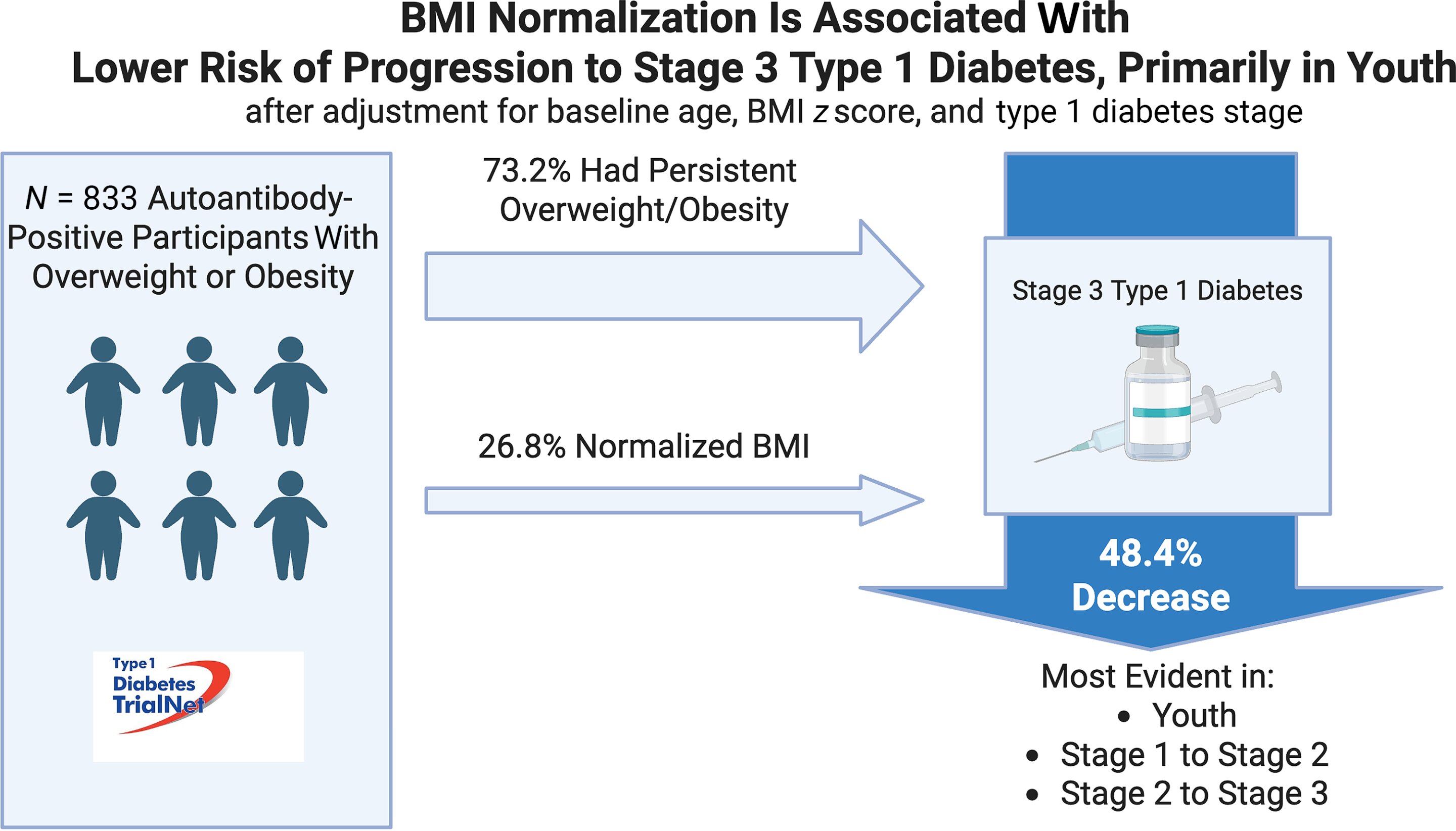
Graphical Abstract. Credit: Diabetes Care (2026). DOI: 10.2337/dc26-0833
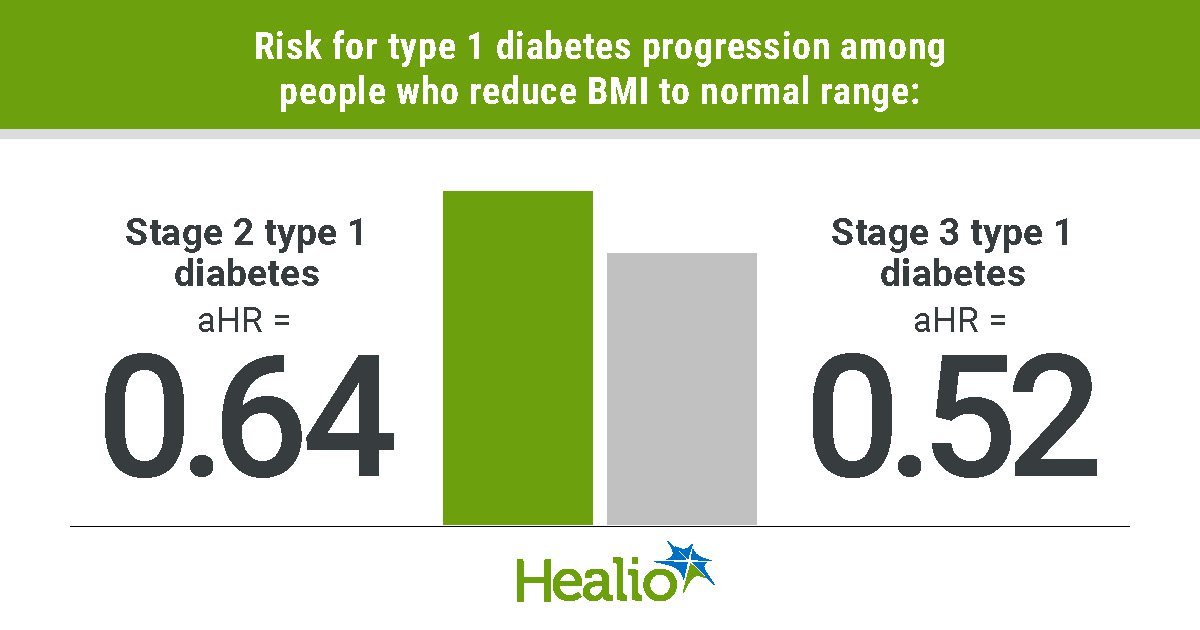
A Baylor College of Medicine-led team found that moving into a normal weight range was associated with about half the risk of progressing to clinical type 1 diabetes (T1D), particularly in youth. This observational study, published in Diabetes Care, was conducted in individuals with early signs of type 1 diabetes.
"T1D is an autoimmune disease in which the body's immune system attacks the insulin-producing cells of the pancreas, called islets of Langerhans," said first and corresponding author Dr. María Redondo, professor of pediatrics in diabetes and endocrinology at Baylor College of Medicine and Texas Children's Hospital. "Without insulin, cells in the body cannot use sugar circulating in the blood for energy, which can lead to diabetic ketoacidosis, a life-threatening complication, and potentially death if untreated. Over the long term, T1D can also increase the risk of complications affecting the eyes, kidneys, nerves, heart and blood vessels."
Redondo and her colleagues examined whether, among individuals with overweight or obesity who were already at increased risk for T1D, subsequent normalization of body mass index (BMI, measured as weight relative to height) was associated with a different risk of progression to clinical T1D.