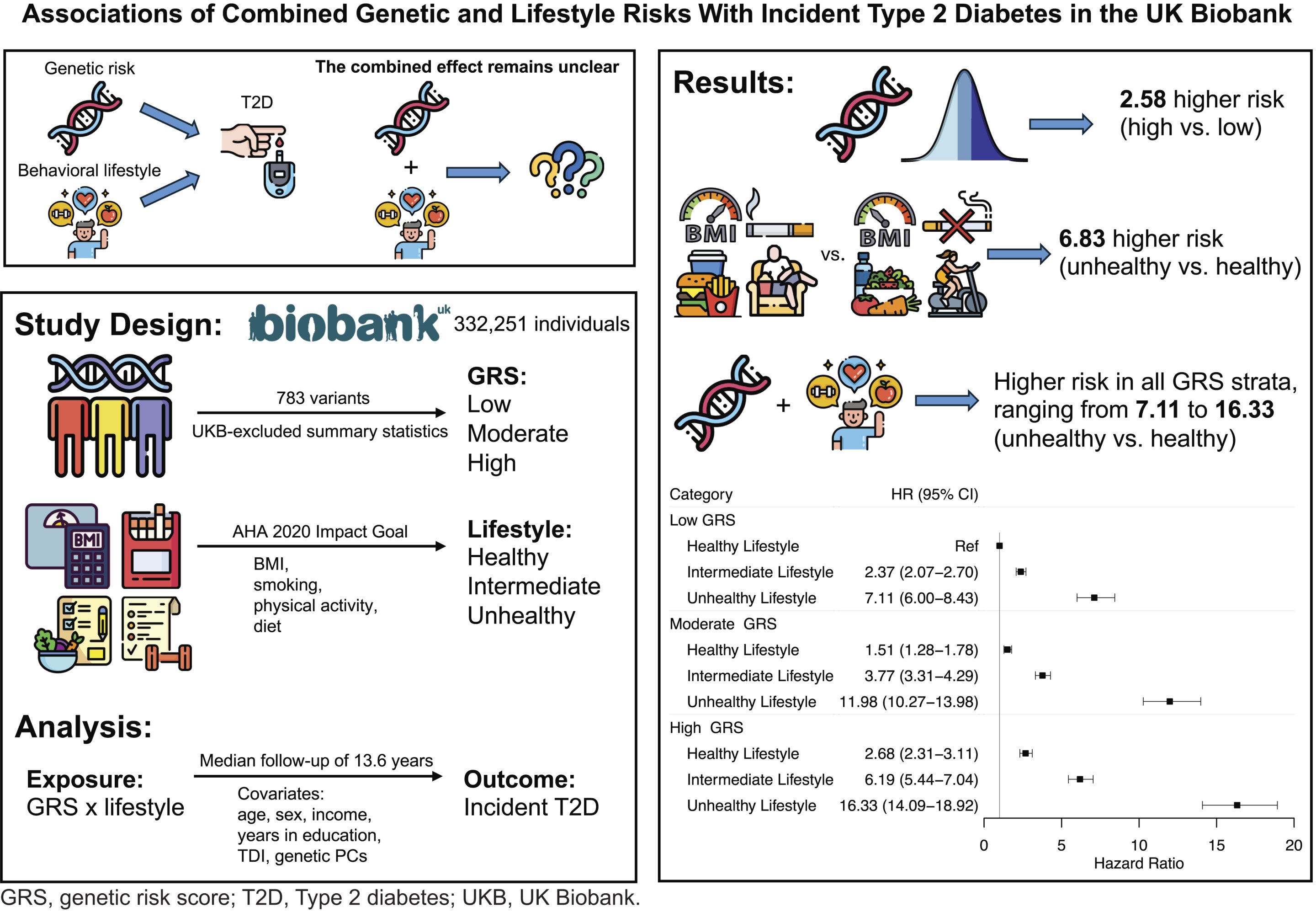
A new study led by researchers at the University of Massachusetts Amherst suggests that even people with a high genetic risk for type 2 diabetes can substantially reduce their chances of developing the disease by adopting healthier lifestyles—and that more than half of cases might be preventable. Published in the journal Diabetes, the study analyzed data from more than 332,000 adults in the U.K. and found that lifestyle factors such as body weight, physical activity, smoking and diet play a powerful role in shaping diabetes risk, regardless of genetic predisposition.
"Even if you have a strong family history or high genetic risk, it's not a foregone conclusion that you'll develop type 2 diabetes," says senior author Cassandra Spracklen, associate professor of epidemiology at UMass Amherst. "Healthier lifestyle choices will mitigate your risk—even if you've lost the genetic lottery."
The study examined how genetic risk, which was calculated using 783 known diabetes-related genetic variants, interacts with lifestyle behaviors. Participants were followed for a median of nearly 14 years, during which 4% developed type 2 diabetes.
Both genetic risk and lifestyle independently can increase the likelihood of developing the disease. But lifestyle had the stronger effect. Individuals with the least healthy lifestyles were nearly seven times more likely to develop diabetes than those with the healthiest habits, compared to a 2.6-fold increased risk for those with the largest genetic risk for type 2 diabetes versus those with the lowest genetic risk.