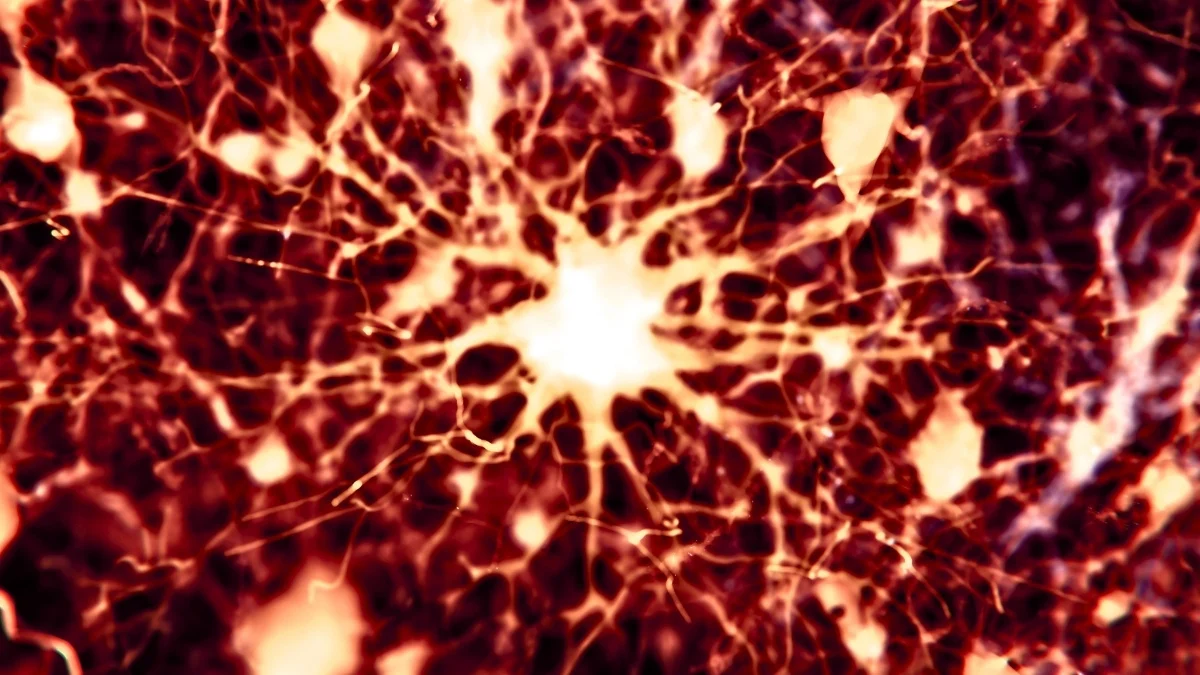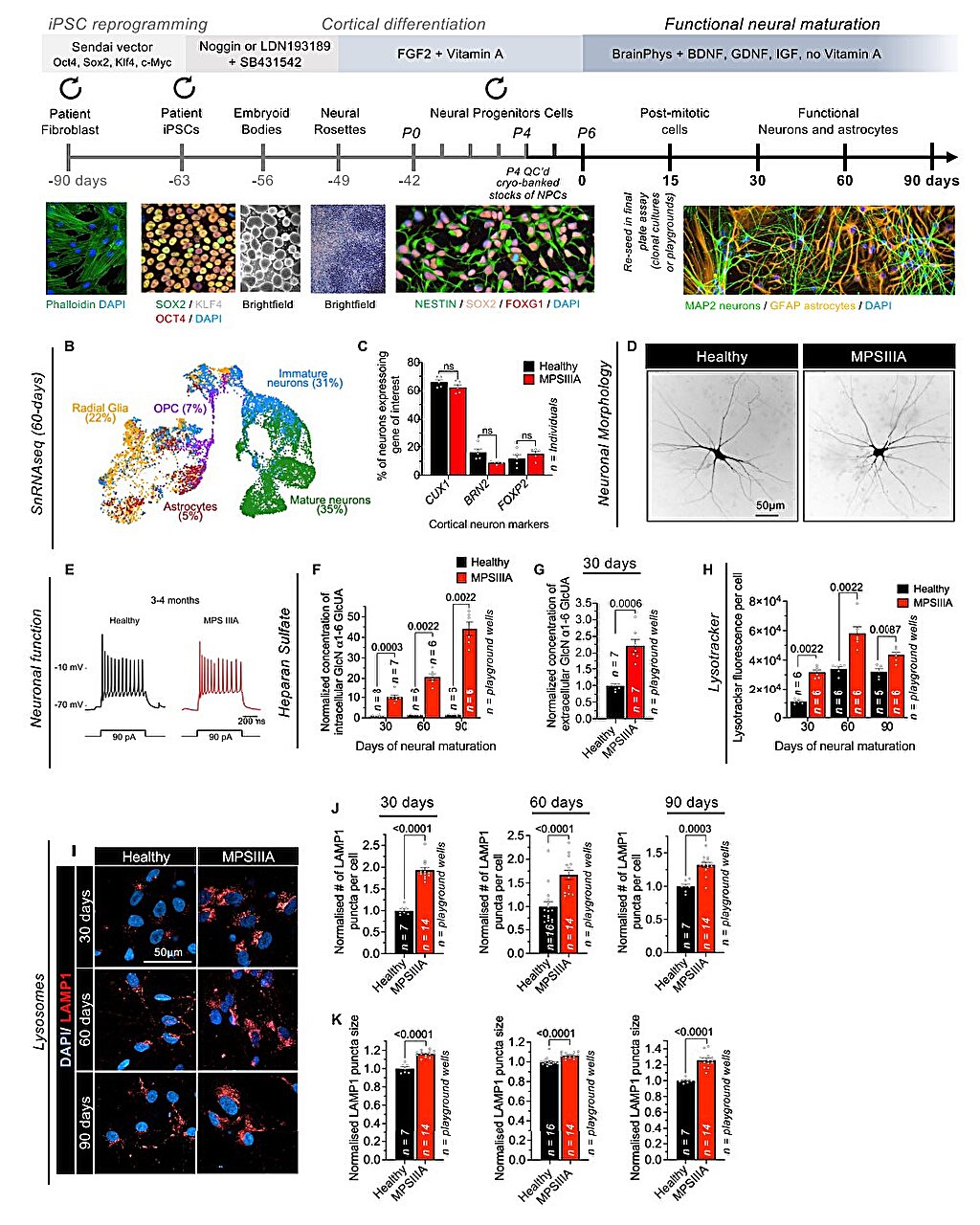
Characterization of iPSC-derived neural cultures for MPS IIIA. Credit: Nature Communications (2026). DOI: 10.1038/s41467-026-76837-1
An Australian research collaboration has identified several existing TGA-approved medicines that could help slow brain damage in children with a rare form of dementia—offering hope for faster treatment options.
In a new study published in the Nature Communications journal, medical researchers used patient-derived brain cells grown in the lab, combined with advanced imaging and artificial intelligence, to rapidly test approved drugs and pinpoint those that improve brain cell health.
The research focused on Sanfilippo syndrome, a devastating childhood dementia that causes progressive loss of memory, behavior and physical abilities. There are currently no widely available treatments.
Sanfilippo syndrome is one of more than 100 genetic disorders that together affect 1 in 2,900 children in Australia. Half of all children with dementia die by age 10.