Originally published on tamiz.pro.
The era of the single-function chatbot is over. In 2026, building an AI system means orchestrating a heterogeneous stack of local inference engines, specialized tool-use frameworks, and rigorous governance policies. We have moved from prompt engineering to agent topology design.
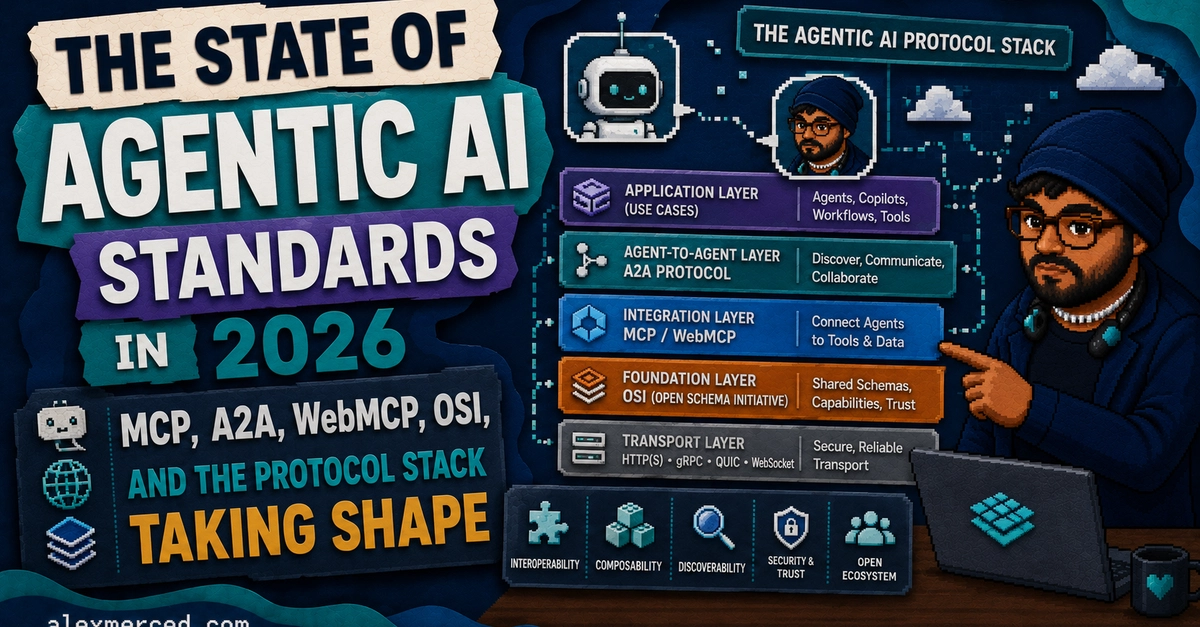
This architecture is no longer monolithic. It is a layered stack where the foundation consists of quantized, on-device models, the middle layer handles the stochastic reasoning and tool execution, and the upper layer enforces safety, auditability, and cost governance.
The Foundation: Local-First Inference
The defining characteristic of the 2026 agent stack is the shift away from pure cloud-hosted APIs toward local-first execution. This is driven by two factors: latency requirements for real-time agent loops and enterprise compliance constraints that prohibit sensitive data leaving the environment.