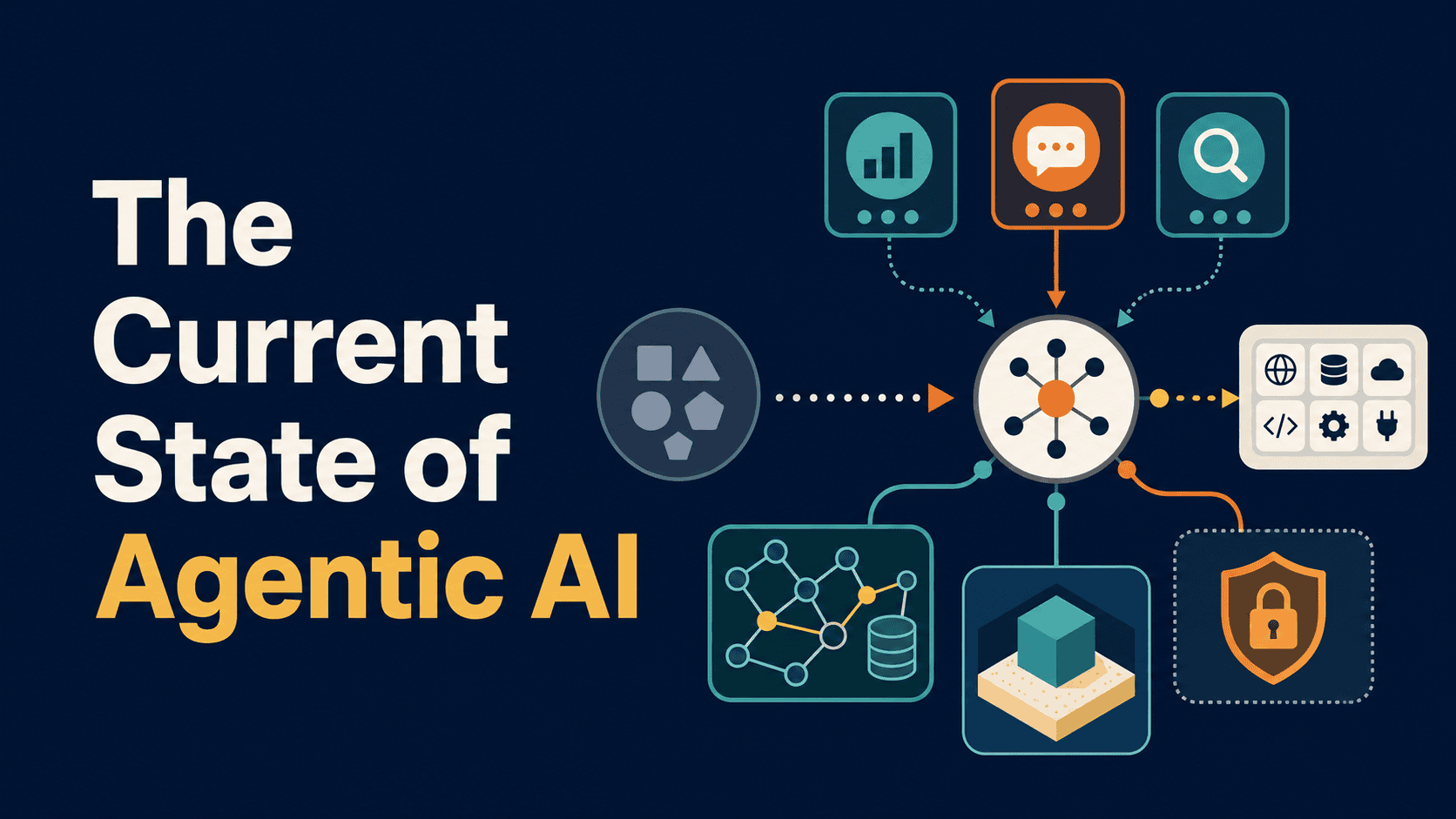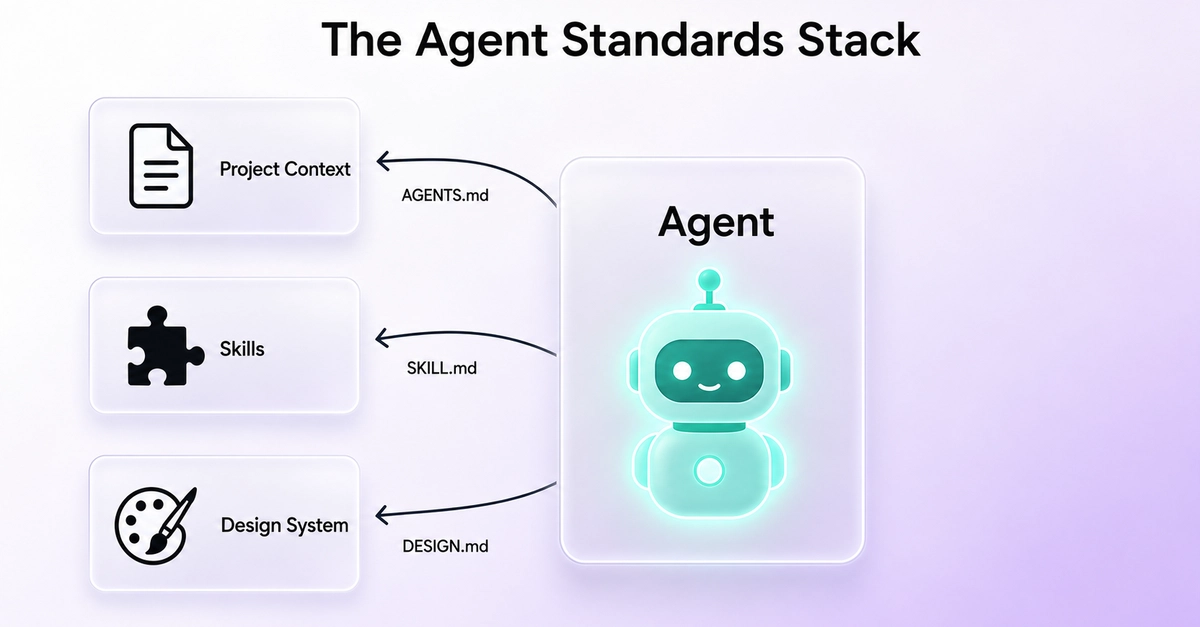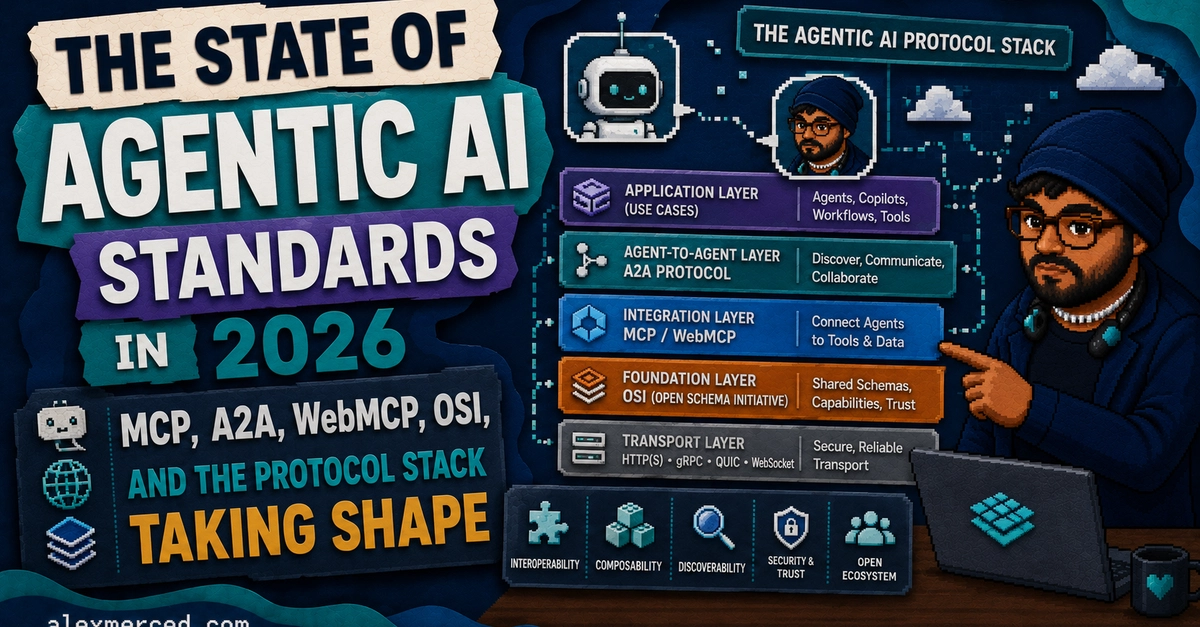
In 2023, an AI agent was a demo. In 2024, it was a framework. In 2025, it was a hundred incompatible frameworks. And in 2026, something genuinely new is happening: the agent world is growing a protocol stack, a set of open standards that determine how agents reach tools, talk to websites, talk to each other, understand business meaning, pay for things, and show their work to humans.
I watch this space from two vantage points. My weekly AI newsletter tracks the standards and protocol developments as they happen, and my day job in the lakehouse world puts me on the receiving end of them, because the single biggest consumer of agent standards is turning out to be data platforms. The agents everyone is building want, more than anything else, to query, analyze, and act on enterprise data, which means every protocol in this article eventually terminates at something I write about the rest of the week: a catalog, a table, a semantic definition.
So this is my mid-2026 map of the agentic standards territory. What each protocol actually does, stated plainly. Where each one stands right now: shipped, versioned, previewed, or aspirational. How they layer rather than compete. The honest open problems, governance, security, and sheer protocol sprawl. And a decision framework for builders who need to ship something this quarter without betting on the wrong horse. The history of data infrastructure teaches one big lesson about moments like this, and I will lean on it throughout: standards wars end, the winners are the ones that stay neutral and layered, and the people who understood the layering early built the durable things.