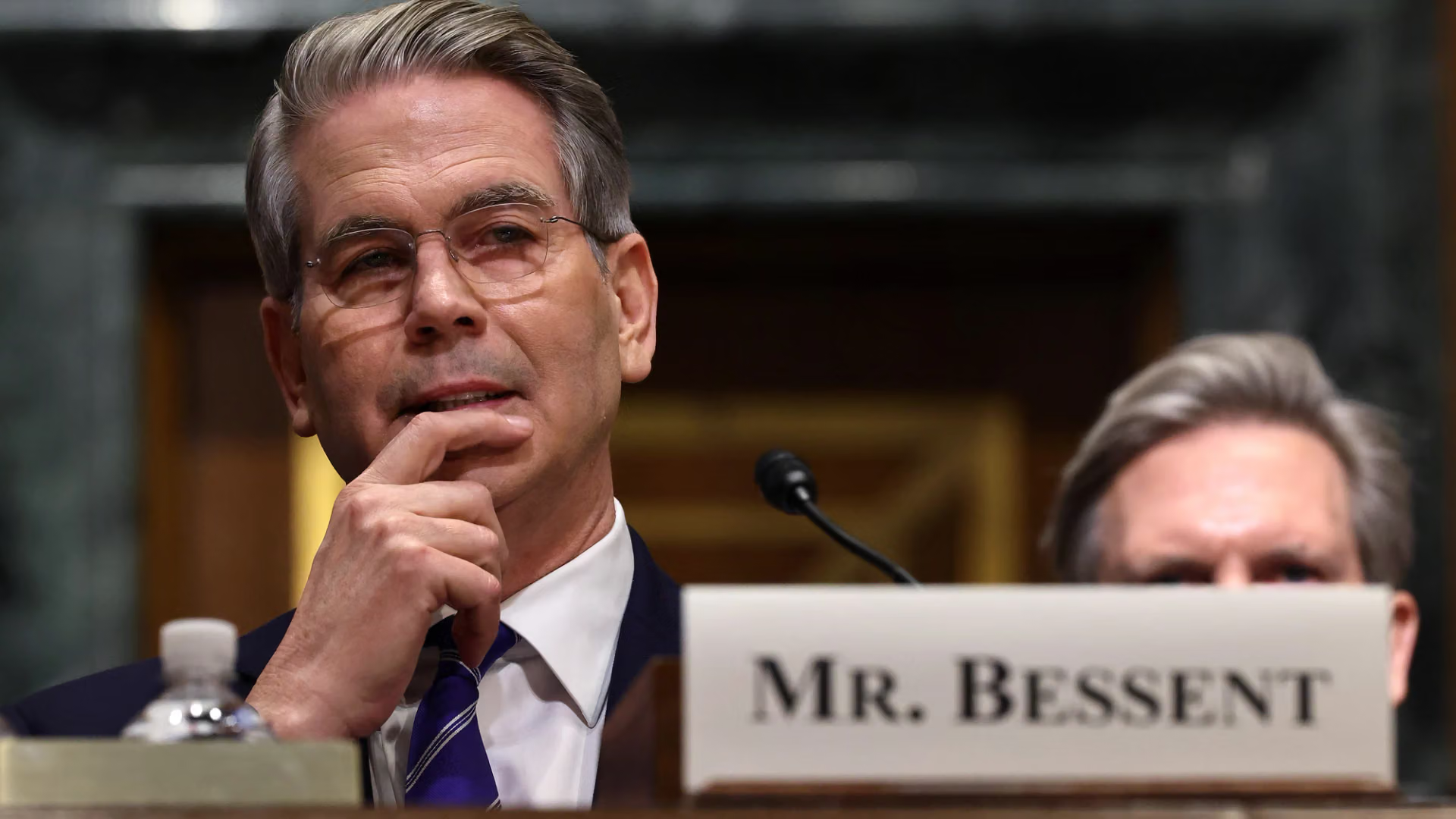
45 min ago3 min read(Chip Somodevilla/Getty Images)SummaryTreasury Secretary Scott Bessent said long-dated bond buybacks could exceed $4 billion, a shift that macro strategist Mark Connors says could ease a major macro headwind for bitcoin.Bitcoin is holding above $72,000, a key level where concentrated short positions could add buying pressure if prices continue to rise.Connors sees bitcoin eventually reaching $180,000 as liquidity improves, though he warns a lack of progress on the Clarity Act by Sept. 15 could pressure prices.The U.S. Treasury’s plan to routinely buy back long-term government debt could mark a turning point for bitcoin BTC$72,749.73 by easing one of the pressures that has weighed on crypto markets, according to macro strategist Mark Connors.Treasury Secretary Scott Bessent said Thursday that the government expects to conduct regular buybacks of long-dated bonds and could increase their size beyond the $4 billion previously announced.“We want to show that [bond] yields do not reflect underlying fundamentals,” Bessent told CNBC. “We have a big toolkit.”The comments came as the 10-year Treasury yield traded around 4.68%, up three basis points on the day but off its session high. Bitcoin added to its gains following Bessent’s remarks, nearly reaching $73,000.Connors, a longtime bond-market investor and chief investment officer at Risk Dimensions, described the Treasury move as an unusual and important intervention. He sees it as a sign that the government is responding to pressure from rising long-term borrowing costs.“This is the first tell,” Connors said. He expects Treasury purchases to grow as the government faces the challenge of finding buyers for its debt.That matters for bitcoin because high Treasury yields can pull capital toward government bonds and away from risk assets. Buybacks can support bond prices and help contain yields, potentially removing some of that pressure.Connors said the initial purchases remain small but he expects Treasury support could eventually reach between $10 billion and $30 billion a month, far beyond the $4 billion announced by Bessent.The move has also changed his outlook for bitcoin. Connors had expected BTC to remain subdued until November as it followed its traditional four-year cycle. He is now less certain that investors will have to wait that long.He believes another potential step could involve changes to the supplementary leverage ratio, or SLR, which affects how much Treasury debt banks can hold relative to their capital. Easing those constraints could give banks more room to absorb government bonds.“When that happens, that’s when bitcoin starts to seek that first $180,000 price threshold,” Connors said. His target range for the cycle through 2030 is $180,000 to $360,000.In the immediate term, $72,000 could carry added significance because of how crypto traders are positioned.Charles Schwab director of crypto research Jim Ferraioli said earlier modeling showed a large concentration of leveraged bitcoin shorts around $72,000.If BTC holds above that level or continues climbing through it, traders betting on lower prices could close positions voluntarily or face liquidation. Closing a short requires buying bitcoin, which can put upward pressure on the price and trigger further liquidations.For Connors, however, the bigger story is not bitcoin’s short-term squeeze. It is what Bessent’s buyback plan could signal about U.S. liquidity. If Treasury support expands and pressure from long-term yields eases, he believes one of bitcoin’s major macro headwinds could start to fade.There is still a near-term risk to that bullish outlook, however. Connors said bitcoin could come under pressure if the Clarity Act fails to make progress by around Sept. 15. He sees the legislation as important to market sentiment, even if regulators continue to give crypto companies room to operate.“Near-term price risk is predicated on Clarity,” he said. “I do think we will fall from $72,000 if Clarity doesn’t progress from that September 15 date that’s laid out.”Related Assets12345678910Anvil: The Missing Collateral LayerAnvil: The Missing Collateral LayerAnvil is a shared on-chain collateral layer built on a programmable letter of credit: reserve assets as a guarantee -no loan, no interest, keep custody & yield.Jul 29, 2026Anvil is a shared on-chain collateral layer built on a programmable letter of credit: reserve assets as a guarantee -no loan, no interest, keep custody & yield.Why it matters:Anvil is a shared on-chain collateral layer built on a programmable letter of credit: reserve assets as a guarantee -no loan, no interest, keep custody & yield.View Full Report
Bitcoin (BTC) price analysis: $180,000 targeted on Treasury buybacks
Longtime bond market investor Mark Connors sees routine government bond buybacks improving liquidity and bringing bitcoin’s next rally closer.
TL;DRAI
Bessent announces Treasury buybacks of long-term bonds beyond $4B; macro strategist Connors targets Bitcoin at $180K if monthly support reaches $10-30B. High Treasury yields compress risk-asset valuations; buybacks contain yields and ease macro headwinds for crypto provided Clarity Act progresses by mid-September.
711 words~3 min read