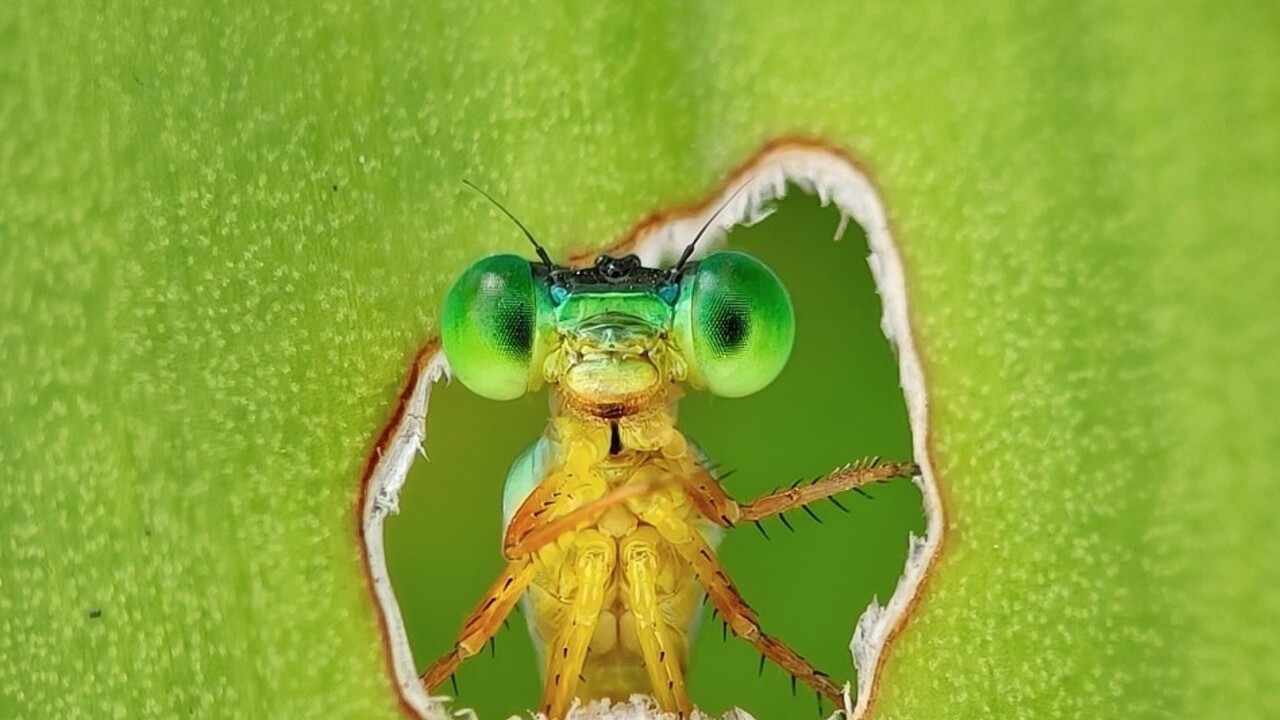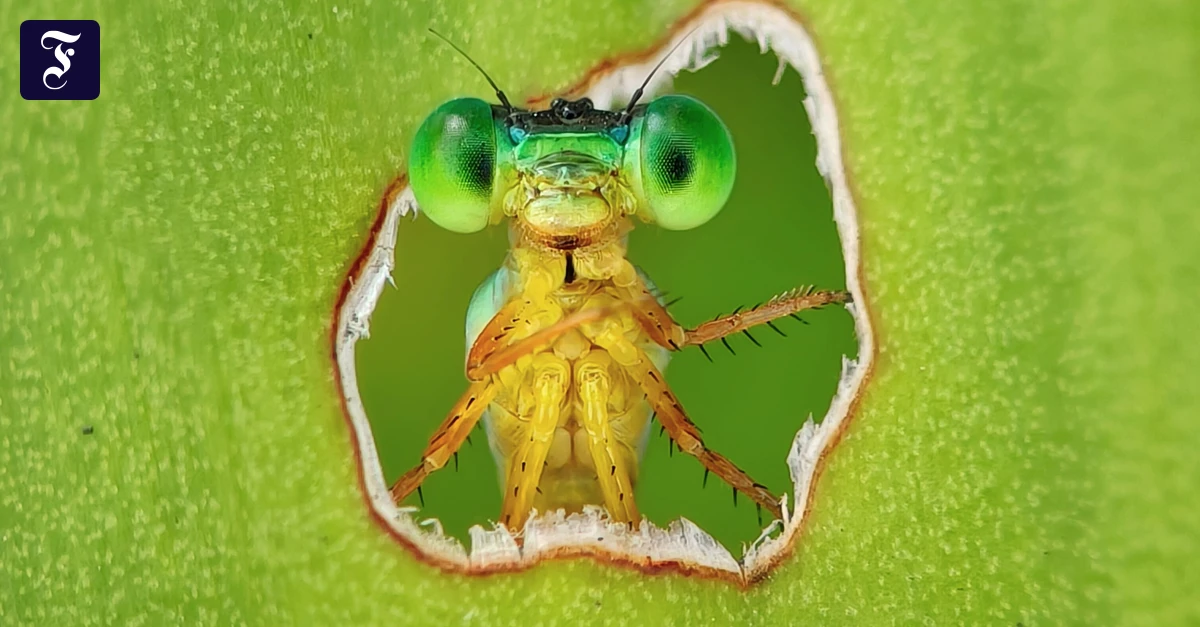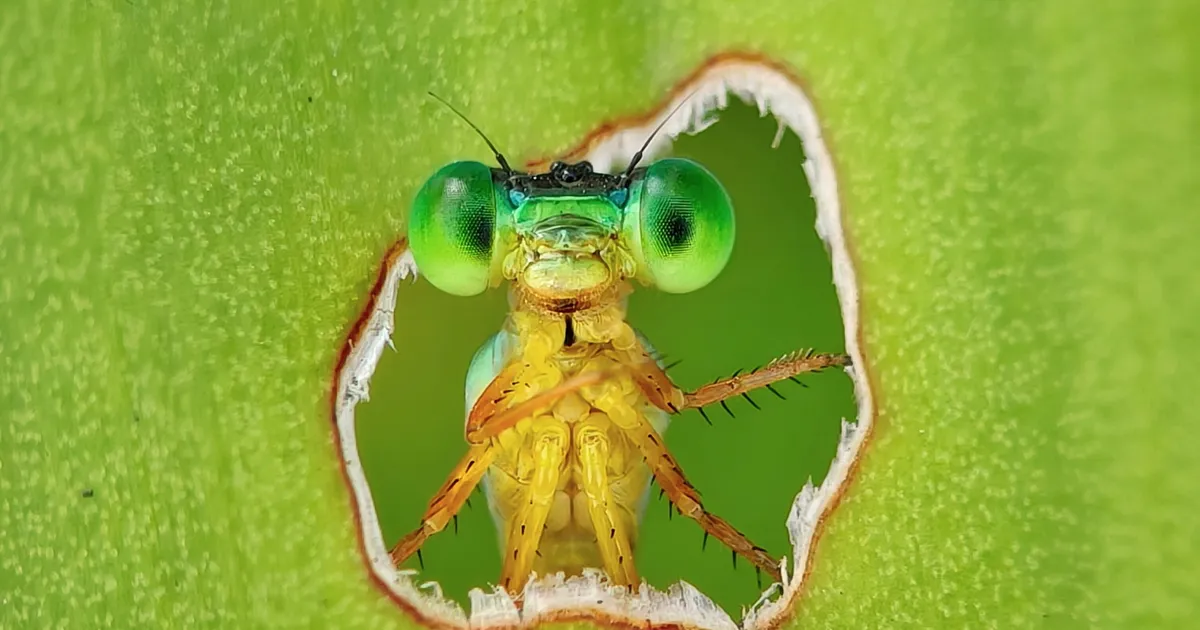
Animals are the light, including when they are flies. In fact, the face of a damselfly watching us watch her through a hole in a leaf is the winner of the scientific journals BMC Ecology and Evolution and BMC Zoology 2026 images competition. Possibly the charm lies less in the carnivorous insect itself and more in the uniqueness of the photograph. The lovely creature, specifically an orange-tailed marsh dart damselfly, was probably horrified to see the photographer, Sritam Kumar Sethy, a student at Berhampur University in Odisha, India. But here we are.The winner in the Relationships in Nature category was "Giant Cuttlefish in Breeding Battle," photographed by Victor Huertas of James Cook University, Australia. The picture shows two male cuttlefish (Ascarosepion apama) fighting during the species' annual mating spree in the Upper Spencer Gulf, which makes one wonder – how do cuttlefish joust? Using rapid skin color changes, which may include moving zebra stripes and flashing light patterns. We could learn much from our aquatic friends.The winning cuttlefish photo. Credit: Victor HuertasThe winning cuttlefish photo. Credit: Victor HuertasDuring the party, the 90-pound weaklings in cuttlefish circles may mimic females in their displays and even tuck in their arms, which may sound counterintuitive, but it apparently enables them to sneak by bigger, flashier males to nab a female, who we can assume is ultimately not fooled.The video is not from the competition. Back to that: The winner in the Protecting Our Planet category shows a drone shot of Long Sault Parkway, a 10.1 kilometer route linking 11 islands in Lake St. Lawrence. But they were neither natural nor intentional."These islands were formed from submerged hilltops following the construction of the Moses-Saunders Power Dam in the 1950s. This photo serves as a visual record of the significant impact of human activity on the environment," commented the photographer, Allen Tian, a postdoctoral researcher affiliated with Queen's University in Canada and Hangzhou Normal University and Zhejiang University in China.A bridge between islands in a lake. Credit: Allen TianA bridge between islands in a lake. Credit: Allen TianSpecial mention was awarded to a picture of three manatees clustering to drink freshwater in the Everglades National Park, Florida, taken by Brandon Güell of Florida International University, and to the image of a baby olive ridley sea turtle (Lepidochelys olivacea), photographed by biologist Abhijeet Bayani at MES Abasaheb Garware College, India, to showcase local conservation actions.Manatees drinking freshwater in Florida. Credit: Brandon GüellManatees drinking freshwater in Florida. Credit: Brandon Güell "The release of hatchlings is not just a biological milestone, but an emotional one," Bayani stated. "It brings a profound sense of joy and ownership to people, and a renewed promise of continuity to the species."A baby olive ridley sea turtle and a human's foot and hand. Credit: Abhijeet BayaniA baby olive ridley sea turtle and a human's foot and hand. Credit: Abhijeet BayaniBMC notes that the image competition is only open to people affiliated with a research institution and working in ecology, evolutionary biology, palaeontology or zoology.
A peeping damselfly beats all in ecology photo competition
The carnivorous insect peering through a leaf triumphed over battling cuttlefish exchanging violent displays of color, a bridge between islands and a baby turtle in this year's BMC photo contest
501 words~2 min read