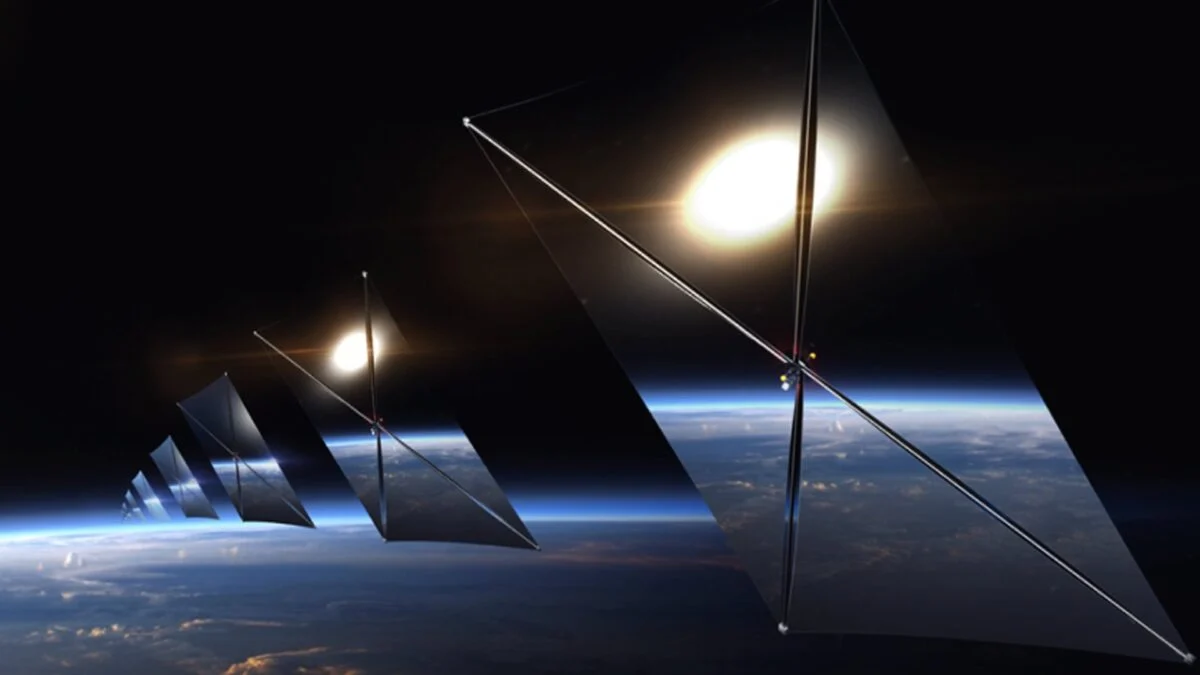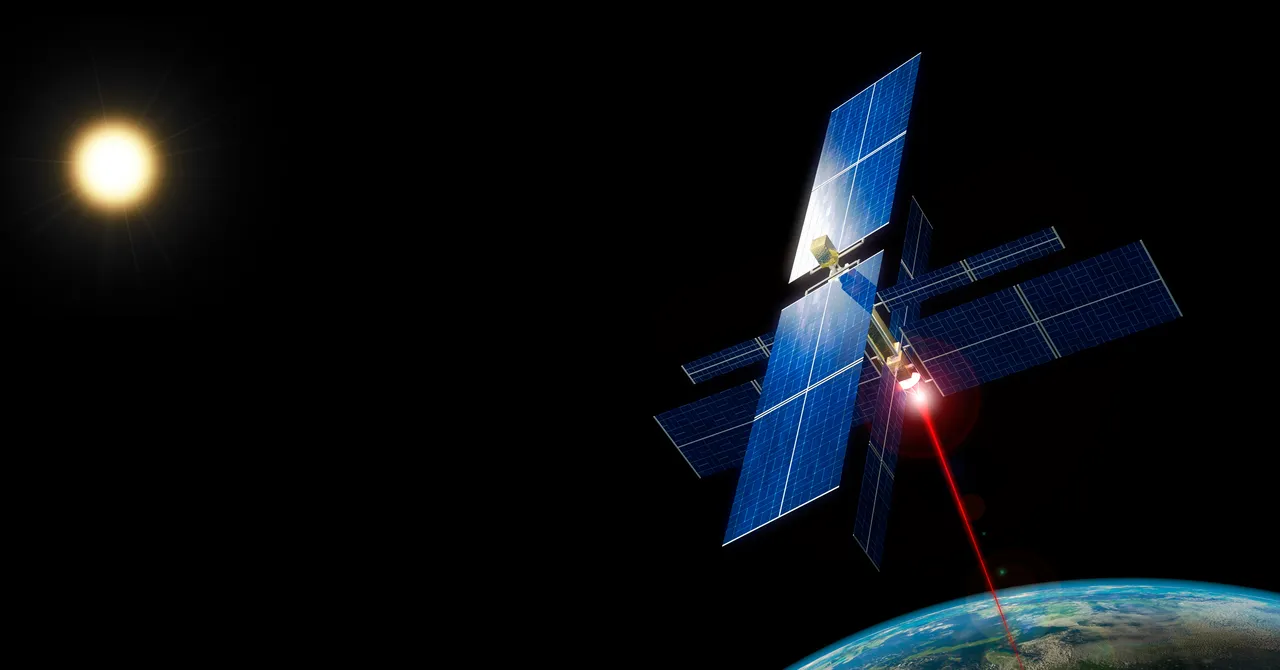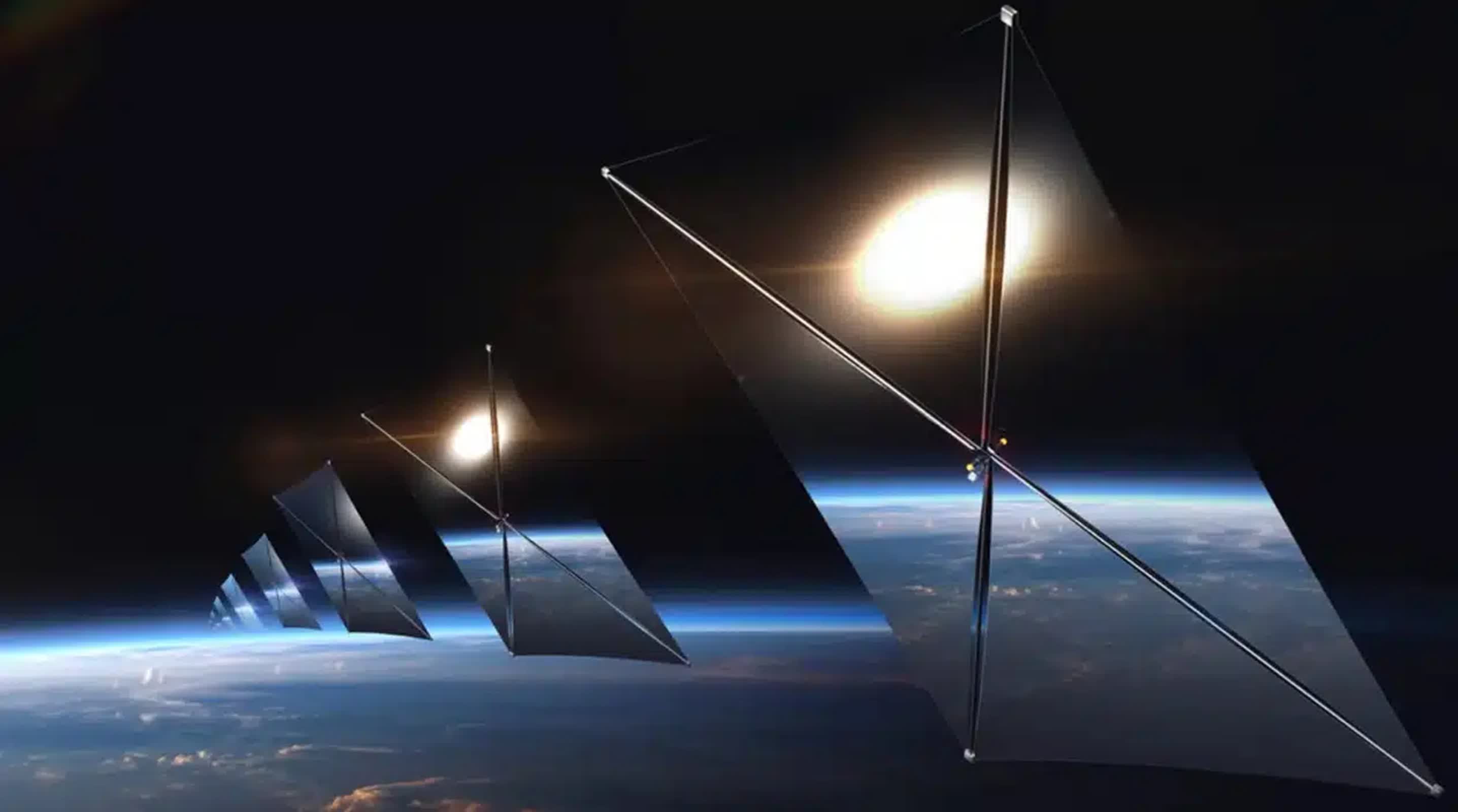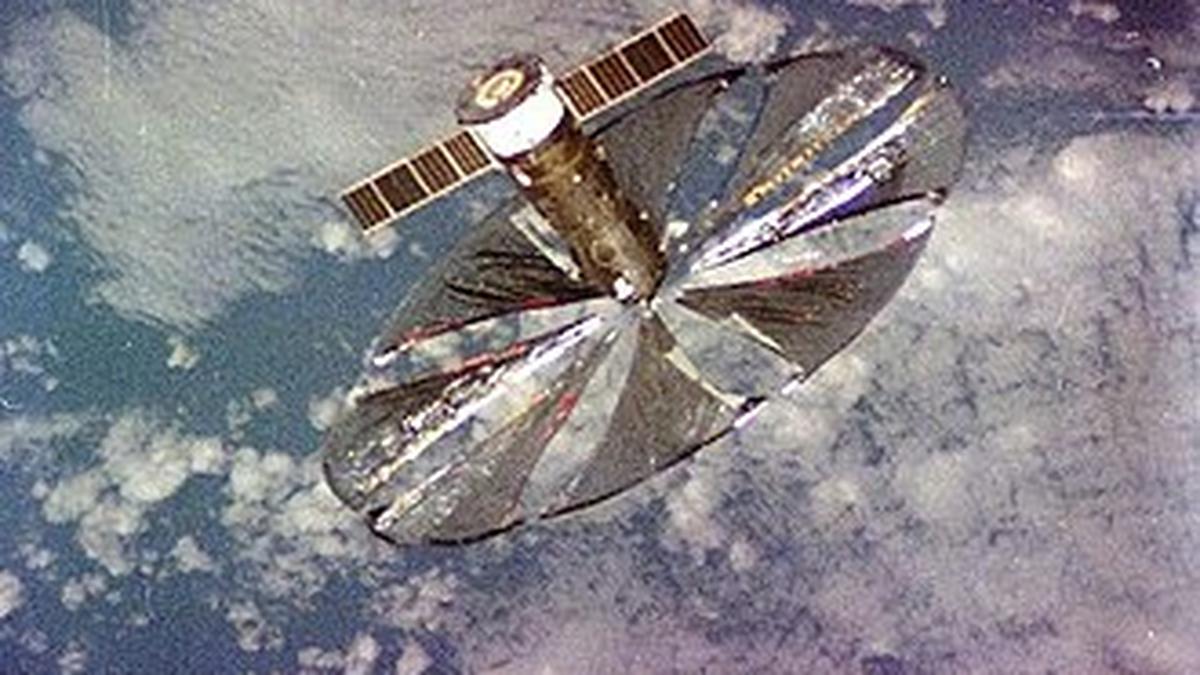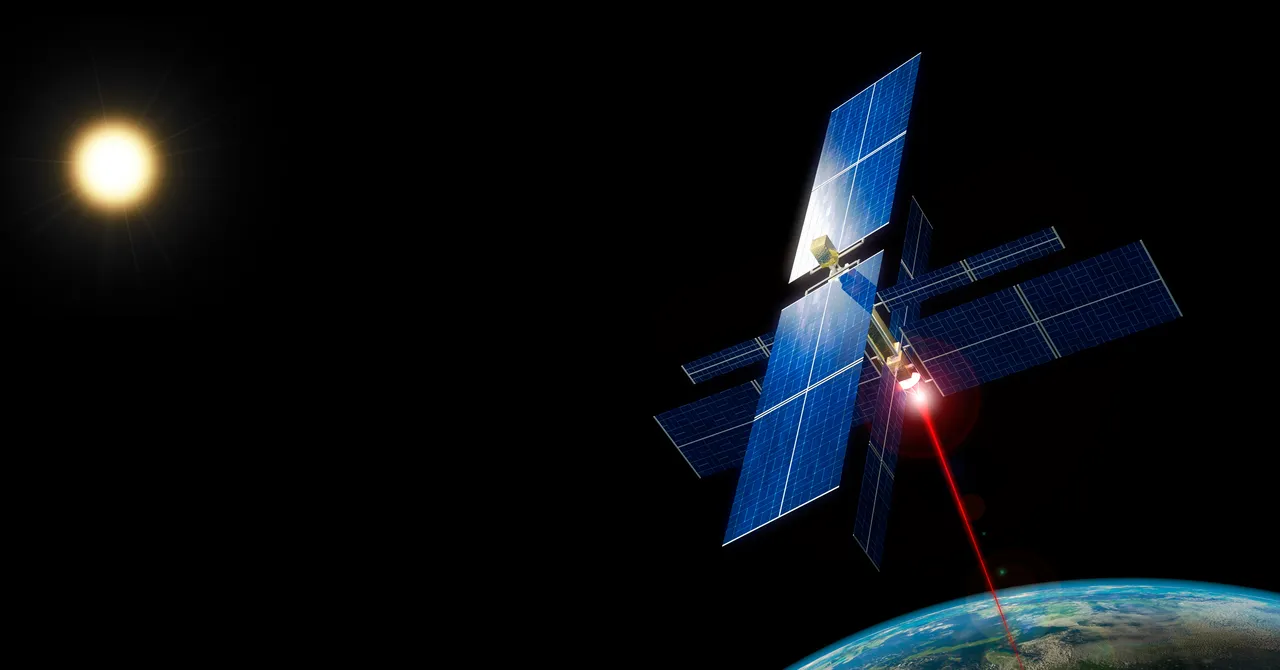
Night normally means the end of solar power, outdoor work and natural daylight. But a California startup is trying to change that basic rule by putting a giant reflector in orbit. On July 9, 2026, the U.S. Federal Communications Commission approved Reflect Orbital’s Eärendil-1 demonstration satellite, allowing the company to test an 18-by-18-meter, or roughly 59-by-59-foot, mirror designed to redirect sunlight toward selected locations on Earth after sunset.The idea sounds almost like science fiction, but the underlying physics is straightforward. Sunlight is already reaching the spacecraft because it is high above Earth and can remain in sunlight even when the ground below has entered darkness.Eärendil-1 would use a thin reflective surface to intercept that sunlight and steer it back toward a defined area on the night side. The planned demonstration is intended to show whether that beam can be positioned and controlled accurately enough to make the concept practical.California Startup Secures FCC Approval for Orbital Sunlight Mirror: How a giant mirror in orbit can shine on Earth at nightEärendil-1 is not a space-based battery and it does not generate electricity. Its job is closer to that of a giant heliostat, a device that redirects sunlight by changing the angle of a reflective surface. In orbit, the spacecraft can rotate its mirror while moving rapidly around Earth, allowing sunlight to be reflected toward a selected location that is already in darkness.The planned satellite will operate roughly 600 kilometers, or about 373 miles, above Earth, depending on the orbital position. Reflect Orbital says the demonstration could create a ground footprint about 5 kilometers wide and provide illumination for several minutes during a pass. The company has described a target intensity around 0.1 lux for as long as five minutes, roughly comparable to moonlight rather than daylight.That distinction matters. The goal is not to recreate noon across an entire city. The first spacecraft is meant to produce a controlled patch of additional light and prove that the reflector can unfold, point toward the correct location, maintain its beam and then stop illuminating the area when the pass ends.The satellite's rapid movement also places a natural limit on how long any one location can remain illuminated. A reflector in low Earth orbit is traveling at several kilometers per second, so it cannot simply hover above a solar farm. Its usefulness depends on coordinating the spacecraft's orbit, the position of the Sun, the target on the ground and the angle of the mirror with considerable precision.The strongest commercial argument is solar power. Solar panels produce electricity when sunlight reaches them, but electricity demand does not always follow the same schedule. In many places, demand remains high during the evening just as conventional solar generation begins falling toward zero.Reflect Orbital's proposed system would effectively move some sunlight from a time and place where it is available to a location where it is temporarily needed. A solar farm could, in theory, receive additional illumination after sunset and continue producing electricity for a short period. The company has also discussed applications involving construction, agriculture, emergency response and other outdoor operations.There is an important physical limitation, however. Redirecting sunlight does not create new energy. Every photon reflected toward Earth has first been supplied by the Sun, and the mirror, atmosphere and photovoltaic panels all introduce losses. The economic question is therefore not whether the system can move sunlight, but whether moving it from orbit can deliver useful energy more cheaply and reliably than batteries, transmission upgrades or other forms of energy storage.That is one reason the first mission matters. Before anyone can seriously evaluate a space-based sunlight business, the company needs to demonstrate that a lightweight reflector can be deployed in orbit, survive the space environment and direct a useful amount of light to the intended ground location with predictable accuracy.The difficult part is not reflecting sunlightA mirror can reflect sunlight easily. Controlling a giant reflective surface in orbit is much harder.The spacecraft must know where it is, where the target is and where the Sun is, then adjust its orientation so that the reflected beam reaches the correct place. Small changes in the mirror's angle can move the illuminated footprint significantly on Earth's surface. The system also has to account for the spacecraft's motion and changing geometry throughout the orbital pass.Atmospheric conditions add another layer of uncertainty. Sunlight traveling downward through the atmosphere can scatter from molecules, aerosols and clouds. That means the visible effect may extend beyond the intended central footprint, especially under hazy conditions. Researchers have recently modeled this problem and concluded that atmospheric scattering could make the nighttime sky brighter well outside the area directly targeted by a reflector.This is where the debate surrounding Eärendil-1 becomes much larger than a question about solar power. A spacecraft may be able to put light on a selected patch of ground, but controlling where that light is noticed by people, telescopes, aircraft and wildlife is considerably more complicated.Astronomers fear a new kind of light pollutionThe American Astronomical Society strongly opposed the Eärendil-1 application before the FCC approval. Astronomers warned that a bright moving reflector could interfere with sensitive telescopes, particularly when the satellite crosses a telescope's field of view. The organization said a reflector of this type could be several times brighter than the full Moon from certain viewing positions and could overwhelm astronomical detectors.The concern is not limited to seeing a bright object moving across the sky. Modern telescopes often search for extremely faint signals, and even relatively modest increases in sky brightness can make those observations harder. Light scattered through the atmosphere can also spread beyond the area where the company intends to deliver illumination, potentially affecting observations from locations well outside the central beam.A newly published atmospheric modeling study adds weight to that concern. Researchers found that scattered light from proposed orbital reflectors could alter nighttime sky brightness over distances extending tens of kilometers under some conditions. The study examined both the sunlight traveling from the satellite toward Earth and the light scattered upward after reaching the ground.Wildlife faces a different problemHumans are not the only species that depend on darkness. Nighttime light influences migration, feeding, reproduction and predator-prey behavior across many ecosystems. Artificial light from cities is already recognized as an ecological pressure, and conservation groups have argued that deliberately adding moving patches of light from orbit could create another form of disturbance.The potential impact becomes more difficult to predict if the technology moves beyond one experimental satellite. DarkSky International and other groups have opposed the project, pointing to concerns involving astronomy, wildlife, public safety and the natural nighttime environment.The scale of Reflect Orbital's longer-term vision is what makes the issue particularly contentious. Eärendil-1 is a single demonstration spacecraft, but the company has discussed eventually deploying a much larger constellation, with public descriptions reaching tens of thousands of satellites by 2035. At that scale, the environmental and astronomical questions would be very different from those raised by one short demonstration.The FCC approval does not mean the technology is provenThe July decision is important, but it should not be confused with proof that orbital sunlight is commercially viable. The FCC authorization permits the company to deploy and operate Eärendil-1 under specified conditions. The agency's authority in this proceeding centered largely on the satellite's communications and spectrum-related aspects, while many environmental and astronomical concerns fell outside the scope of its review.The authorization also gives the company a deadline. According to the FCC document, Eärendil-1 must be launched, placed into its assigned orbit and operated in accordance with the authorization no later than July 9, 2032, unless the agency extends the deadline.That leaves the real experiment ahead. Engineers must demonstrate that a huge reflective surface can work reliably in orbit, that the beam can be controlled safely and that the promised illumination can be delivered without creating unacceptable problems elsewhere.A strange new question for the space ageFor decades, satellites have mostly been used to observe Earth, communicate, navigate or collect scientific data. Reflect Orbital is proposing something different: using orbital infrastructure to deliberately change conditions on the ground by manipulating sunlight.If the experiment works, the idea could open a new category of space-based services. Solar farms might receive light after sunset, emergency teams could gain temporary illumination and remote industrial operations could potentially work for longer periods without relying entirely on generators.But the same physics that makes the idea possible creates its biggest challenge. Sunlight does not stop being sunlight simply because a company wants to put it somewhere specific. It scatters through the atmosphere, reaches unintended observers and interacts with an environment that evolved around a predictable cycle of day and night.Eärendil-1 will therefore test more than a mirror. It will test whether humanity can treat sunlight as something that can be scheduled and delivered on demand without paying a larger price in the night sky. The answer could shape not only Reflect Orbital's business, but also how carefully future space infrastructure is allowed to alter the environment below.
Earlier this year, a California startup received approval to launch a 59-foot mirror into orbit. Two years later, the demonstration could redirect sunlight onto chosen points on Earth, allowing crews to keep working after dark
A California startup just got FCC approval to test a 59-foot mirror satellite in orbit. The spacecraft, named Eärendil-1, will catch sunlight in space and beam it down to dark spots on Earth. It promises sunlight on demand to boost solar power long after sunset and illuminate nighttime work zones. Still, astronomers warn these artificial beams could disrupt nocturnal wildlife and clutter our night sky.
1,493 words~7 min read