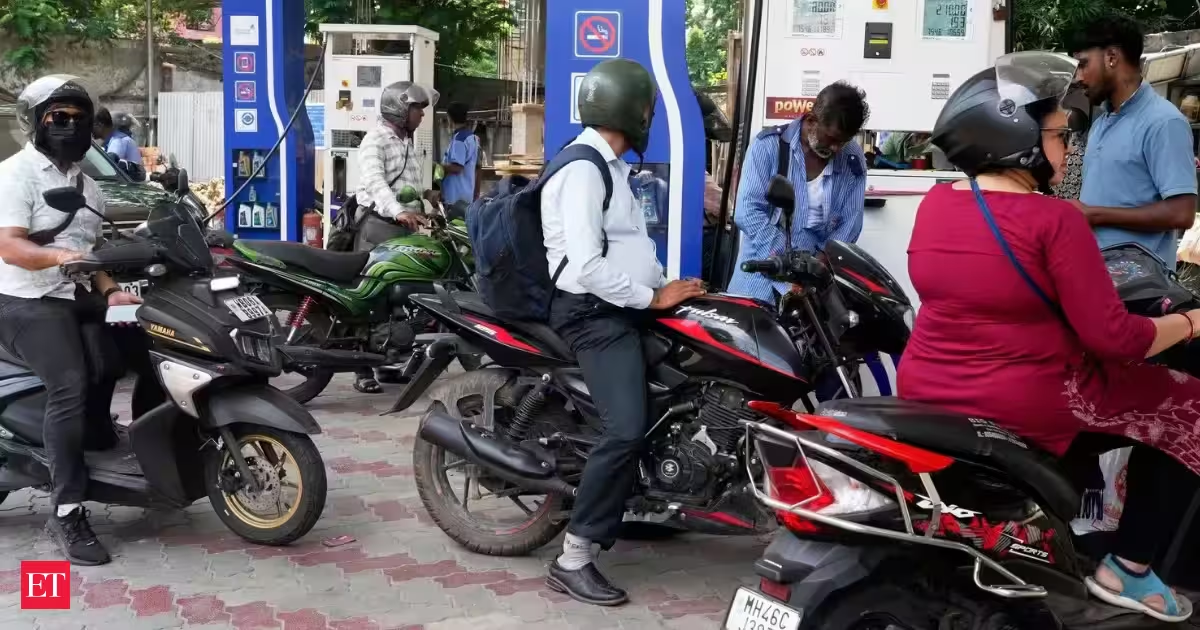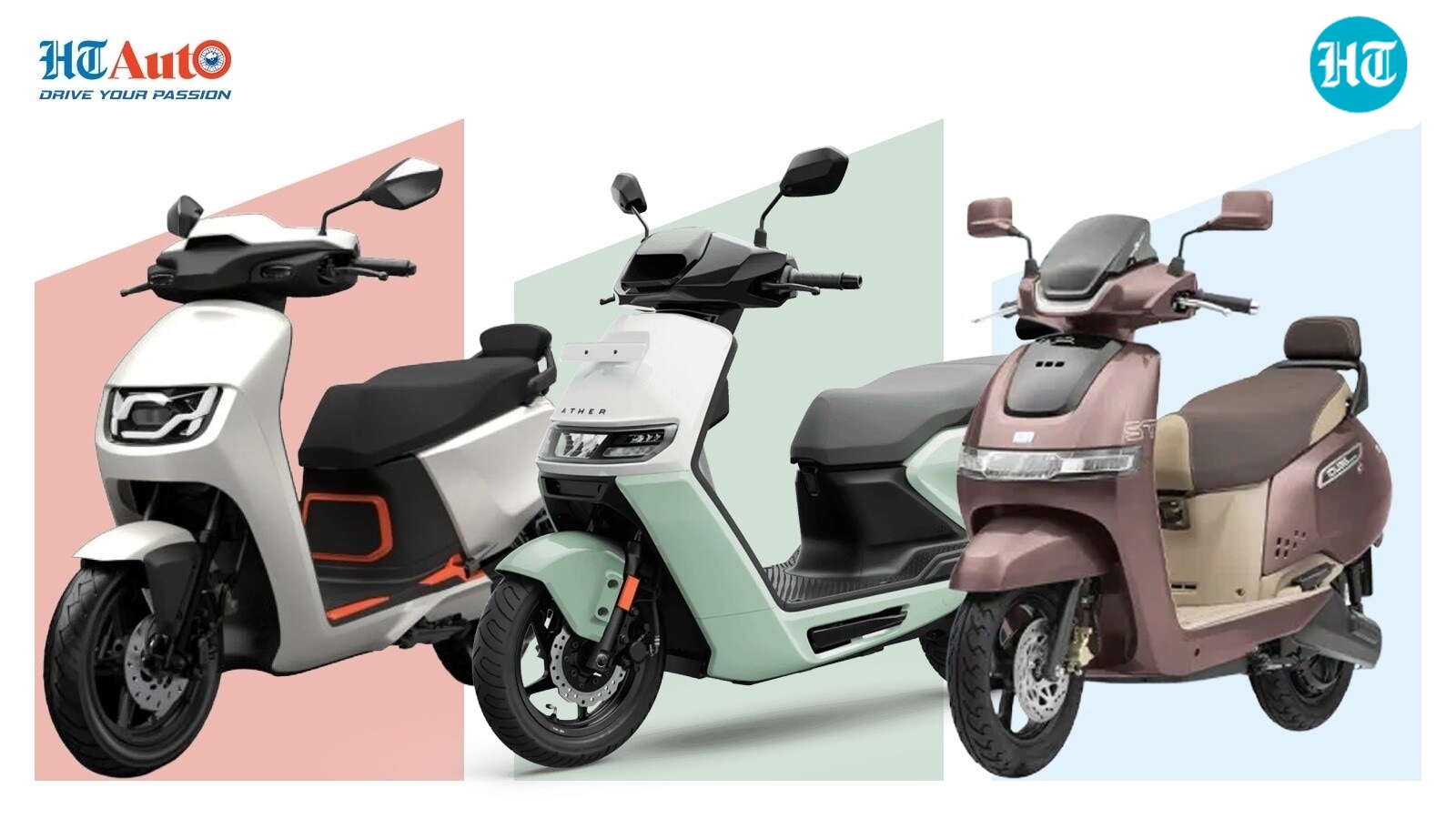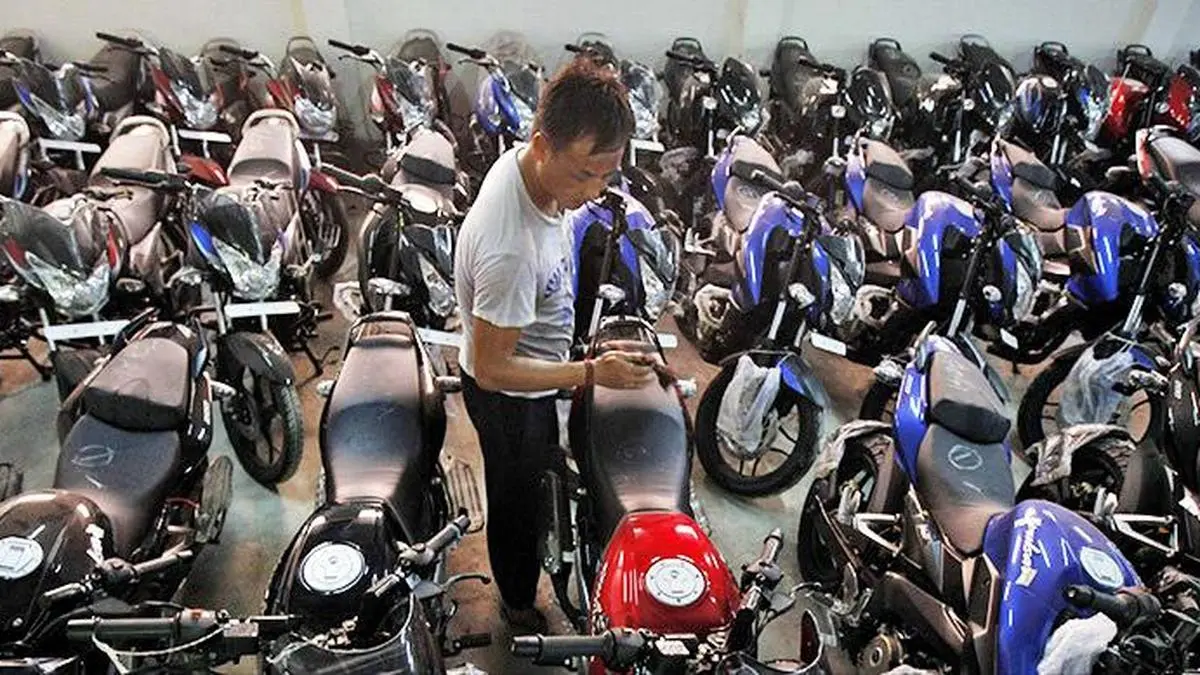
Manufacturers have expanded distribution networks, introduced market-specific products, and strengthened their presence in strategic overseas markets, said India Ratings and Research (Ind-Ra)
| Photo Credit:
India’s two-wheeler export business is acquiring a higher-value layer, with scooters and motorcycles above 200cc growing three-to-five times faster than overall shipments as manufacturers expand beyond traditional African markets.The shift is being driven by Indian brands gaining ground overseas and the country emerging as a manufacturing and export hub for global markets. For instance, Royal Enfield is building its international presence with mid-capacity motorcycles, while Bajaj Auto and TVS Motor are expanding their own brands as well as manufacturing for global partners.In the four years to FY26, overall two-wheeler exports grew at a CAGR of 3.9 per cent, compared with 12.8 per cent for motorcycles above 200cc and 18.2 per cent for scooters. Sub-125cc motorcycles, however, have historically accounted for more than 60 per cent of exports and remain the volume backbone, suggesting the faster-growing premium segments are adding a higher-value layer.This, as India increasingly serves two sides of the global market — by increasing footprint and outsourcing factories.Overall exports hit a record 5.18 million units in FY26, up 23 per cent, and are projected to grow another 15-20 per cent in FY27.Beyond AfricaManufacturers have expanded distribution networks, introduced market-specific products, and strengthened their presence in strategic overseas markets, said India Ratings and Research (Ind-Ra). Several OEMs, including Bajaj Auto and TVS Motor, have also expanded through overseas assembly and manufacturing facilities. OEMs with global parentage are increasingly establishing India as an export hub due to lower costs.The changing product mix is accompanied by a geographical shift. Colombia, Mexico, and Brazil have found place among India’s top 10 two-wheeler export destinations, reducing the industry’s historical dependence on Africa.Higher-income markets in Latin America and Southeast Asia are supporting demand for larger motorcycles, while urbanisation and a preference for automatic mobility are helping scooter exports.Yet, Africa remains central to India’s volume story and could provide another leg of growth. Nigeria, India’s largest two-wheeler export destination until FY24, suffered a sharp downturn following currency, inflation, and foreign-exchange pressures. Despite the recovery, India’s exports to Nigeria remain at only around 39 per cent of their FY22 level, leaving considerable headroom as economic conditions normalise.“The current upcycle appears to be increasingly structural, rather than purely cyclical, with OEMs benefiting from a wider geographic reach and stronger distribution networks,” said Shruti Saboo, Director, Corporate Ratings, Ind-Ra.Better export economicsThe shift also changes the economics of exports. Premiumisation is increasing realisations, while the rupee has depreciated around 15 per cent against the US dollar since 2024. Ind-Ra expects these factors to support higher revenue growth compared with volumes and improve profitability.One segment, however, remains conspicuously small — electric two-wheelers. Their exports tripled in FY26 but still represented less than 1 per cent of overall shipments.Ind-Ra said Indian manufacturers face a tougher export battle against Chinese EV makers, who benefit from greater scale, battery supply-chain control, lower costs, and technological advantages. India’s strength in ICE export markets may, therefore, not automatically translate into similar success in electric two-wheelers.Published on August 20, 2026