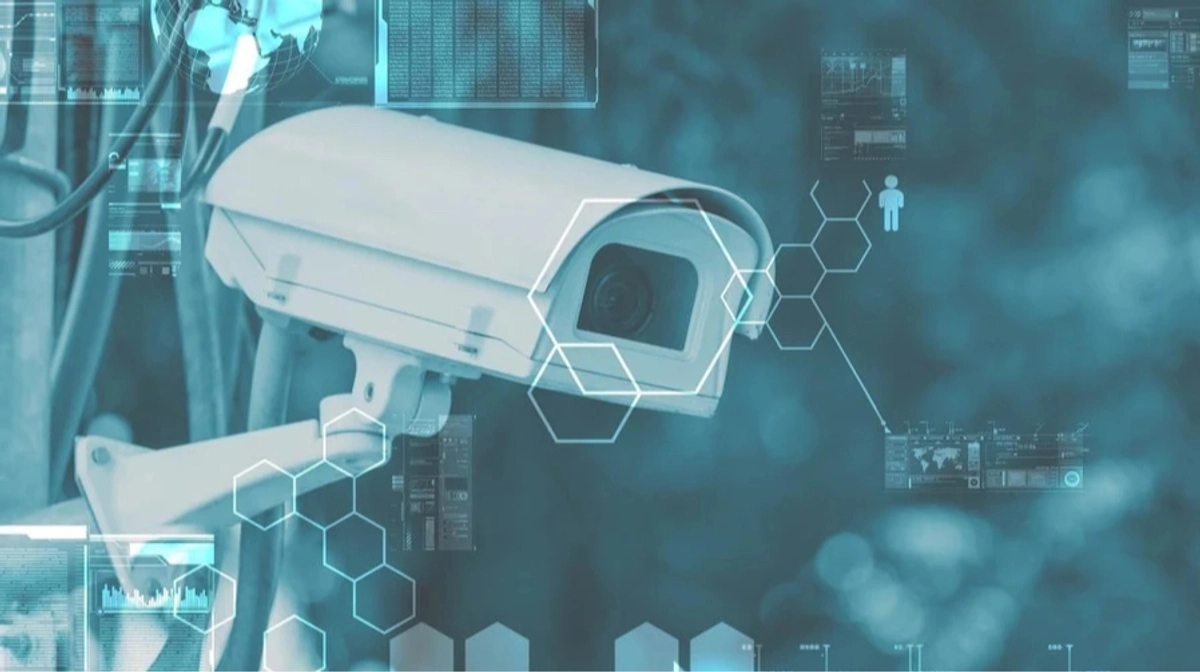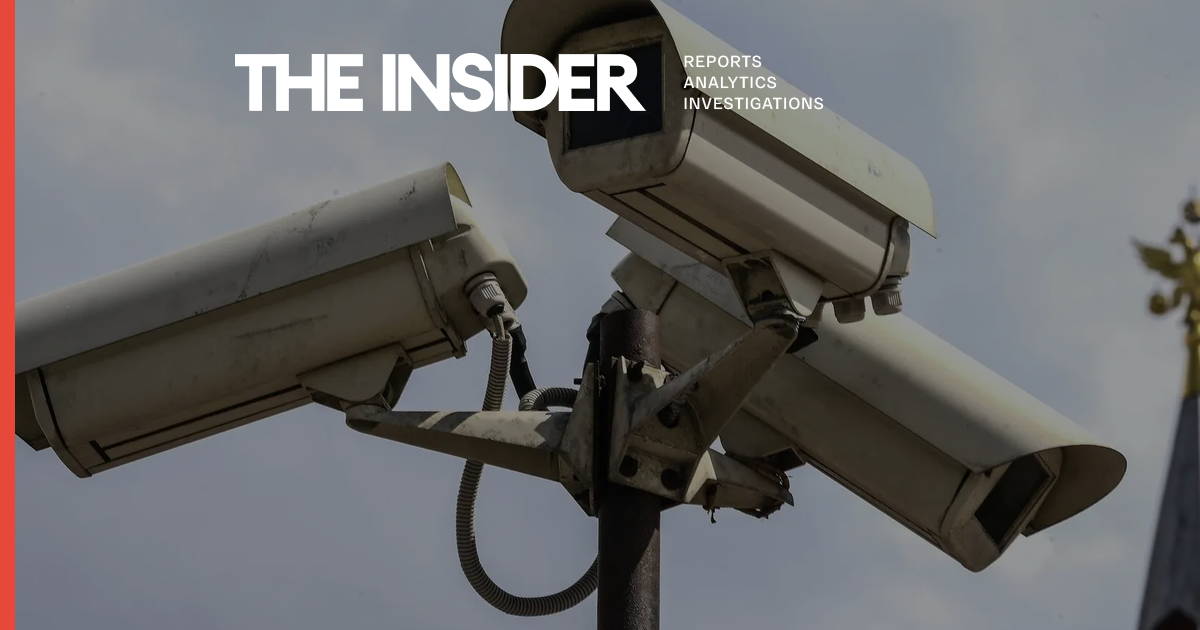
On July 27, Alexander Bastrykin, the head of Russia’s Investigative Committee, announced that the agency had successfully incorporated artificial intelligence into its work. According to Bastrykin, specialized software for biometric analysis now allows Russian investigators to process terabytes of video footage quickly, identifying hundreds of suspects. The Investigative Committee is using new AI-based tools to analyze large volumes of data, search for digital clues, and identify people suspected of involvement in “extremist” and “terrorist” activity. Russia is not alone: China, Iran, North Korea, Turkey, and Belarus are also actively integrating AI into the systems they use to control their citizens.Contents1.A society of total surveillance2.China: How AI helps the world’s biggest Big Brother suppress dissent3.The race for computing power: How independent is China from the U.S., and is it ready to help other autocracies?4.AI in service of the Kremlin: An upgraded “digital Gulag,” attacks on global chatbots, and “troll farms 2.0”5.Iran’s hijab controls, North Korean crypto theft, and crackdowns on protests in Belarus and Turkey6.The free world against AI tyrannyA society of total surveillanceIn recent decades, debate over the political consequences of the world’s digital transformation has only intensified.The camp of technological optimists has included thinkers from a wide range of fields. Cyberlibertarian John Perry Barlow declared the internet a sovereign space without borders or governments. Silicon Valley pioneer Jaron Lanier saw open coordination among people online as a tool for developing global democracy. Sociologist Nicholas Negroponte believed censorship in the digital space was technically impossible. Sociologist Manuel Castells argued that networked structures would undermine the hierarchies of authoritarian states.They were opposed by an equally eclectic collection of pessimists. Gilles Deleuze warned of the emergence of a flexible “society of control” through digital networks. Roger Clarke introduced the concept of “dataveillance” — surveillance through digital traces. And David Lyon argued that a total “surveillance society” was nothing short of inevitable.It is still too early to draw any final conclusions, but so far authoritarian regimes have been largely successful in suppressing freedom of speech online by combining technical censorship with physical measures. In addition to tracking of online activity and user location, citywide video surveillance systems leave nowhere for real-world dissidents to hide. And with the emergence of generative AI, the world’s largest autocracies — China, Russia, Iran, North Korea, Turkey, and Belarus — have made a qualitative leap, integrating cutting-edge technologies into their existing systems of control while testing new methods of suppressing citizens’ rights.Traditional authoritarian methods — censorship, espionage, propaganda, and force — required significant human and financial resources. AI has changed that, allowing the world’s most powerful tyranny, China, to scale up control while minimizing costs. Beijing has accumulated an enormous body of information that, with the help of modern language models, will allow the authorities to identify patterns in large datasets quickly, detecting new markers of social discontent faster and suppressing protests before Chinese citizens can take to the streets. Soon, a person detained on the basis of a neural network’s decision will face the continuous monitoring of their emotional state while in custody — carried out by AI-powered cameras that are already being tested in Chinese prisons.“Catching-up” autocracies such as North Korea or Russia are not yet using AI to its full potential. Due to sanctions, they are forced to import the necessary chips through semi-legal schemes — and paying a premium for the privilege. Even so, they continue to actively develop their own surveillance programs using AI.Importantly, authoritarian regimes are willing to sell and exchange technologies, accelerating their adoption and increasing their impact. Russia, for example, shared technology with the Iranian mobile operator Ariantel in order to help Tehran build its own equivalent of Russia’s SORM, the FSB surveillance system. SORM, which appeared in the mid-1990s, tracks a user’s browsing history and session times, records every call and text message, and stores intercepted data for years.SORM has advanced significantly thanks to machine learning. Phone conversations are now transcribed by programs similar to the audiogram feature of Russian telecoms giant MTS, turning speech into text in real time, making it available for instant contextual analysis by the regime.Data from SORM, such as a phone’s location (as determined through cell towers), is compared with footage from city surveillance cameras connected to facial recognition systems. Those systems are built on AI training and can identify people by analyzing their facial features, silhouettes, and movements. One such facial recognition technology, FindFace, developed by Russia’s NtechLab, has also appeared in Iran.The free world faces an existential challenge: technologies created to unite humanity have become effective weapons for dividing and controlling it. To continue suppressing civil liberties with AI technologies, authoritarian regimes critically need access to powerful microchips — occasionally obtained through legal import exceptions, but more often delivered via gray supply chains for Western equipment or made at home thanks to investments in production capacity. Authoritarian regimes critically need access to powerful microchips
AI in an iron grip: How dictatorships use artificial intelligence to strengthen their rule
On July 27, Alexander Bastrykin, the head of Russia’s Investigative Committee, announced that the agency had successfully incorporated artificial intelligence…
TL;DRAI
Six authoritarian regimes deploy AI surveillance: Russia's biometric software identifies suspects in video; China scales control via language models detecting dissent. Tech leaders face geopolitical risk as dictatorships acquire chips via gray markets and export surveillance AI, impacting global governance frameworks.
5,270 words~24 min read