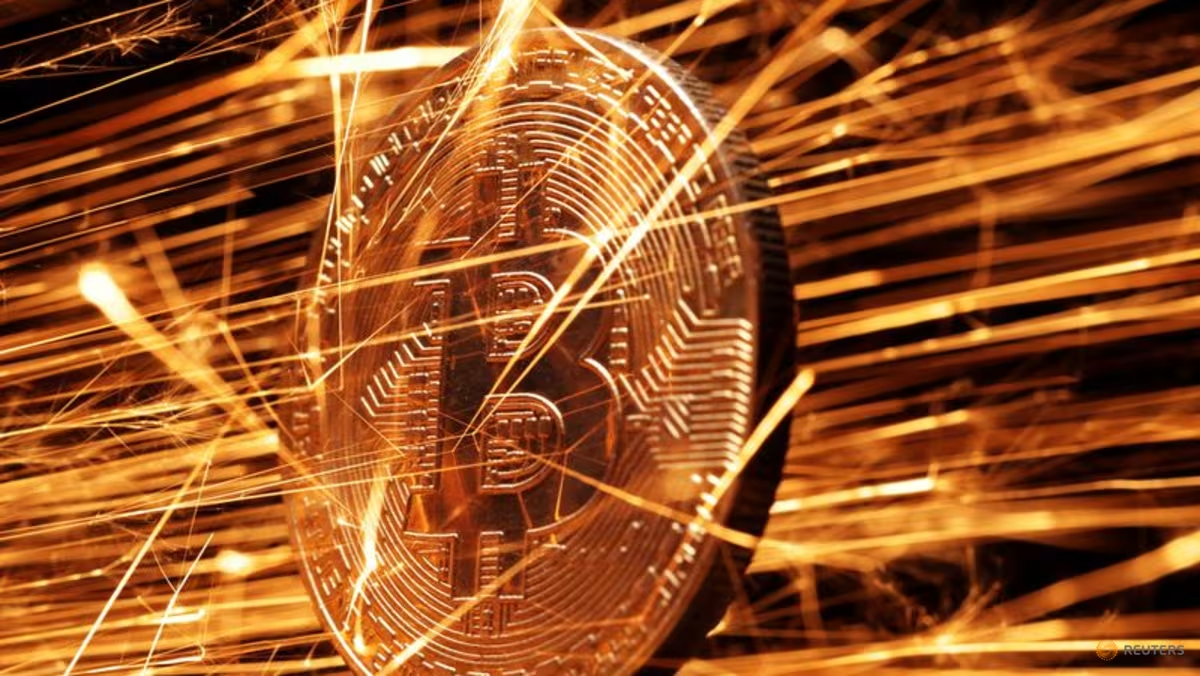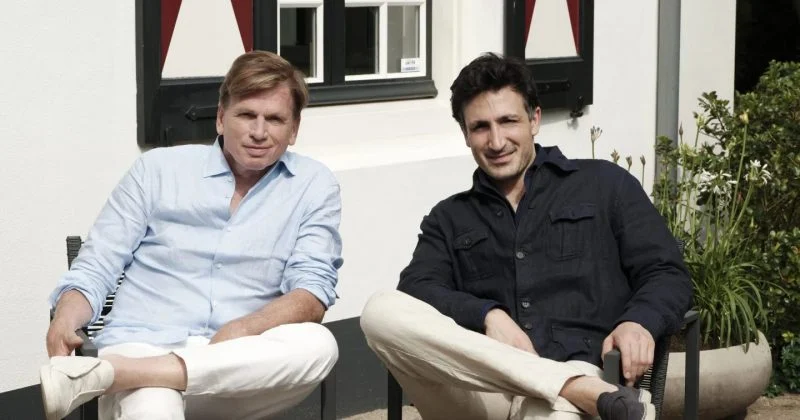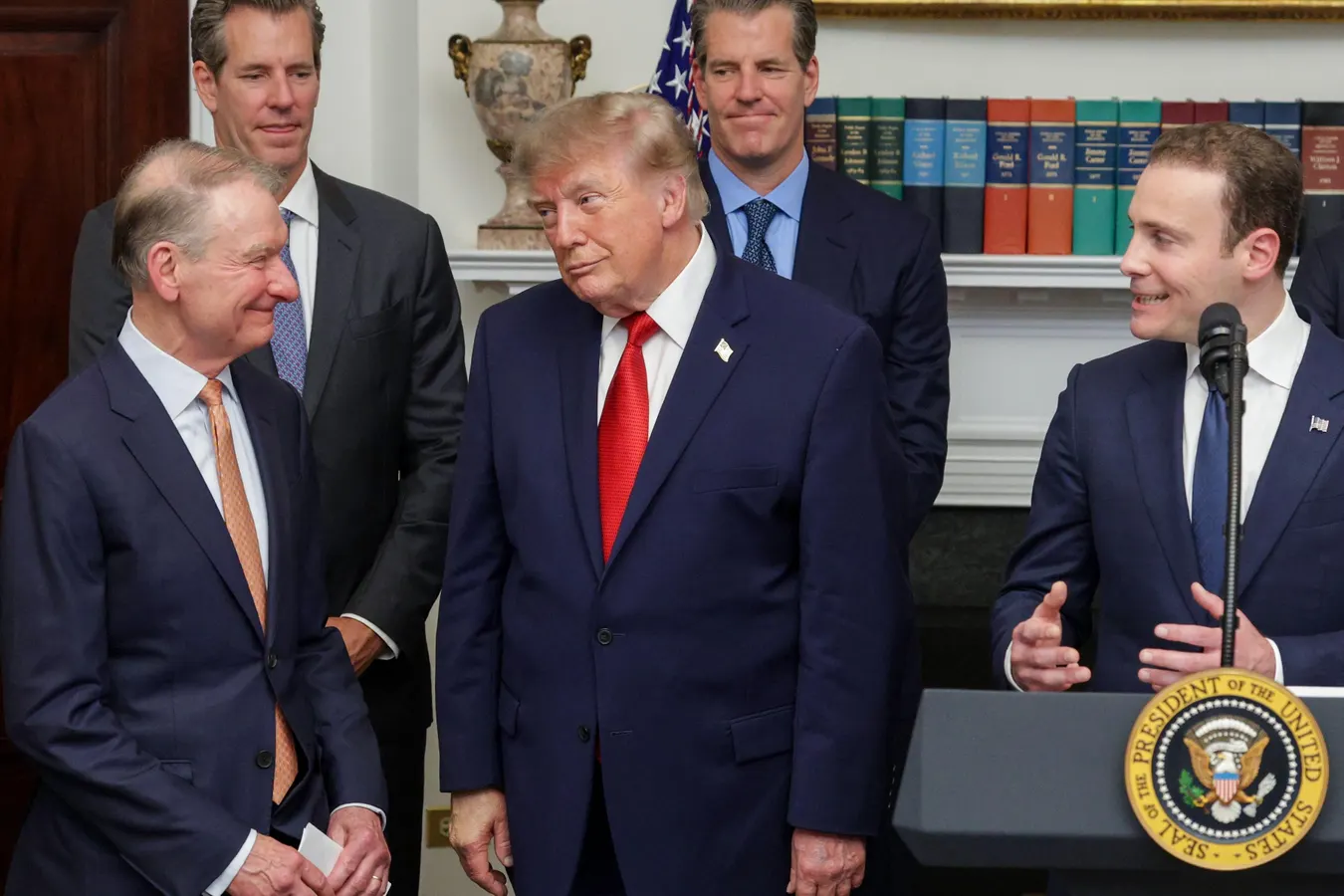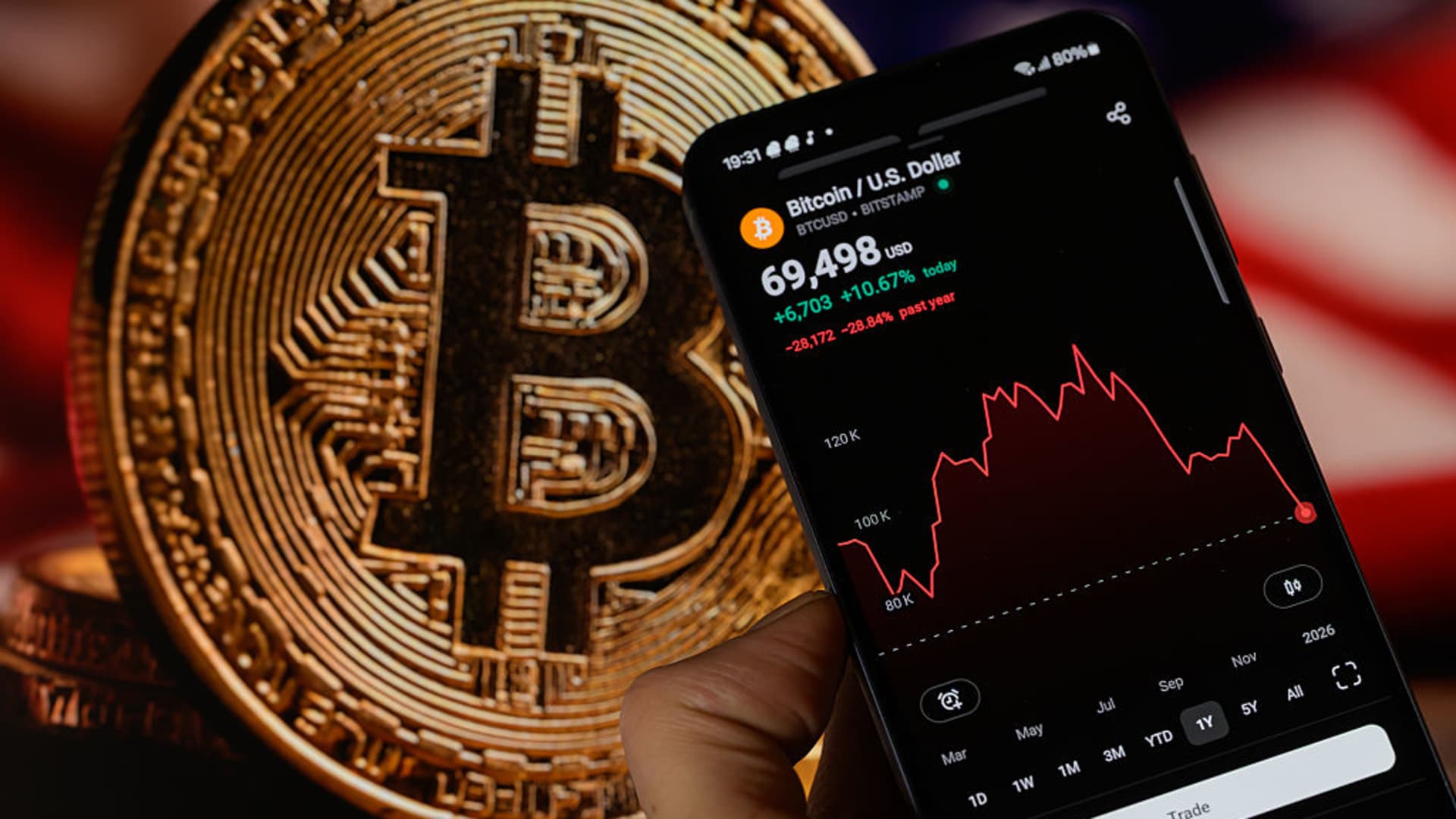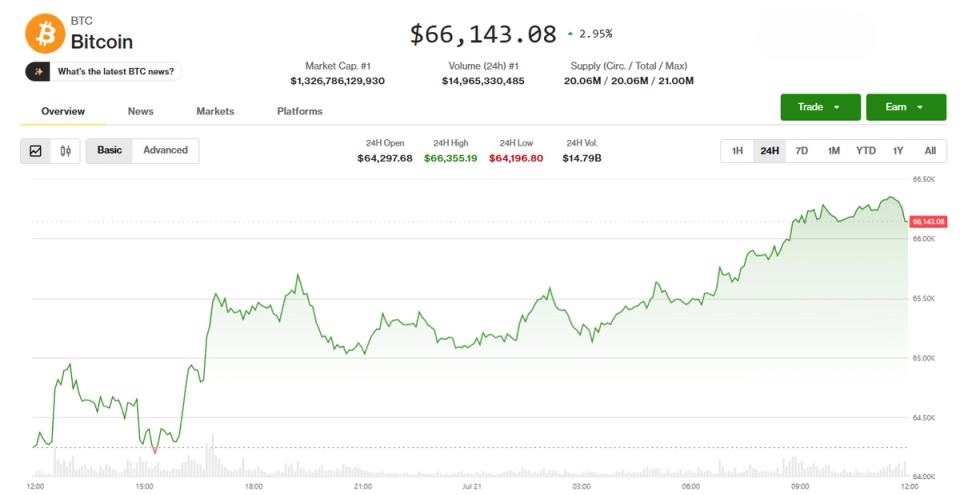
30 min ago3 min read(Shutterstock)SummaryBitcoin surged to $72,000 amid renewed political support from President Trump for a U.S. crypto-market structure bill and growing institutional interest.OKX executive Erald Ghoos argues that stricter U.S. and European rules like MiCA will underpin mass adoption and draw capital back from AI and semiconductor stocks, even as some peers say regulatory optimism is already priced into bitcoin.Ghoos also pointed to an expected resurgence in retail trading and a post-MiCA consolidation of digital asset platforms in the EU as trends to watch. Hours before crypto prices surged on Wednesday, Erald Ghoos, CEO of OKX Europe, echoed many crypto market observers in suggesting the market was nearing a bottom as money that had moved into AI and semiconductor stocks began to return to digital assets.Not long after, prices exploded out of the weeks-long range that had confined them, only to receive another boost as President Trump made a fresh call to Congress to pass the Clarity Act. Bitcoin’s rally took it as high as $72,300 during the European morning on Thursday."If and when the Clarity Act gets passed, I think that will blow new life into crypto enthusiasm and trust in the biggest economy in the world, which will then also transpire to the rest of the world," Ghoos told CoinDesk. "With more institutional interest than ever, regulatory clarity from the U.S. and Europe, DeFi being more accessible, the pieces of the puzzle are starting to fall together, for real mass adoption.”His view differs slightly from OKX's global managing partner Haider Rafique, who said recently that regulation-inspired optimism is already priced into BTC."The market prices news ahead of time," Rafique said. "Most of the appreciation from Clarity is already reflected in current prices."Ghoos has long argued that regulation is the foundation, not the obstacle. He predicted that 80% of crypto exchanges would not survive MiCA in June, citing the cost and complexity of building a compliant multi-license operation across Europe. Before MiCA, Europe was thought to have had more than 3,000 registered virtual-asset service providers. As of late June, about 244 firms were authorized under the regime.Regardless of how quickly U.S. rules progress, Ghoos said the market has already found its floor. The money that left crypto for AI and semiconductor stocks is coming back, he said."A lot of the money that flowed into semiconductors, AI stocks, SpaceX, will find a way back into crypto,” he said. “I think there was a hype, and I think a lot of that capital will eventually find its way back into digital assets."After dominating markets in 2026, AI-tied memory and semiconductor stocks showed signs of weakening. “The question now is whether that trend is beginning to reverse as the AI standard-bearers begin to lose momentum and bitcoin,” CoinDesk analyst James Van Straten wrote in early July.Another trend working against cryptocurrency has been a drop-off in retail trading, most noticeable in a 50% decline at Upbit and Bithumb in South Korea. Ghoos, however, argued that retail traders are not leaving crypto; they are simply following momentum, and momentum is about to swing back."I predict that the capital is not going to stay gone," he said. "They're thinking where is the opportunity? Where is the hype? Where can we make money?"Ghoos points to European volume as a different story. After Binance stopped serving EU customers when it failed to secure a MiCA license, OKX recorded a 160% jump in EU app downloads in the 12 days that followed, he said.12345678910Building the Zcash Machine: Tachyon and Quantum ReadinessBuilding the Zcash Machine: Tachyon and Quantum ReadinessZcash’s Tachyon upgrade aims to scale shielded payments, improve quantum readiness, and test whether its funding, security, and governance can hold.Jun 30, 2026Zcash’s Tachyon upgrade aims to scale shielded payments, improve quantum readiness, and test whether its funding, security, and governance can hold.Why it matters:Zcash’s Tachyon upgrade aims to scale shielded payments, improve quantum readiness, and test whether its funding, security, and governance can hold.View Full Report
Bitcoin rally sparks debate whether Clarity Act is already priced in
Erald Ghoos, OKX Europe CEO, says U.S. crypto rules could blow new life into the market amid a rotation of capital from AI back to bitcoin.
TL;DRAI
Bitcoin hit $72,300 after Trump backed the Clarity Act, while debate lingers on whether regulatory optimism is already priced in. Regulatory frameworks like MiCA are pulling institutional capital from AI/semiconductor stocks, making crypto a compliance-driven allocation.
658 words~3 min read