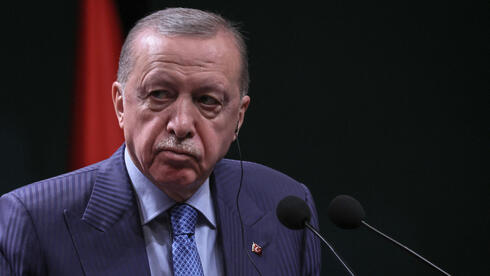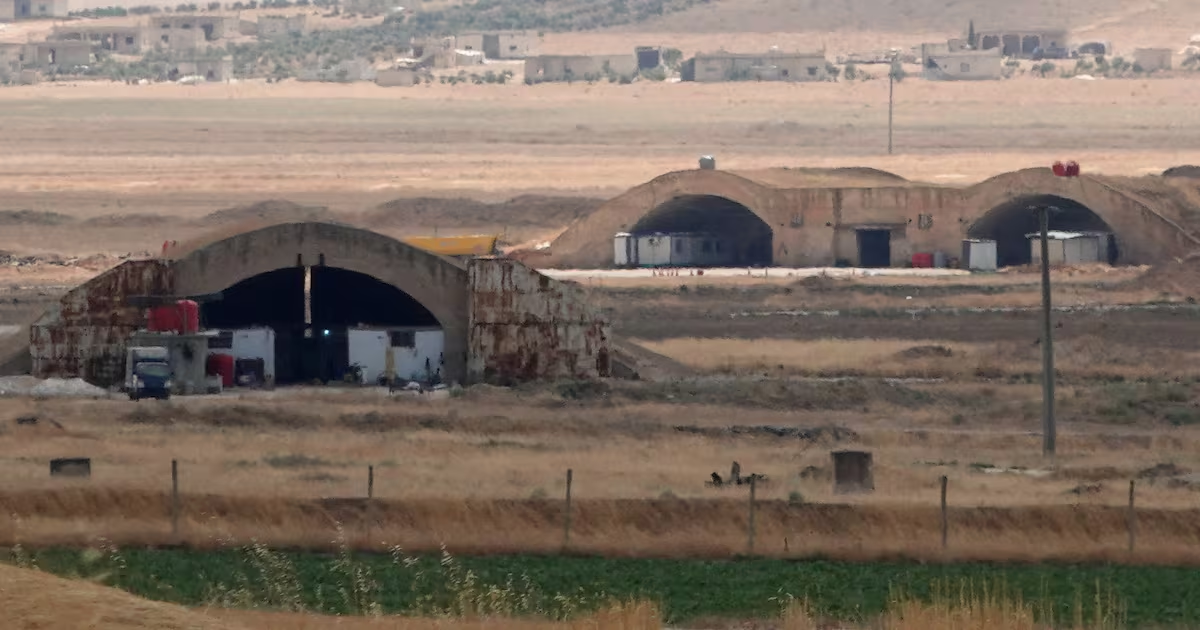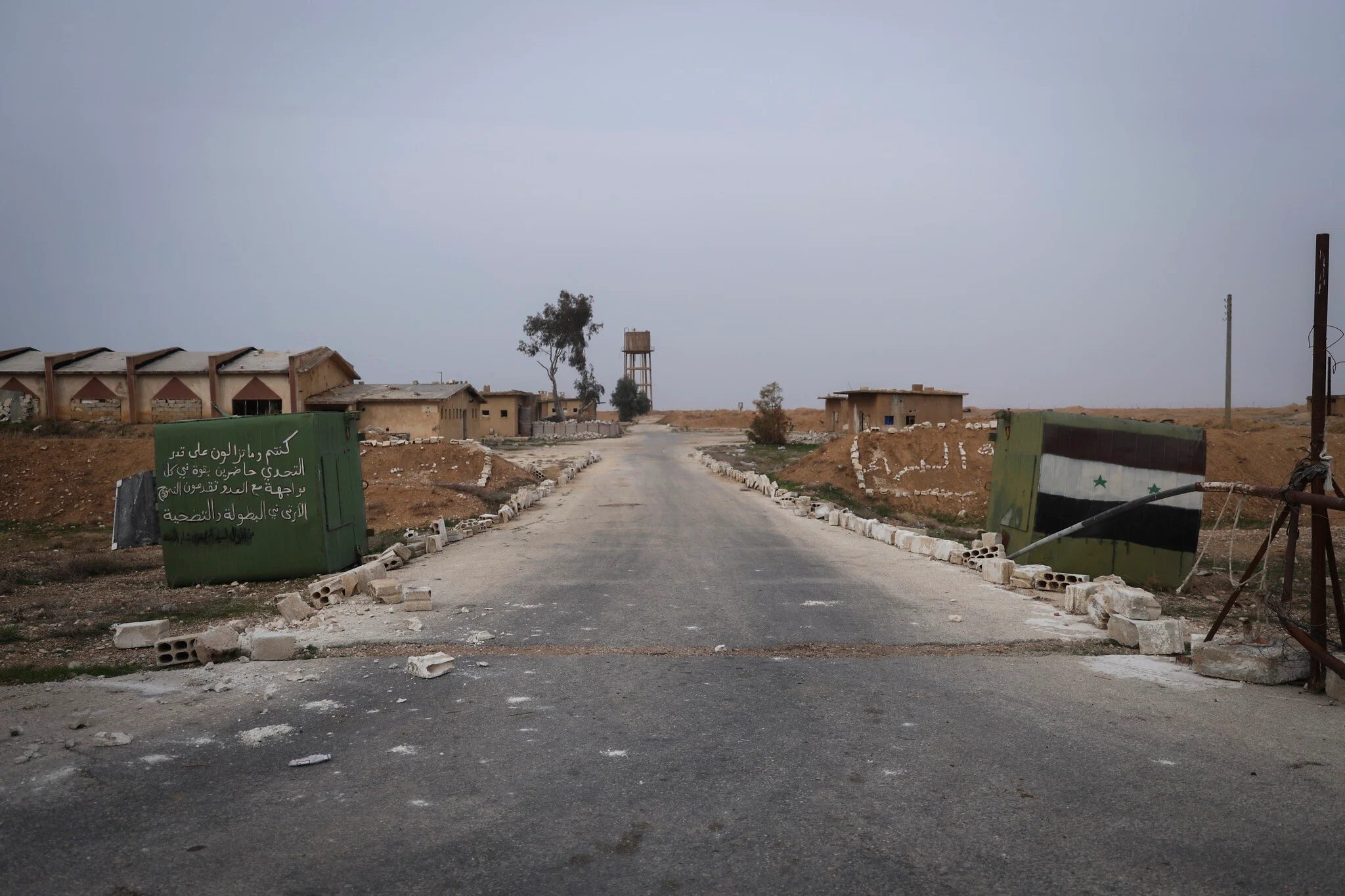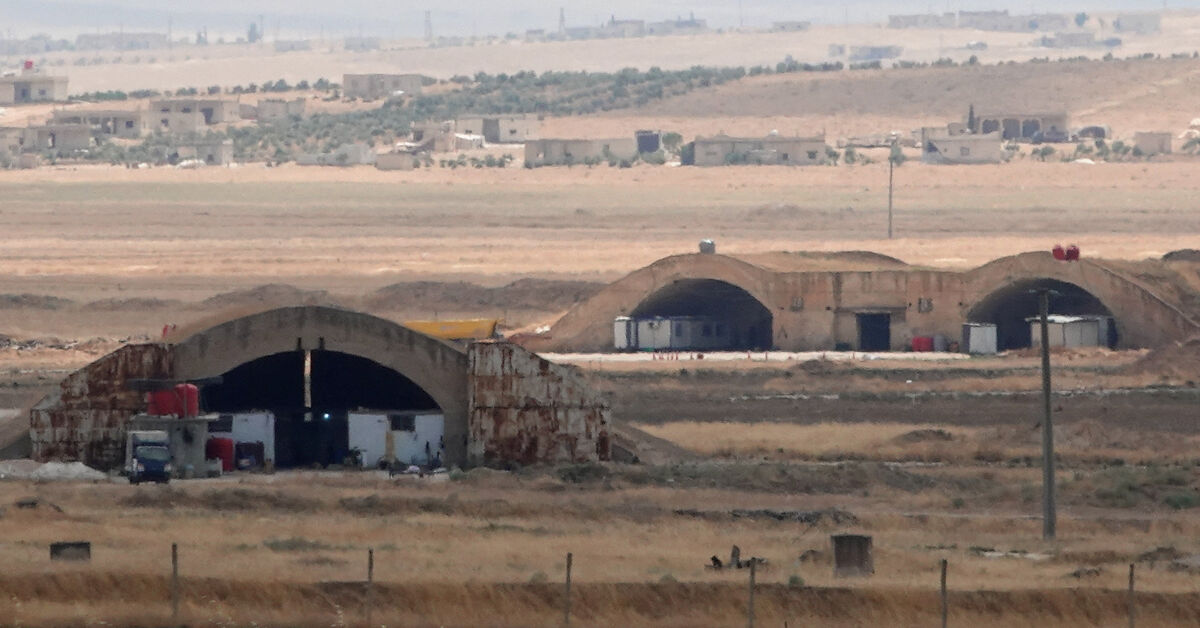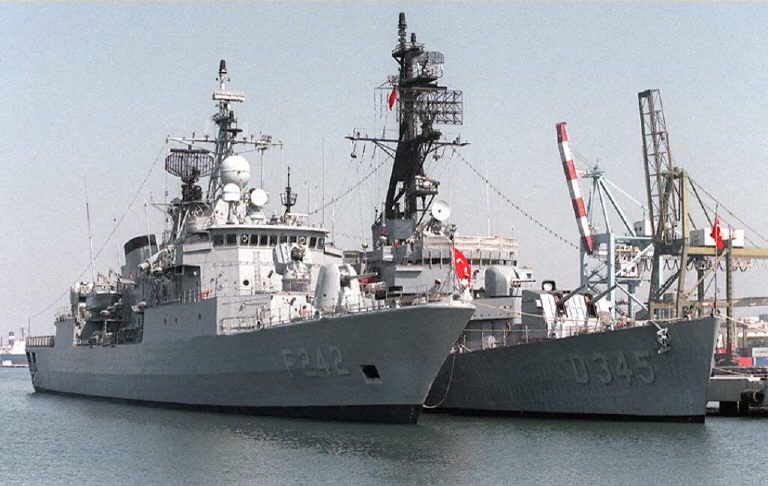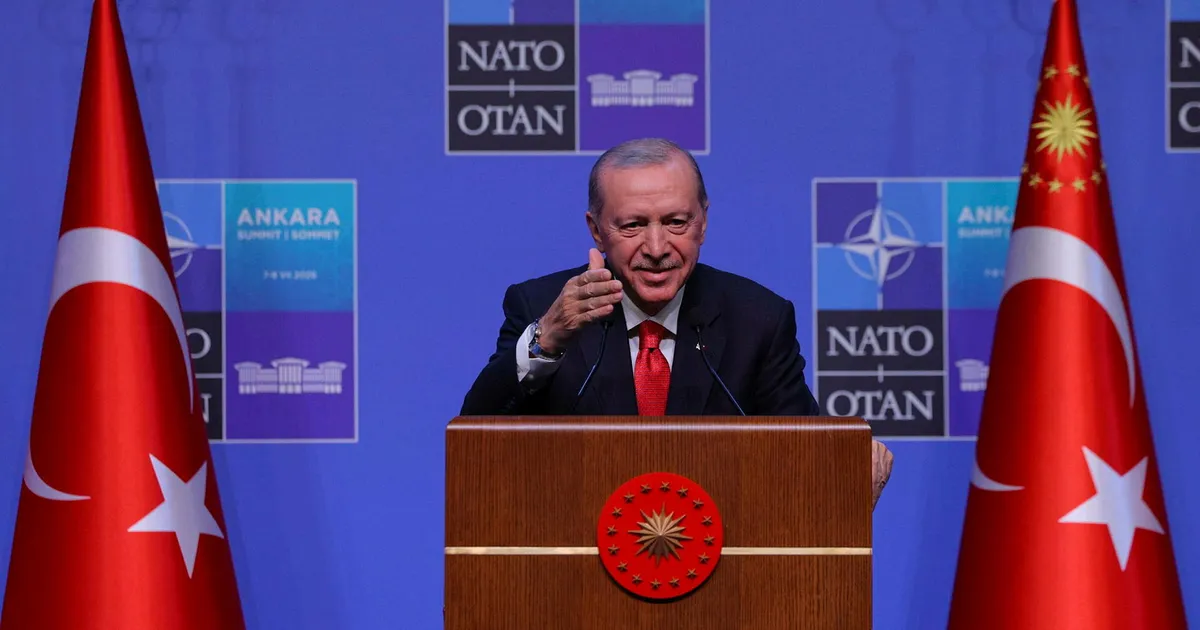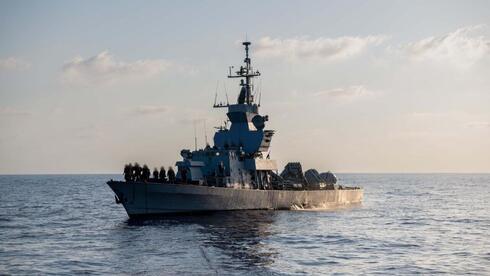
Israeli security officials say Turkish naval activity in the eastern Mediterranean is adding to concerns over Ankara’s growing role in Syria, though both sides have so far avoided direct military confrontation; 'Have seen several times that Trump prefers Erdogan over Netanyahu' After Israeli officials said the unusual strike on a Syrian military airport was carried out because “Damascus allowed Turkish troops to deploy on its territory despite warnings,” Turkey’s Defense Ministry issued an official response Thursday denying the claim.“No Turkish military delegation was present at the Syrian air force base before or during Israel’s airstrikes,” ministry spokesperson Rear Adm. Zeki Akturk said.“Our efforts to protect Syria’s sovereignty and territorial integrity will continue with determination. It is important that the international community take more concrete and effective steps against Israel’s actions, which threaten peace and stability in the region,” according to Akturk.The attack on the military airport in Syria“The perception that Israel’s military interventions against neighboring countries are routine and acceptable must under no circumstances be allowed to take hold. We will continue to support Syria’s efforts to develop its own military capability and infrastructure," he added.Meanwhile, Israeli security officials are watching Turkey not only on land but also at sea. According to the officials, Turkey has been moving naval vessels into parts of the Middle East where it had not previously maintained a presence, in an effort to project power, in some cases not far from Israeli vessels.Turkey has a large and significant navy, much of it domestically produced. So far, there have been no unusual incidents at sea between Israeli and Turkish vessels, and certainly no direct confrontations. But the two militaries are watching one another there as well. The fact that Turkish vessels are now operating in areas where they were not previously present has raised tensions in the region.Two weeks ago, the Israeli Navy completed a large-scale service-wide exercise, the first of its kind since the start of the war, simulating a range of threats. These included attacks on ports, strikes on offshore rigs and, of course, disruptions to freedom of navigation and the stopping of merchant vessels on their way to Israel.Security officials say war with Turkey is not currently part of the reference scenario, and Turkey is considered a rival state rather than an enemy state. However, they stressed that this is “a delicate spectrum that, as we are seeing, can change in an instant.”GalleryIsraeli naval exercise (Photo: IDF Spokesperson's Unit)According to the officials, Turkey would like access to significant natural resources and greater control at sea, and Israeli planners therefore take into account the possibility that Ankara may seek to expand its maritime presence in cooperation with Syria.Such incidents in the Mediterranean have been taking place throughout the past year and are not necessarily a development of the past few days or months. But they have taken on added significance against the backdrop of rising tensions in Syria. On Wednesday, IDF Chief of Staff Lt. Gen. Eyal Zamir visited Syria and said that “hostile forces will not establish themselves on our borders.”Most of the friction has focused on shows of presence and displays of power. The two navies interact and encounter one another in the eastern Mediterranean, in economic zones and international waters where all sides operate.This has included several incidents in which Israeli and Turkish vessels encountered one another and drew closer. When that happens, both sides go on heightened alert. A show of force can also take the form of a fast, close pass near another vessel or, alternatively, a kind of “encirclement” of a ship by several naval vessels for several minutes.These incidents are becoming more common in the maritime arena but have not deteriorated into actual confrontations. Security officials explain that “there is a big difference between encountering a German Navy vessel and encountering a Turkish Navy vessel. The level of alertness is different.”There has been no major change in these incidents in recent days compared with the past year.Two days ago, the Prime Minister’s Office issued a statement in English effectively confirming the strike: “Israel and Syria agreed to a status quo on security matters, which Syria nearly violated by allowing Turkish troops to deploy at an air force base near Aleppo. Israel repeatedly warned Syria that such a deployment would constitute a threat to Israel’s security — and Syria chose to ignore those warnings. Israel will not tolerate threats to its security and would welcome a return to the status quo.”The strike drew sharp reactions in Turkey. The pro-government newspaper Türkiye, which supports President Recep Tayyip Erdogan’s policies, declared in its headline that it was a “serious Israeli provocation.”The subheadline read: “Israeli fighter jets bombed a military airfield in Idlib — only about 55 kilometers from the Turkish border. The airfield was intended for the deployment of radar and air defense systems — and in doing so, [the Israelis] carried out a provocation of war.”Despite the harsh tone, however, the statements were not given particular prominence and were generally buried among other reports.Meanwhile, Prime Minister Benjamin Netanyahu referred Wednesday to the unusual strike and said: “We will not tolerate a Turkish military entrenchment moving southward, because it threatens us, and we made that clear in general. We saw that Turkey intended to establish itself at an airfield south of its line, near Aleppo, and we sent a message — Don’t. The message was delivered, but apparently they did not hear it. So we made sure they understood.”Dr. Rami Daniel, a researcher at the Institute for National Security Studies, addressed the tensions in Syria Thursday morning in an interview with ynet’s studio and said there were two unusual features to the strike two days earlier.“First, until now there was a kind of understanding between Turkey and Israel over a division of Syria: Israel operates in the south and Turkey does not interfere, Turkey operates in the north and Israel does not interfere,” he said. “The strike was much, much farther north than that dividing line, so this is already a very strong symbol and signal being sent to Turkey.”The relationship between al-Sharaa and Erdogan is not perfect, and there are other players(Photo: Turkish Presidential Press Service / Handout)“The second thing is that, unlike in other cases, not only in Syria, Israel gave up what is known as the space for denial,” Daniel said. “There were many bombings attributed to Israel, an Israeli official confirmed them, and then there was silence. The purpose of those attacks was not clear. In this specific case, we have confirmation from the prime minister that Israel was behind the bombing, and he also says it was because of Turkey. This is a very unusual strike and a kind of escalation vis-à-vis Turkey.”Daniel also addressed Turkey’s response to the strike and said that “a rhetorically harsh condemnation came out of Turkey, but the statement also included an accusation that all of this was connected to the elections in Israel, that these were political considerations by Netanyahu and his government.”“Many people analyzed that statement as an attempt by Turkey not to escalate. And that is correct,” he said. “At the moment, I don’t think Turkey is interested in a direct confrontation with Israel or in escalation. By the way, it currently has American support on the Syrian issue, so we will probably again see very strong condemnations from Ankara and a desire not to escalate in practice beyond what we know now.”“As Israelis, we prefer a weak Syria, one in which the IDF and the Air Force have full freedom of maneuver,” Daniel added. “It is true that Turkey wants to strengthen Syria and its regime, but the question is whether it can do that. Israeli air superiority is not only over Syria, it also applies vis-à-vis Turkey, which is technologically less advanced in air defense and air force capabilities.”However, he said that “the game in Syria is complicated.”“The relationship between al-Sharaa and Erdogan is not perfect, and there are other players,” he said. “Could this strike turn Israel into a kind of common enemy that brings al-Sharaa and Erdogan even closer together? It may be that the diplomatic consequences of this bombing will be more negative than the military success of signaling to Turkey that Israel still controls Syrian airspace.”According to Daniel, “al-Sharaa is indeed allowing Turkish forces to arrive, usually framed as training for Syrian soldiers. What we need to understand is that in Israel we were too quick, among other things, to see al-Sharaa as some kind of Turkish proxy. The situation is more complicated. Al-Sharaa still wants a certain degree of independence from Erdogan.”“To strike from outside like this at a Syrian base connected to Turkey could actually mean shooting ourselves in the foot,” he said. “Afterward the Turks can come to al-Sharaa and tell him, ‘Listen, your problem is not with Turkey, which did indeed occupy part of northern Syria, but with Israel, this crazy regional hegemon that keeps bombing Syrian territory again and again.’”He recalled the latest NATO summit in Ankara, when Trump praised Erdogan and said: “I came only for you.”“We are seeing the consequences of this good relationship in many arenas,” Daniel added. “Thanks to Trump, Erdogan entered the Gaza issue with the ceasefire in October. He apparently wants to help, and Trump wants to help Erdogan grow stronger in Syria in exchange for various arrangements. There is a very good relationship here, and we have already seen several times that Trump prefers Erdogan over Netanyahu. That is a strategic challenge for Israel in several arenas.”
Turkey denies troop deployment at Syrian military base as tensions with Israel rise on land and sea
Israeli security officials say Turkish naval activity in the eastern Mediterranean is adding to concerns over Ankara’s growing role in Syria, though both sides have so far avoided direct military confrontation; 'Have seen several times that Trump prefers Erdogan over Netanyahu'
1,588 words~7 min read