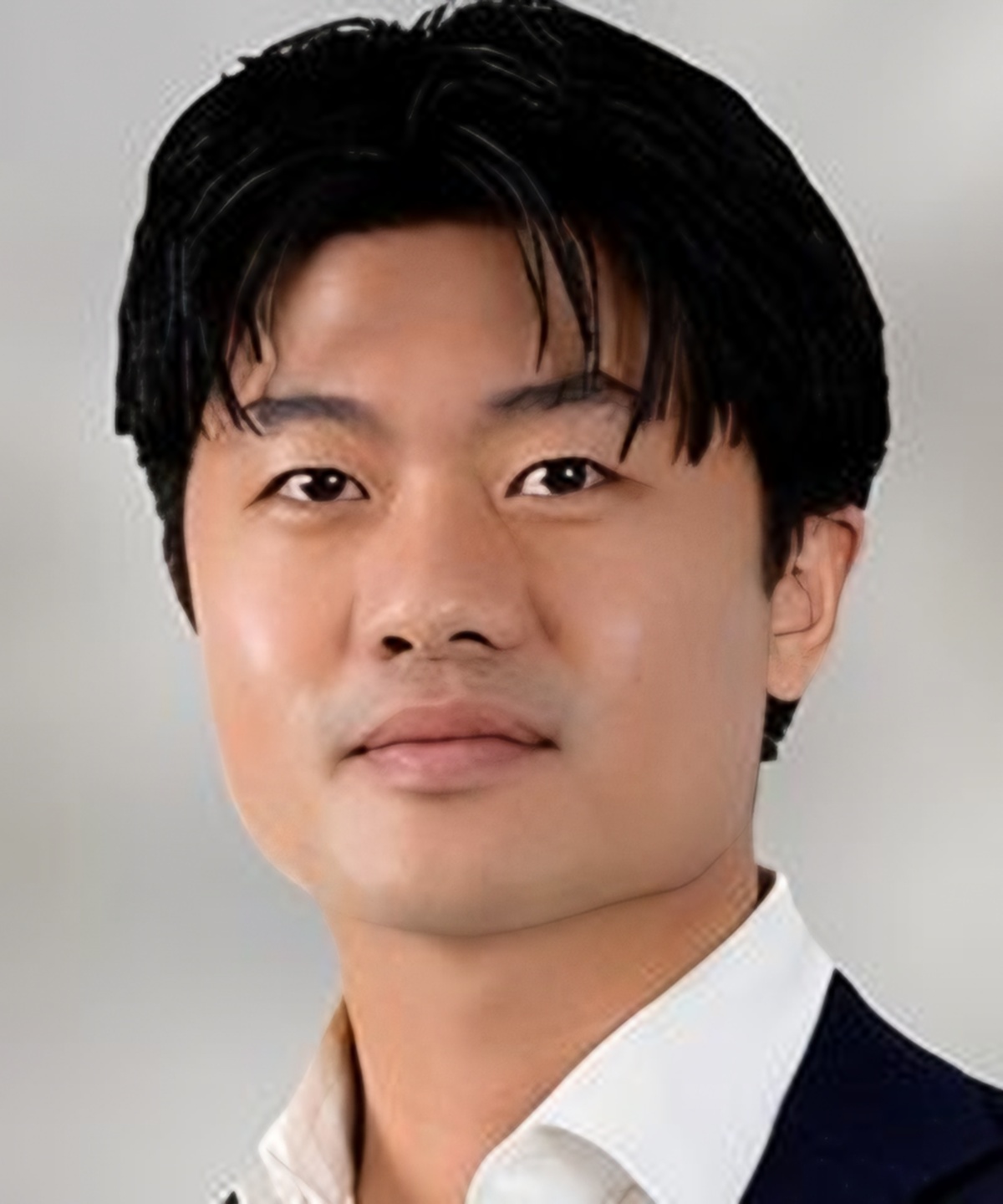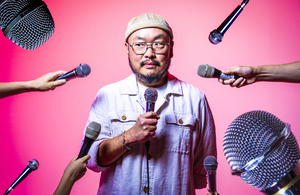
Danny Cho was only going to be in Seoul for two years. Nine years later, he's still building Korean stand-up and taking it global Korean American stand-up comedian Danny Cho poses for a photo before an interview with The Korea Herald at Herald Square in Seoul, Aug. 13. (Yoon Chang-bin/The Korea Herald) Danny Cho did not come to Korea chasing a Korean Dream.When the Korean American stand-up comedian moved to Seoul in 2017, the plan was far less ambitious: stay two years to escape the routine that had drained him at home."So the reason why I moved to Korea, it was supposed to be a temporary thing, like two years, and it was not to do stand-up in Korean," Cho told The Korea Herald in an interview in Seoul on Aug. 13. “It was because I was burnt out."Korea was supposed to be a detour. Instead, he found a reason to stay when he met a handful of young comedians performing stand-up at a small venue in Hongdae, Mapo-gu's university nightlife district, before they became members of what is now Korea's best-known comedy YouTube channel, Psick Univ.Cho had visited Korea intermittently since 2012, drawn by its tiny English-language stand-up scene — but performing in Korean was never part of the plan.Cho's image of Korea came largely from his parents, who immigrated to the US in 1978. "Their Korean culture is a 1978 version of Korean culture, which is not the culture here," he said.He jokes that this made him a "naengdong-ingan" — literally "frozen person," a term Koreans use for someone culturally stuck in an earlier era.So when the head of his future management company mentioned there were young comedians trying Korean-language stand-up in Hongdae, his first reaction was: Does that even work?He went to watch. What intrigued him wasn't mastery, but what was missing."They watched stand-up comedy through Netflix or YouTube with subtitles, so they only saw the topic," he said, "but stand-up is, there's technique to it."Cho felt they had absorbed the surface of American stand-up without its underlying mechanics: pacing, structure, setup and timing. Danny Cho, Korean American stand-up comedian (Lee Yoon-ji/The Korea Herald) He introduced himself and explained, unfiltered, why certain jokes hadn't worked, then asked to perform with them the next week. His Korean was less polished than it is now, but the set worked."I went and the place went crazy and I thought to myself, 'Oh this works,'" he said.Soon the dynamic changed, with the Psick Univ. comedians beginning to address him as "hyeong," a respectful term used by men to refer to an older brother or male friend, and asking him what the next step should be.That moment upended Cho's two-year plan.He began to believe that his Korean-language ability — stronger, he felt, than that of fellow Korean American comedians back home — put him in a unique position. Combined with his experience touring and performing in comedy clubs across the US, he thought he could help build Korea's nascent stand-up scene.From East LA to the club circuitCho's outsider approach traces back to East Los Angeles, California, where he grew up in what he says was the only non-Latino family in the neighborhood. His parents ran a liquor store that he remembers seeing robbed, while gang violence was also part of his childhood surroundings. Humor became a form of social survival."I personally believe the best comedians have to be funny because their lives depend on it," he said.He discovered stand-up in middle school through tapes of "Def Comedy Jam," and later studied economics at UCLA. After graduating in 2004, he joined KPMG's valuation consulting practice — the kind of career that fit his description of the "perfect Korean son." Korean American stand-up comedian Danny Cho poses for a photo before an interview with The Korea Herald at Herald Square in Seoul, Aug. 13. (Yoon Chang-bin/The Korea Herald) But he kept doing stand-up on the side. "I was like, 'Do I become the perfect Korean son? Or do I become a showbiz dreamer?'" he recalled.The decision was accelerated by Bobby Lee, a veteran Korean American comedian, who saw Cho perform and told him, “There's two types of people that get on TV — really good looking people and mutants. You look like a mutant, my friend."Lee connected him with an agent, and Cho quit KPMG in 2007, supporting himself through commercial work and college gigs.Cho crossed paths, often between tour stops, with fellow Korean American artists who later became bigger names. His UCLA seniors included members of hip-hop group Far East Movement, which later topped the Billboard Hot 100, and he knew rapper Dumbfoundead from his battle-rap days.Funny first, relatable secondKorean comedy, Cho believes, tends to put considerable weight on “gonggam," or shared experience and relatability. I asked what he prioritizes instead.“Funny," he said. “Just being funny."For Cho, almost anything that happens in everyday life can become material for a set. What matters is the reaction it provokes.“If I'm walking and something hits me, it has to be either funny, it has to make me really angry, or I go, ‘Oh, that's weird,’" he said. “Those are the three things. If I feel that way, then I have to sit down and think about it (to turn it) into a joke."He also sees a fundamental difference in where Korean and American comedy are willing to direct the punch line.“In the world of comedy there's going to be one victim," he said. “It's either me, the person saying it, or you." Korean American stand-up comedian Danny Cho poses for a photo before an interview with The Korea Herald at Herald Square in Seoul, Aug. 13. (Yoon Chang-bin/The Korea Herald) In his broad assessment, Korean comedy has traditionally made the performer the victim — the fool who gets embarrassed or humiliated. Stand-up can do that too, but it also permits the comedian to attack outward.“You can self-deprecate, but you can also attack," he said.The harder part in Korea, he argues, isn't always what audiences find funny, but whether they feel comfortable showing it.Building a profession, not just a starNine years in, Cho believes the most important change isn't that Korean stand-up exists — it's that audiences now have choices, with regular clubs and open mics replacing the handful of tiny shows he encountered in 2017.His larger goal is building a functioning profession where comedians can make a living touring without becoming television personalities.“I’m not saying that’s wrong. I’m saying that there is an option for others to do other things," he said.Cho himself has little interest in conventional Korean variety television. “I respect the variety show people because my soul can’t — I can’t do that," he said.Instead, he sees his role in Korea’s stand-up scene as something like the bumper rails on a bowling lane — giving younger comics room to experiment without straying too far from what makes stand-up comedy.“If your motivation is to make people laugh, great. You might fail," he said. “But if your motivation is to shock, then that’s not comedy to me."Can Korean comedy travel?Cho hasn't performed a full English set in six or seven years, and he estimates only 30 percent of his material would survive direct translation. That raises an obvious question of whether Korean comedy can travel the world as K-pop has.Cho thinks it can, but the bigger question is what survives the journey. “I think the main issue would be how universal the topic is."He points to American stand-up clips with Korean subtitles that have drawn millions of views, particularly jokes about relationships and other subjects that cross cultural boundaries. Korean American stand-up comedian Danny Cho poses for a photo before an interview with The Korea Herald at Herald Square in Seoul, Aug. 13. (Yoon Chang-bin/The Korea Herald) Last year he tested the theory at a comedy festival in France, performing in Korean with translation headsets for the audience. “They laughed at where I wanted them to laugh," he said.But comedy poses a technical problem that music does not — timing.“I tell the joke, bam, 15 seconds later, right? So that timing needs to be shortened," he said.Technology, however, is only part of the equation. For Cho, making Korean comedy travel also comes down to the material itself. “It just requires the comedy topics to be more global."Cho isn't looking too far ahead — a year or two at most — and sees no need for a “bukae,” the alternate persona common in Korean entertainment.“I don't have a bukae,” he said. “I just want to be true to myself.”In the end, the recognition he seeks is simple: to hear the people whose opinions matter to him say, “He's a good comic.”
The reluctant architect of Korean stand-up
Danny Cho did not come to Korea chasing a Korean Dream. When the Korean American stand-up comedian moved to Seoul in 2017, the plan was far less ambitious: stay
1,446 words~7 min read