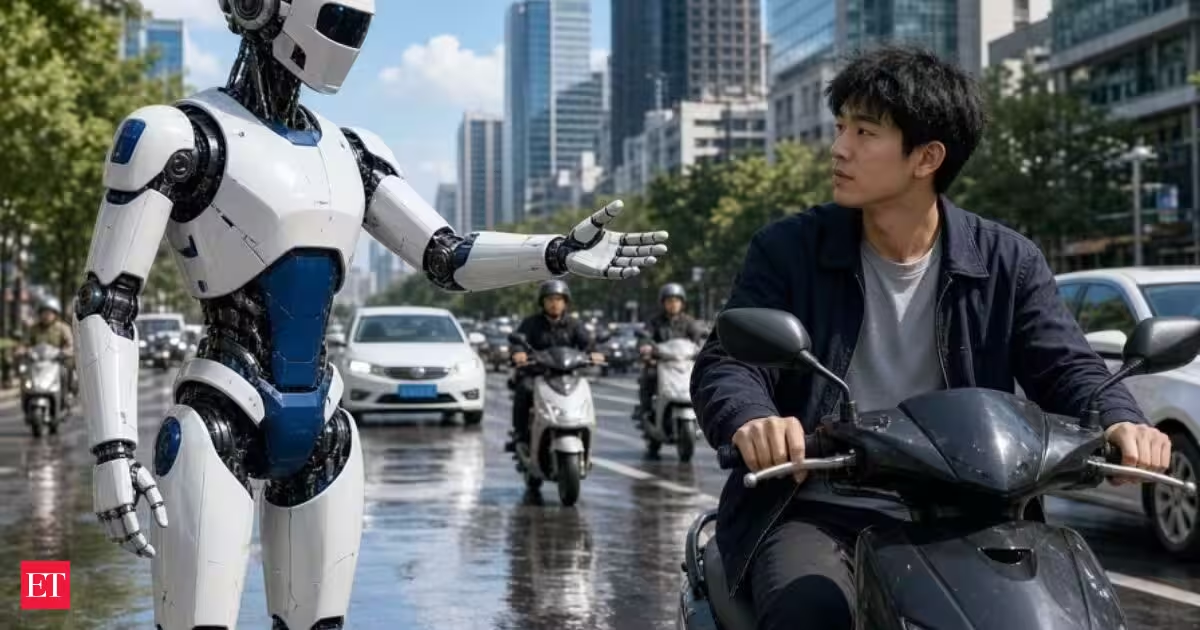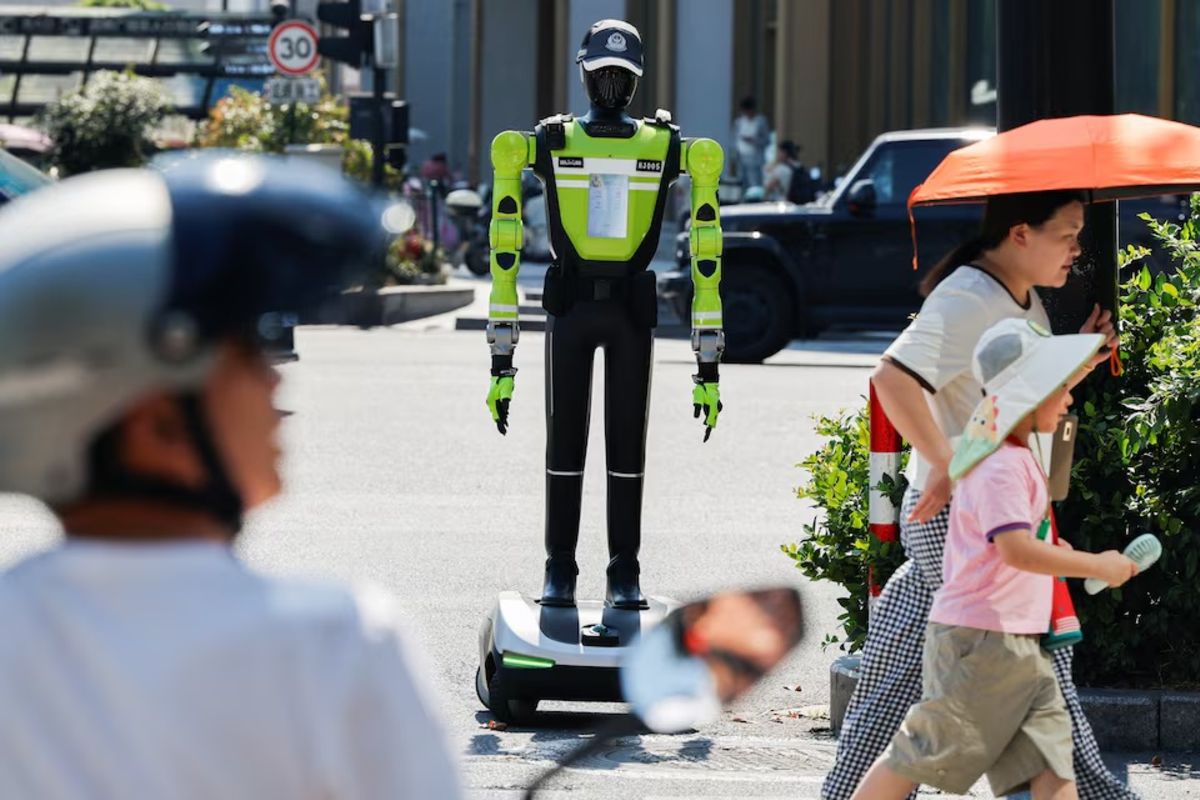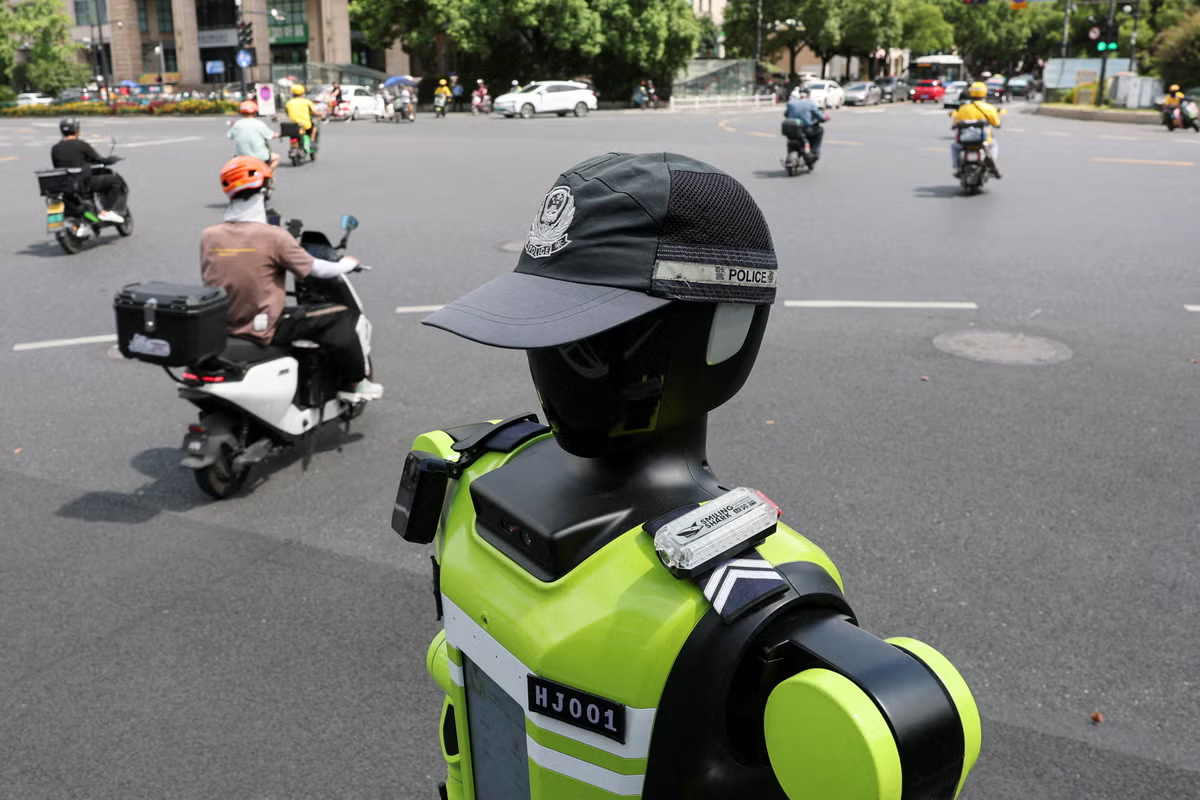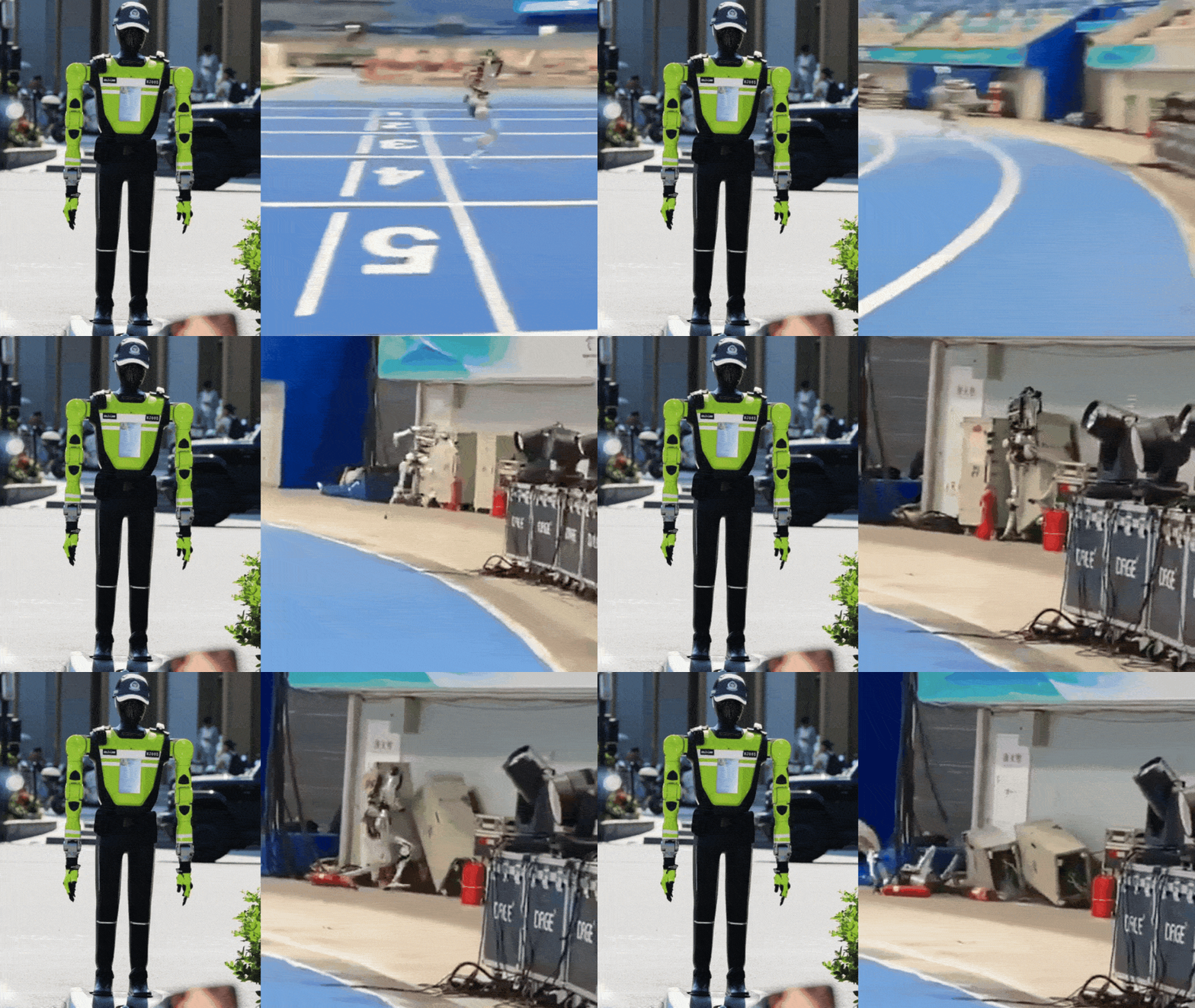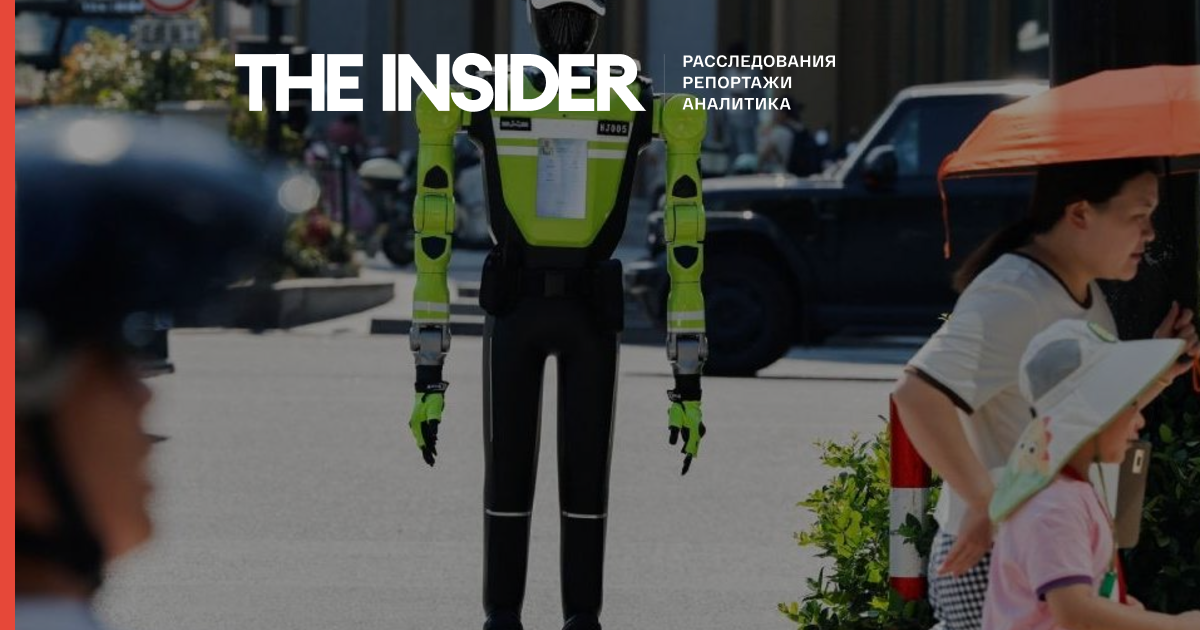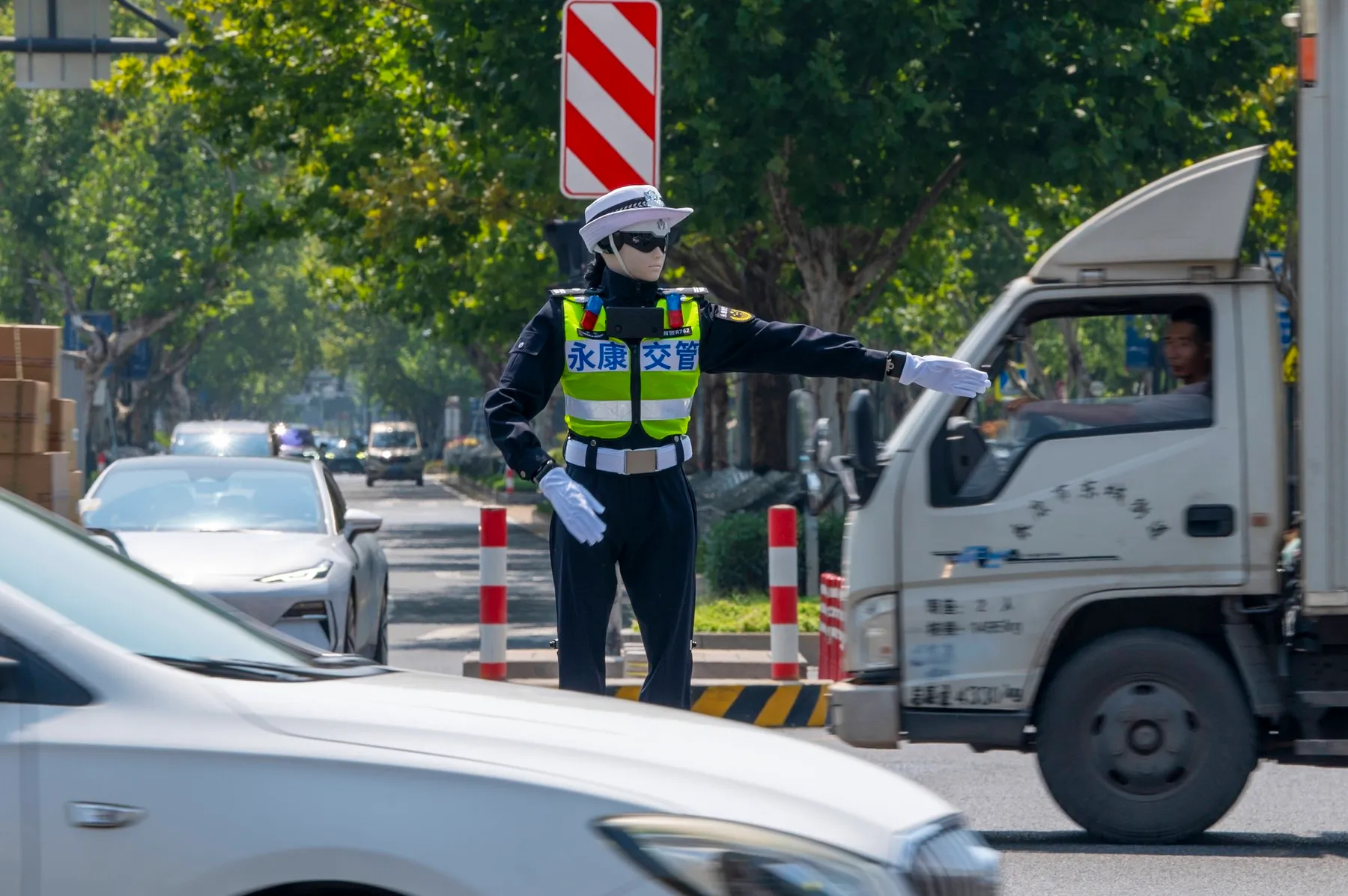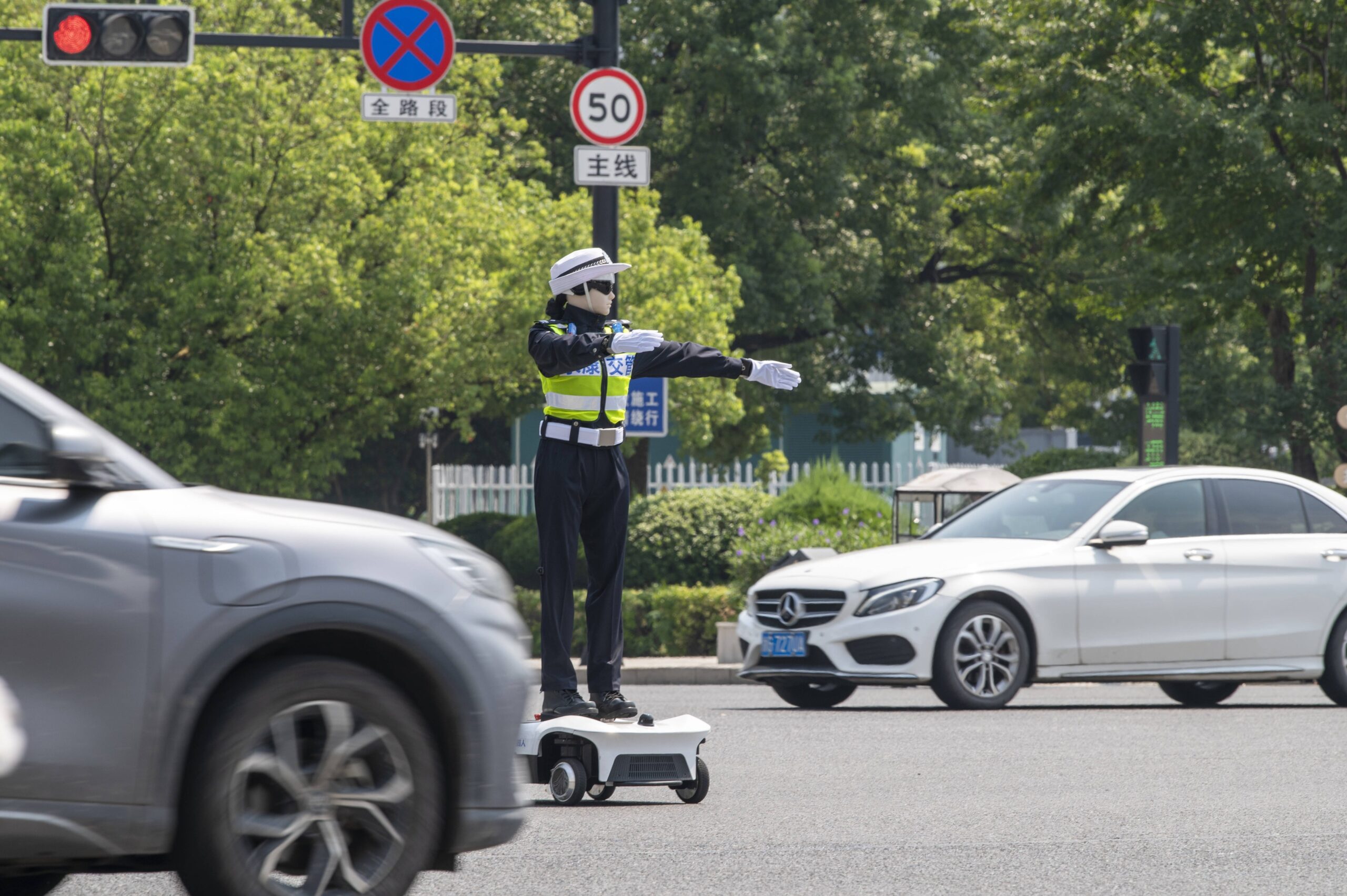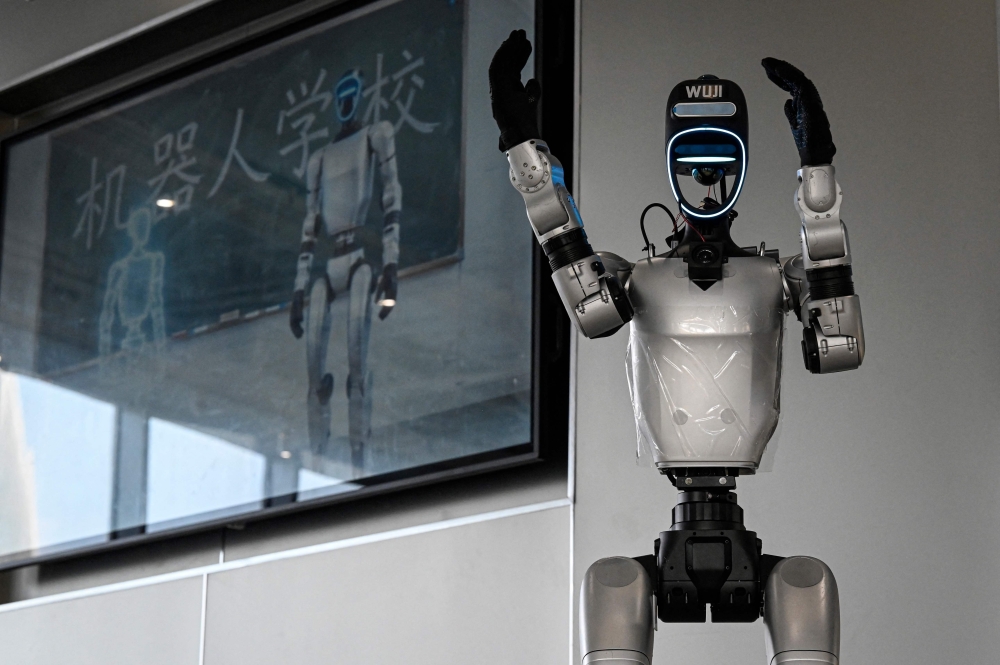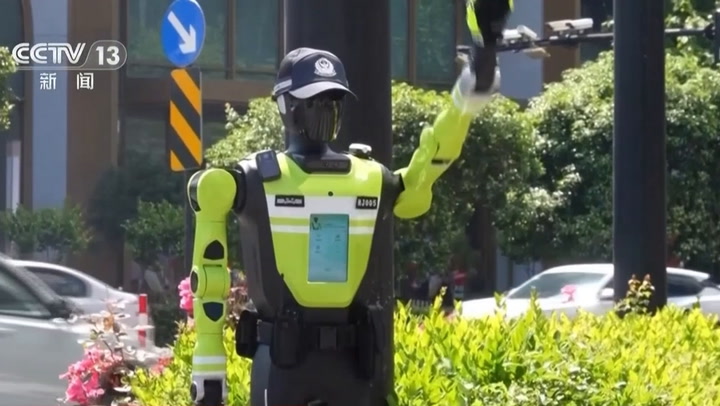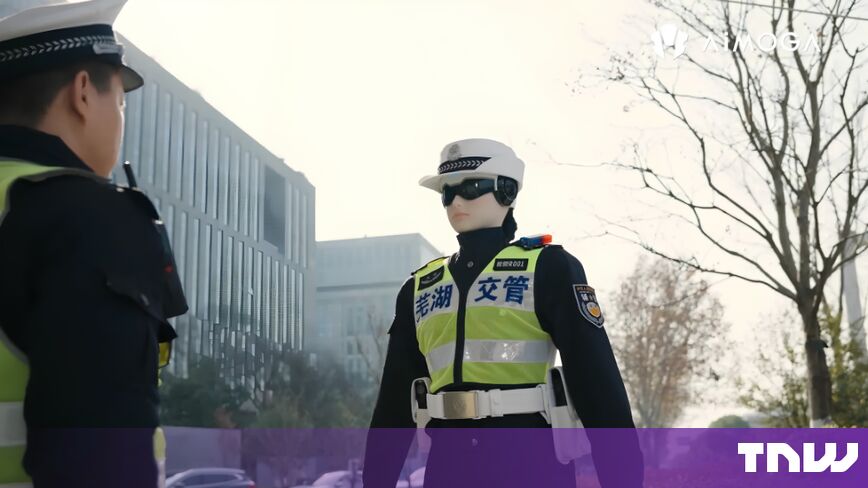
China’s robot traffic police can direct cars, scold jaywalkers, and give a lost tourist directions to the nearest metro station. What they cannot do is stop anybody, and that limitation is written into the design rather than left to the machine’s discretion.
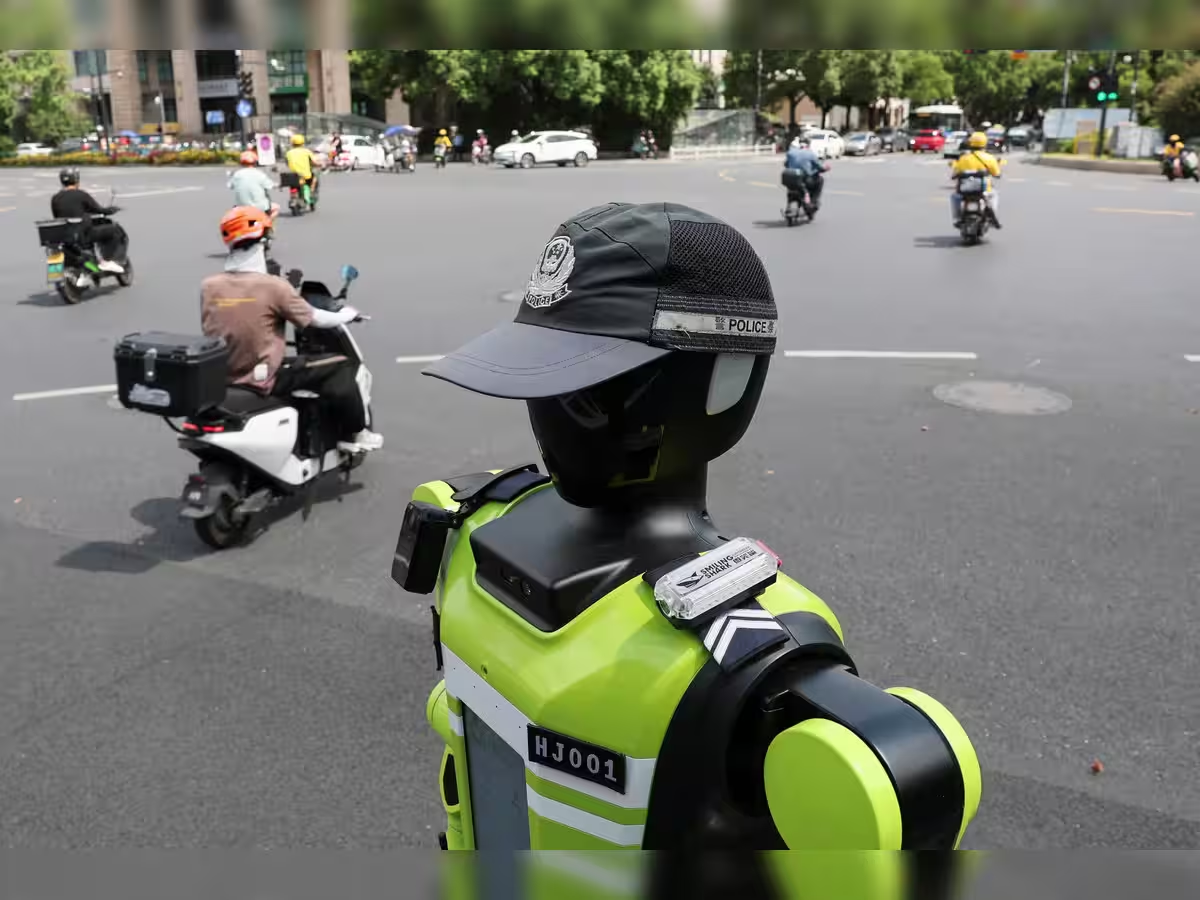
The clearest deployment sits in Hangzhou, where the local traffic police put 15 humanoid robots on duty around the West Lake scenic area on 1 May, timed for the Labour Day crowds.
Chinese state media described it as the country’s first robot traffic police squad, working alongside human officers rather than in place of them, which is the framing every Chinese city has used since the first AI-run police station was announced.
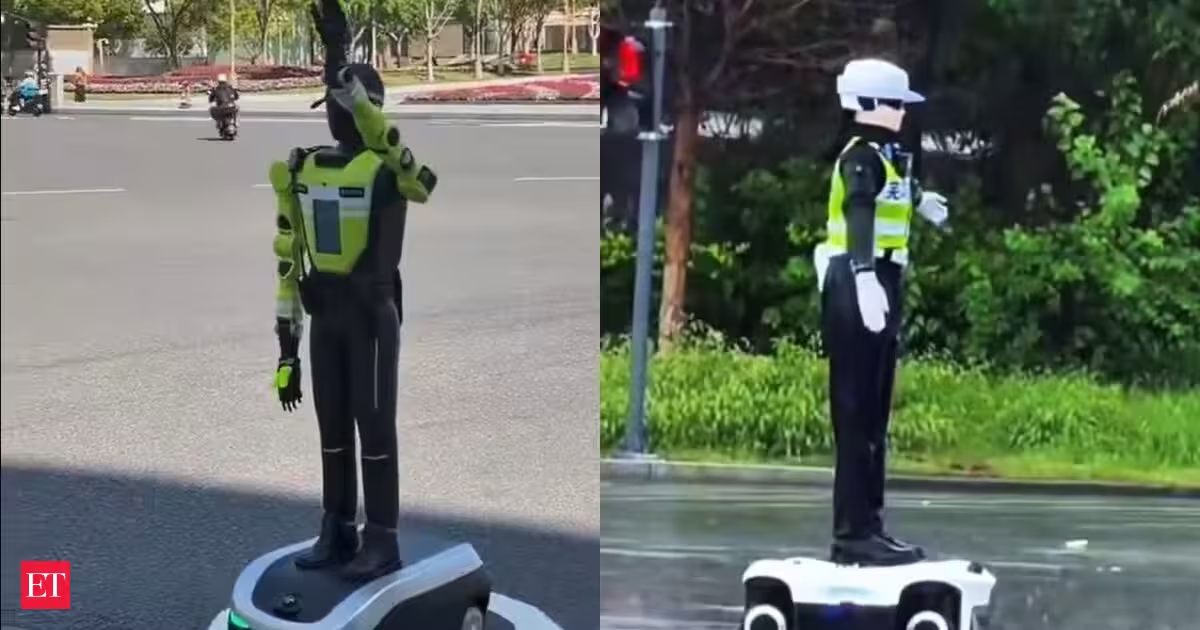
The job description is narrower than the word RoboCop suggests. The machines guide pedestrians and riders of non-motorised vehicles away from violations, help manage traffic flow, and answer navigation questions from tourists using large speech models plumbed into live traffic data.
They also watch. Visual recognition picks up violations as they happen, and the robots perform traffic command gestures synchronised with the signal cycle, which is the sort of detail that only becomes impressive once you consider how badly a machine can misread a junction.