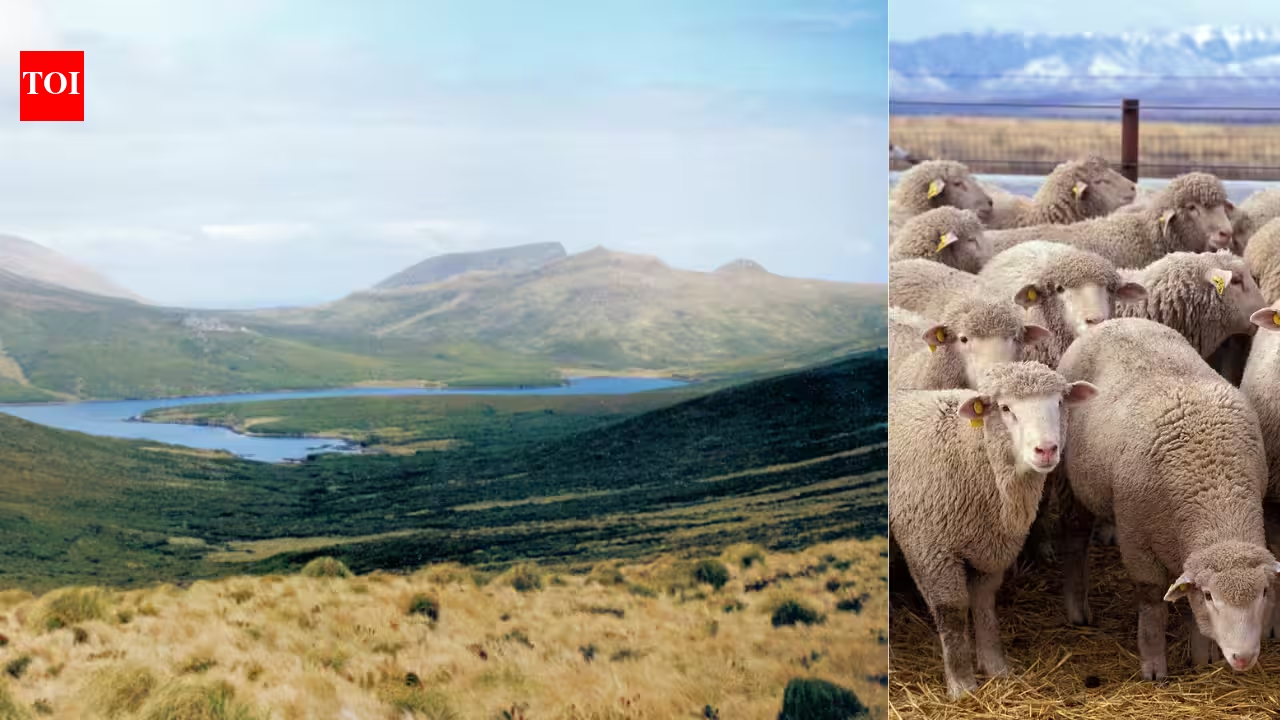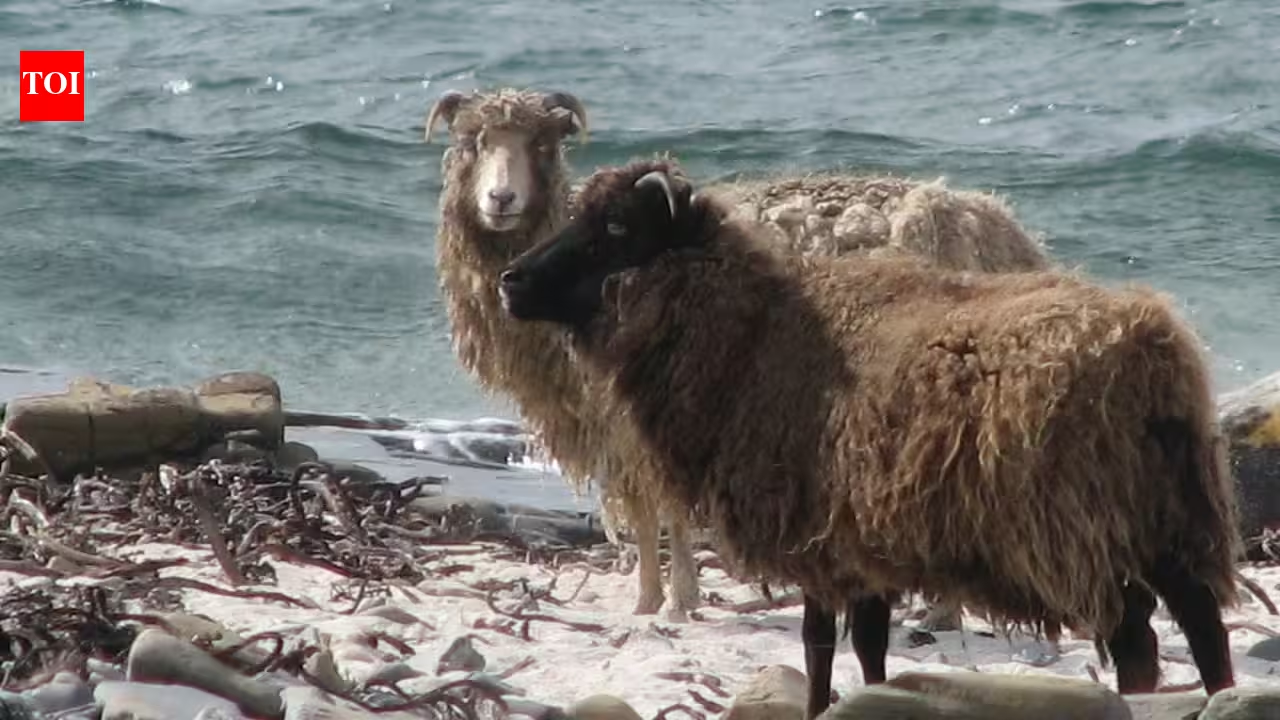
The unusual North Ronaldsay sheep | Wikimedia CommonsThe economy of North Ronaldsay, which was a small island in Scotland's Orkney archipelago, had started changing in the 1830s. The island's kelp industry had collapsed, and landowner John Traill wanted more of the island available for agriculture and cattle. Around 1832, islanders built a dry-stone sheep dyke around the perimeter of North Ronaldsay, which separated the native sheep from most of the island's inland grazing land and kept them on the foreshore for much of the year. Historic Environment Scotland describes the structure as roughly 12 to 13 miles long and about 6 feet high, built to keep the sheep on the shore, where they grazed on seaweed.The North Ronaldsay sheep survived for generations in a narrow ecological niche by eating seaweed washed onto the shore. Research has found that North Ronaldsay sheep are exceptionally sensitive to dietary copper, and that a diet that would be tolerated by other sheep can cause dangerous copper accumulation in this breed. The claim that ordinary sheep feed can be "poison" for them is therefore best understood as a consequence of their unusual susceptibility to copper rather than a claim that every conventional feed is automatically lethal.The unusual North Ronaldsay sheep | Wikimedia CommonsA wall built after the kelp industry collapsedThe sheep dyke was part of an economic change on North Ronaldsay. The North Ronaldsay Trust says the island's kelp industry collapsed in the early 1830s, after which John Traill decided that agriculture and cattle farming offered a more profitable use of the land. The island's native sheep were moved off the inland ground and confined largely to the shoreline. The Trust says they were left with about 271 acres of sand and rock and adapted to a diet made up almost entirely of seaweed from the North Atlantic.Historic Environment Scotland records that breeding ewes and lambs were brought inside the dyke between May and August, when they grazed with other domestic animals. The flock was also managed communally. Regulations covering the allocation and management of the sheep and maintenance of the dyke were agreed between the laird and crofters in 1839, according to the historic listing.Over time, however, the shoreline diet became central to the breed's biology. Seaweed contains relatively little copper, and generations of North Ronaldsay sheep lived in an environment where copper intake was unusually low. Scientists later began studying what happened when animals shaped by that environment were exposed to more copper-rich diets.What happened when the sheep ate terrestrial food?A 1982 study reported copper poisoning in North Ronaldsay sheep that had been removed from the island and maintained on terrestrial herbage. Five sheep were fed grass from laboratory paddocks, with hay from the same paddocks used during winter. Four died, while comparison animals from other breeds remained healthy under the conditions described in the study.Later research examined the biological basis of this sensitivity. A 2006 paper in BMC Veterinary Research compared North Ronaldsay sheep with the more copper-tolerant Cambridge breed. The researchers described the North Ronaldsay animals as uniquely sensitive to copper. The study reported that North Ronaldsay sheep and their crossbreeds absorb more dietary copper than other domestic sheep, showing that the trait is heritable. The researchers linked the breed's sensitivity to long-term adaptation to a copper-poor environment dominated by seaweed. The study examined how their physiology responded to copper. When copper accumulated in the animals' tissues, researchers found patterns of protein expression that differed from those seen in Cambridge sheep. The results were consistent with a much greater susceptibility to copper-induced oxidative stress.North Ronaldsay sheep are a semi-feral breed that has evolved to eat seaweed | Wikimedia CommonsA rare example of inherited adaptationThe animals evolved under conditions where copper was scarce, but that adaptation came with a cost when their diet changed. In one experiment discussed in the 2006 research, North Ronaldsay sheep continued to accumulate copper even on diets containing relatively low amounts of the metal. The same paper described the breed as showing an extreme form of the copper sensitivity already seen in sheep generally.North Ronaldsay sheep are not poisoned by grass simply because it is grass, nor does every commercial sheep feed pose the same risk. The problem is copper exposure. Feed, mineral supplements and terrestrial diets can contain substantially more copper than the seaweed-based diet to which the flock became adapted, and the breed's ability to regulate that intake differs from that of many other sheep.Historic Environment Scotland lists the sheep dyke as a Category A structure, while the North Ronaldsay Trust continues work connected with its restoration and with conservation of the island's distinctive flock. The sheep still occupy the ecological niche created when the island's agricultural priorities changed nearly two centuries after the dyke was built. Their seaweed diet and unusual copper sensitivity remain visible evidence of how long-term isolation and environment can shape inherited traits in a domestic animal.
In 1832, Scottish islanders built a wall that forced their sheep onto the shore: They adapted to eating seaweed and became highly sensitive to copper-rich feed
The economy of North Ronaldsay, which was a small island in Scotland's Orkney archipelago, had started changing in the 1830s. The island's kelp industry had collapsed, and landowner John Traill wanted more of the island available for agriculture and cattle.
816 words~4 min read