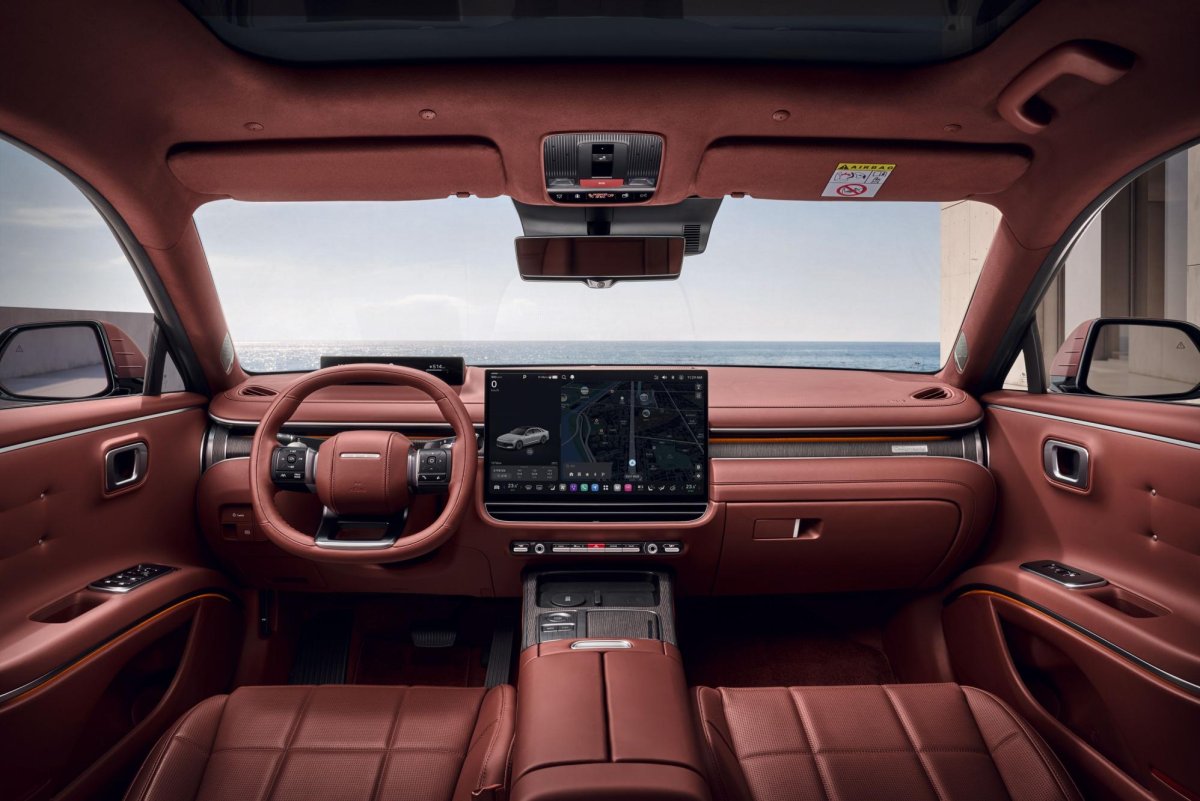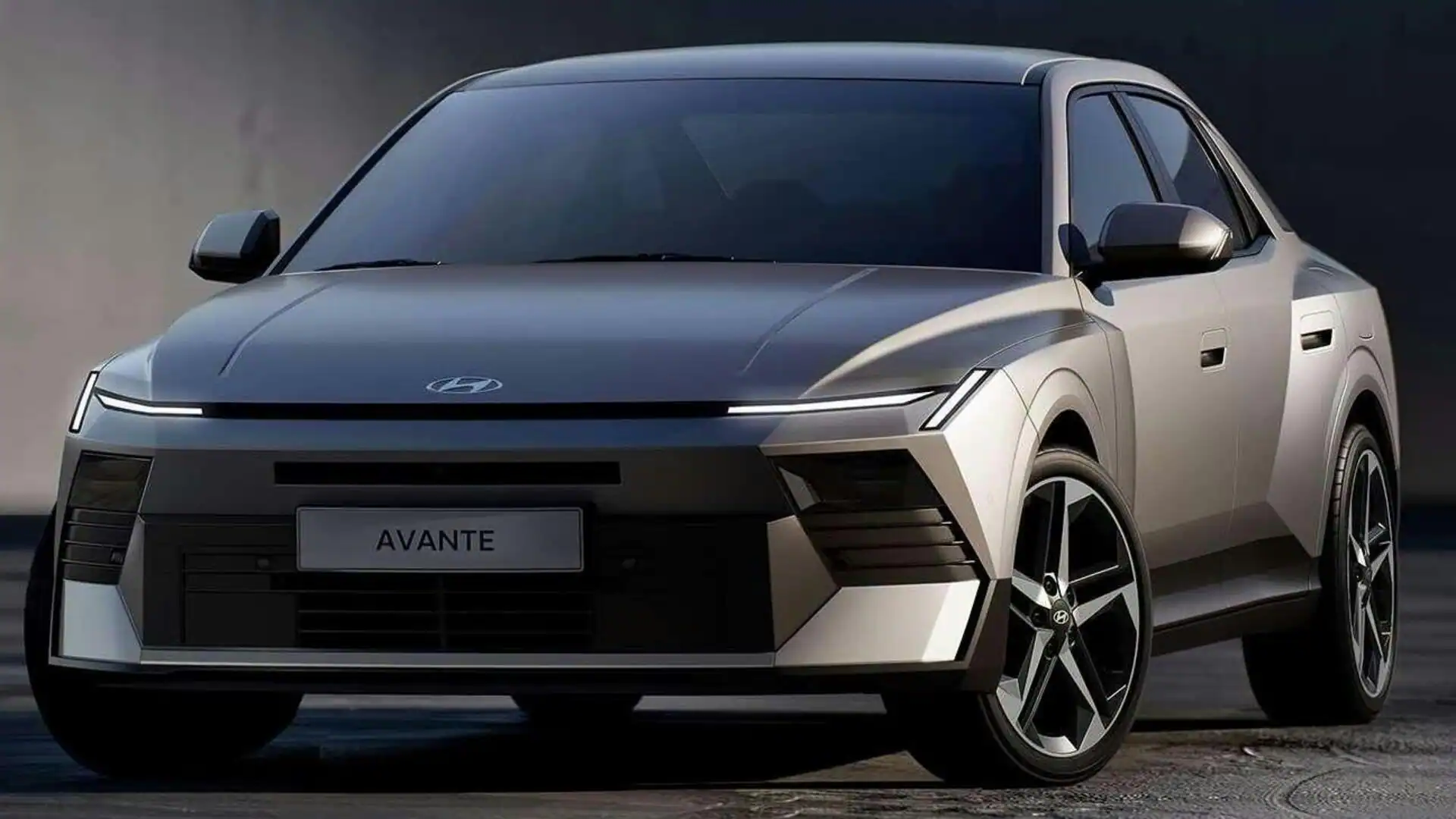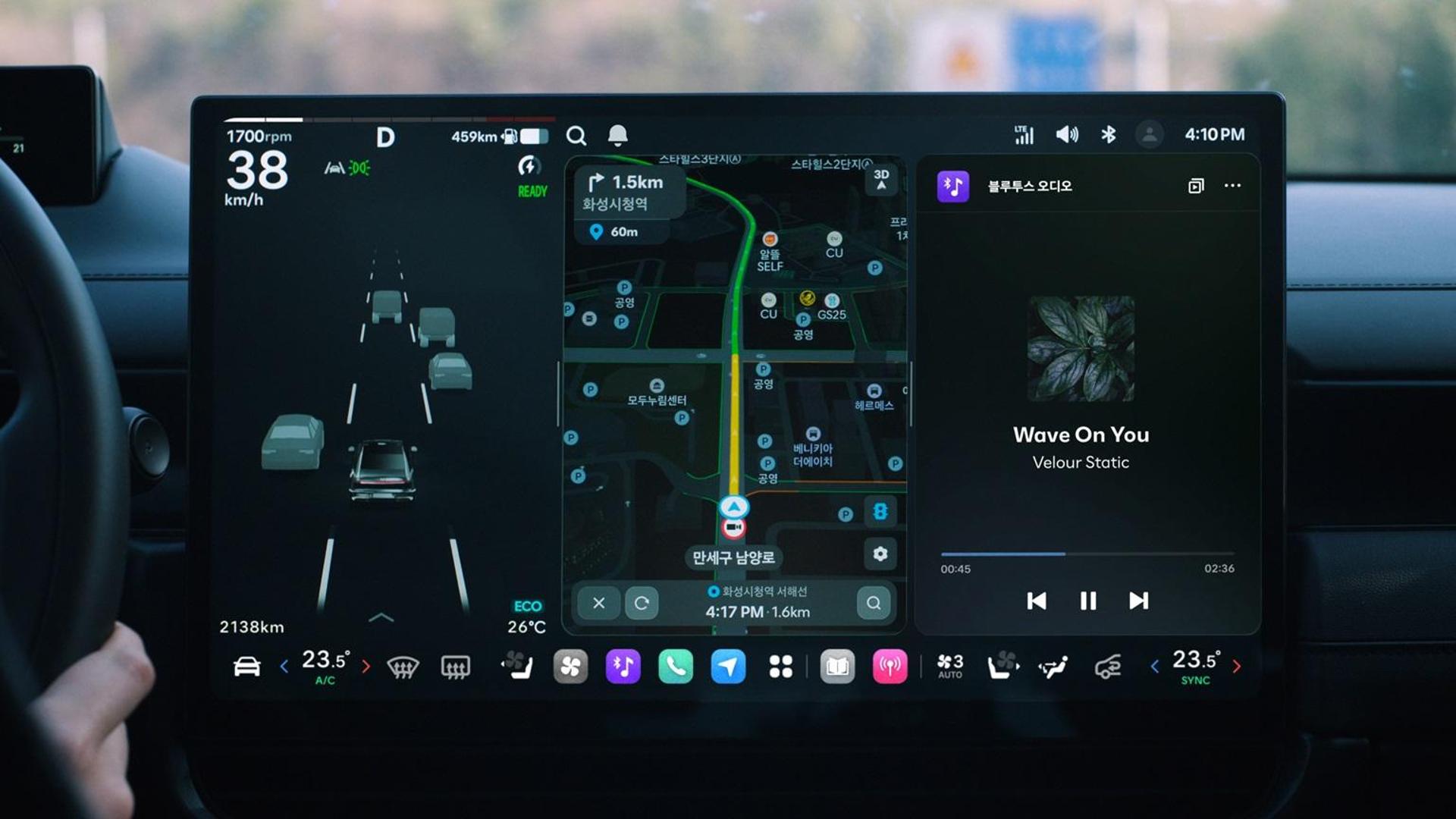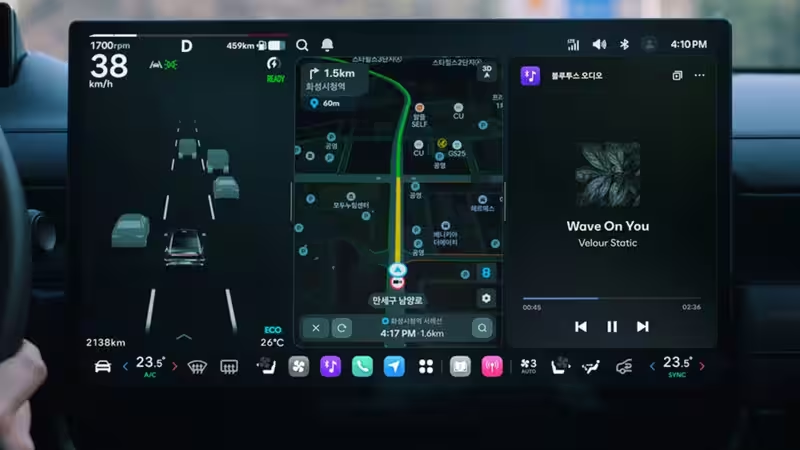
Buried under the GV90's headline-grabbing Arch Gate doors is arguably the more consequential piece of tech: Pleos Connect, Hyundai Motor Group's new infotainment architecture, and the AI agent living inside it, Gleo AI. This is the software the GV90 shares with future Hyundai and Kia products, and it's worth understanding on its own terms.What Pleos Connect Actually IsPleos Connect is Hyundai Motor Group's next-generation infotainment platform, built as a next-generation in-vehicle infotainment system on three core pillars of intuitiveness, safety, and openness, integrating a mobile-friendly UX with Gleo AI and supporting continuous enhancement through over-the-air updates. It's the Group's first tangible step toward a software-defined vehicle architecture, and the company has stated an intent to eventually push toward what it calls AI-defined vehicles. About The AuthorPratik Rakshit has been writing about cars and bikes since 2015. A postgraduate in Journalism from the Asian College of Journalism, Chennai, he has worked across magazine, digital and broadcast platforms, covering everything from everyday hatchbacks to high-performance cars and SUVs. He believes in old-school car journalism, driving by feel, instinct and an honest throttle, while keeping a close eye on the technology shaping the future of mobility. A BMW enthusiast, his dream car is a manual, naturally aspirated Porsche.The Pleos Connect is built as a next-generation in-vehicle infotainment system.The Group's ambitions are large-scale: by 2030 it aims to deploy Pleos Connect in approximately 20 million Hyundai, Kia and Genesis vehicles. In the GV90, that translates to the 23.6/24.6-inch pop-up Cinematic Display and 25-inch HUD mentioned in Genesis's own reveal, Pleos Connect is the software layer running underneath those screens.Gleo AI: What It DoesGleo is an advanced voice assistant built on a large language model, currently centered on vehicle control and convenience features, with plans to link it to a wider range of application services over time. In practice, reviewers who've tried it say you say "Hey Gleo" and can then set navigation, call a contact, read a text, control the radio, adjust AC, open windows, change ambient lighting, and ask general questions like what time it is elsewhere, without it feeling limited to a rigid command list.Two capabilities stand out from a usability standpoint. First, it can recognise and execute multiple commands within a single request, and interpret abstract instructions like "navigate there" or "find a restaurant near here" using conversational and driving context. Gleo is an advanced voice assistant built on a large language model, currently centered on vehicle control and convenience features.Second is zone-specific recognition, the assistant identifies which seat a person is speaking from to execute precise, location-aware commands, so a rear passenger can say "heat my seat" without specifying which one. Genesis's own GV90 release lists Gleo Connect alongside Remote Smart Parking Assist 3 and Memory Reversing Assist as part of the same convenience stack.More articles by AuthorTrending StoriesWhy This Matters NowCars have had voice control for years, but most of it, Hyundai's own older Bluelink included, worked off fixed command trees that broke the moment you phrased something naturally. An LLM-based agent removes that friction: instead of memorising syntax, you talk to the car the way you'd talk to a person. For a flagship SUV full of hidden menus (ambient lighting zones, seat massage settings, HVAC zoning, the Smart Vision Roof's six transparency zones), voice becomes less a gimmick and more a necessity, there's simply too much to dig through on a touchscreen while driving. Where It Falls Short- It's still narrow at launch: Gleo's capabilities are initially centered on familiar functions, adjusting in-car settings, web searches, and navigation, with broader capability arriving later via OTA updates- Cloud dependency: Deep contextual understanding generally leans on connectivity; in regions with patchy data coverage, functionality likely degrades.- Regional rollout gaps: Pleos Connect debuted on the Korean Grandeur and Europe's Ioniq 3 first, with the automaker itself noting plans for North America are unclear at this point, a pattern that could easily repeat for right-hand-drive, price-sensitive markets like India.- Multilingual depth is unproven: Genesis hasn't confirmed Hindi or regional-language support, a real gap given the multilingual expectations of Indian luxury buyers.- Privacy and trust: An always-listening, cloud-linked LLM in the cabin raises the same data-handling questions every AI assistant does, Mercedes, for comparison, has been explicit that it anonymises voice data and runs risk-assessment checks on responses; Genesis hasn't detailed its equivalent safeguards yet.How It Stacks Against Rivals, And Other IndustriesGenesis isn't alone here. Mercedes has moved through several stages of the same idea: it first bolted ChatGPT onto its MBUX Voice Assistant via Microsoft's Azure OpenAI Service, then layered in Google Cloud's Automotive AI Agent, built on the Gemini LLM, for its newest CLA-generation MBUX Virtual Assistant, moving from "static answers" to genuine multi-turn conversation. BMW's Intelligent Personal Assistant has taken a similar generative-AI direction. The broader read from industry trackers is that OEM-native assistants like MBUX and BMW's IPA lead on deep vehicle integration and premium UX, but remain largely confined to their own vehicles with language support skewing toward Western and East Asian markets, while advanced features often require connectivity, the exact trade-off Gleo AI faces too.The same shift is playing out well beyond cars. Smartphones went through it first, Apple Intelligence and Samsung's Galaxy AI turned static voice assistants (Siri, Bixby) into context-aware ones that can summarise, translate, and act across apps. Smart homes followed, with Amazon and Google rebuilding Alexa and Google Assistant around generative models so they can hold a conversation instead of just executing single commands. What's happening in the GV90's cabin is really the automotive industry catching up to a pattern already established on your phone and your kitchen counter. The difference is the stakes are higher, since a distracting or wrong response behind the wheel is a safety issue, not just an annoyance. FAQsWhat is Pleos Connect and how does it enhance the infotainment experience in the GV90?Pleos Connect is Hyundai Motor Group's next-generation infotainment platform that integrates a mobile-friendly UX with Gleo AI, focusing on intuitiveness, safety, and openness. It supports over-the-air updates and aims to provide a seamless in-vehicle infotainment experience.How does Gleo AI improve voice control functionality in Hyundai vehicles?Gleo AI serves as an advanced voice assistant that allows users to perform multiple commands in a single request and understand contextual instructions. This offers a more natural interaction with the vehicle, making it a necessity for navigating complex vehicle settings while driving.What are the limitations of Pleos Connect and Gleo AI at launch?At launch, Gleo AI focuses on familiar functions such as navigation and in-car settings, with broader capabilities expected through future updates. Additionally, it may experience degradation in functionality due to cloud dependency, as well as regional rollout gaps and unproven multilingual support.What is Pleos Connect and how does it enhance the GV90 infotainment system?Pleos Connect is Hyundai Motor Group's next-generation infotainment platform that powers the GV90's systems. It is built on three core pillars: intuitiveness, safety, and openness. This platform integrates a mobile-friendly user experience with the advanced Gleo AI, allowing for continuous enhancements through over-the-air updates.What features does Gleo AI provide in the GV90?Gleo AI is an advanced voice assistant that allows drivers and passengers to control various vehicle functions with natural language commands. Users can set navigation, make calls, manage music, adjust climate controls, and more, all through conversational commands, including multi-command execution and zone-specific recognition.What limitations exist with the Gleo AI voice assistant in the GV90?Gleo AI's capabilities are initially focused on common functions like adjusting in-car settings and navigation. Additional functionalities will be available through OTA updates over time. It's also reliant on cloud connectivity, which may affect performance in areas with poor data coverage, and there's currently unproven multilingual support.end of article
Hyundai's Pleos Connect and Gleo AI Are The Next-Gen Infotainment and AI Agent in Genesis GV90
Hyundai's Pleos Connect infotainment system and Gleo AI agent are set to redefine vehicle interaction. This advanced AI will integrate deeply into future Hyundai and Kia models, enhancing user experience. Gleo AI understands multiple commands and zone-specific requests, offering intuitive control over vehicle functions. While promising, its full potential hinges on cloud connectivity and regional rollout plans.
TL;DRAI
Hyundai launched Gleo AI on Pleos Connect for 20M vehicles by 2030, moving automotive from rigid voice commands to conversational LLM-based agents. For IT managers: automotive is emerging as priority for AI deployment, mirroring smartphones' context-aware pivot and reshaping vendor selection and skill demand.
1,279 words~6 min read