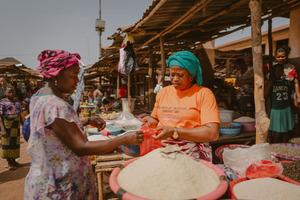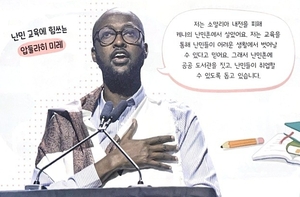
This excerpt from a sixth-grade social studies textbook by Dong-A Publishing shows a photo of Abdullahi Mire and describes him as an advocate for refugee education. (VANK via Yonhap) South Korean elementary school textbooks are presenting a more diverse and positive picture of Africa than before, according to a civic group that has campaigned against stereotypical portrayals of the continent in classrooms.Voluntary Agency Network of Korea, a South Korean internet-based civic group, said Thursday it analyzed seven sixth-grade social studies textbooks set to be used from the second semester of this year and found significant changes in how Africa is portrayed.The group had previously criticized textbooks based on Korea's 2015 revised national curriculum for presenting a narrow and inaccurate view of the continent, portraying Africans largely as victims of famine and armed conflict or recipients of international aid.The new textbooks place greater emphasis on African countries' growth potential, technological development and roles in the international community.They also feature prominent African figures, including Wangari Maathai, the Kenyan environmentalist who became the first African woman to win the Nobel Peace Prize in 2004.Nelson Mandela, South Africa's first democratically elected president and a symbol of the struggle against apartheid, is also featured prominently.Abdullahi Mire, a journalist and refugee education advocate who received the 2023 UNHCR Nansen Refugee Award, is introduced for his work promoting education for refugees.General depictions of Africans have also changed. Images in a section on Doctors Without Borders, for example, show Africans helping people in need, a shift from earlier portrayals that largely cast them as recipients of assistance.Other changes include giving greater prominence to local names of African landmarks, such as Mosi-oa-Tunya, the UNESCO World Heritage site widely known in English as Victoria Falls.Descriptions of Korea's relations with African countries have also shifted toward broader forms of cooperation, rather than portraying the continent primarily as a source of natural resources.“Meaningful changes have been made, including greater use of local place names, more attention to the roles played by Africans themselves and broader coverage of cooperation with Korea,” VANK said. “The textbooks appear to be moving away from portrayals centered on poverty and famine and toward showing more diverse aspects of Africa.”The group said there is still room for improvement, noting that a substantial portion of the textbooks' coverage of Africa continues to focus on famine, poverty and the continent's role as a recipient of aid. It stressed that textbooks should offer a more balanced view of the world rather than reinforce particular images or stereotypes.
Korean textbooks moving beyond stereotypes of Africa: NGO
South Korean elementary school textbooks are presenting a more diverse and positive picture of Africa than before, according to a civic group that has campaigne
417 words~2 min read