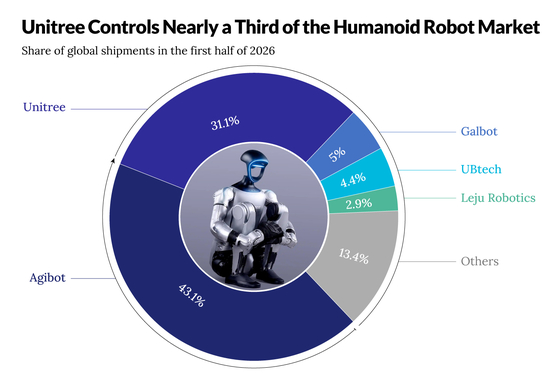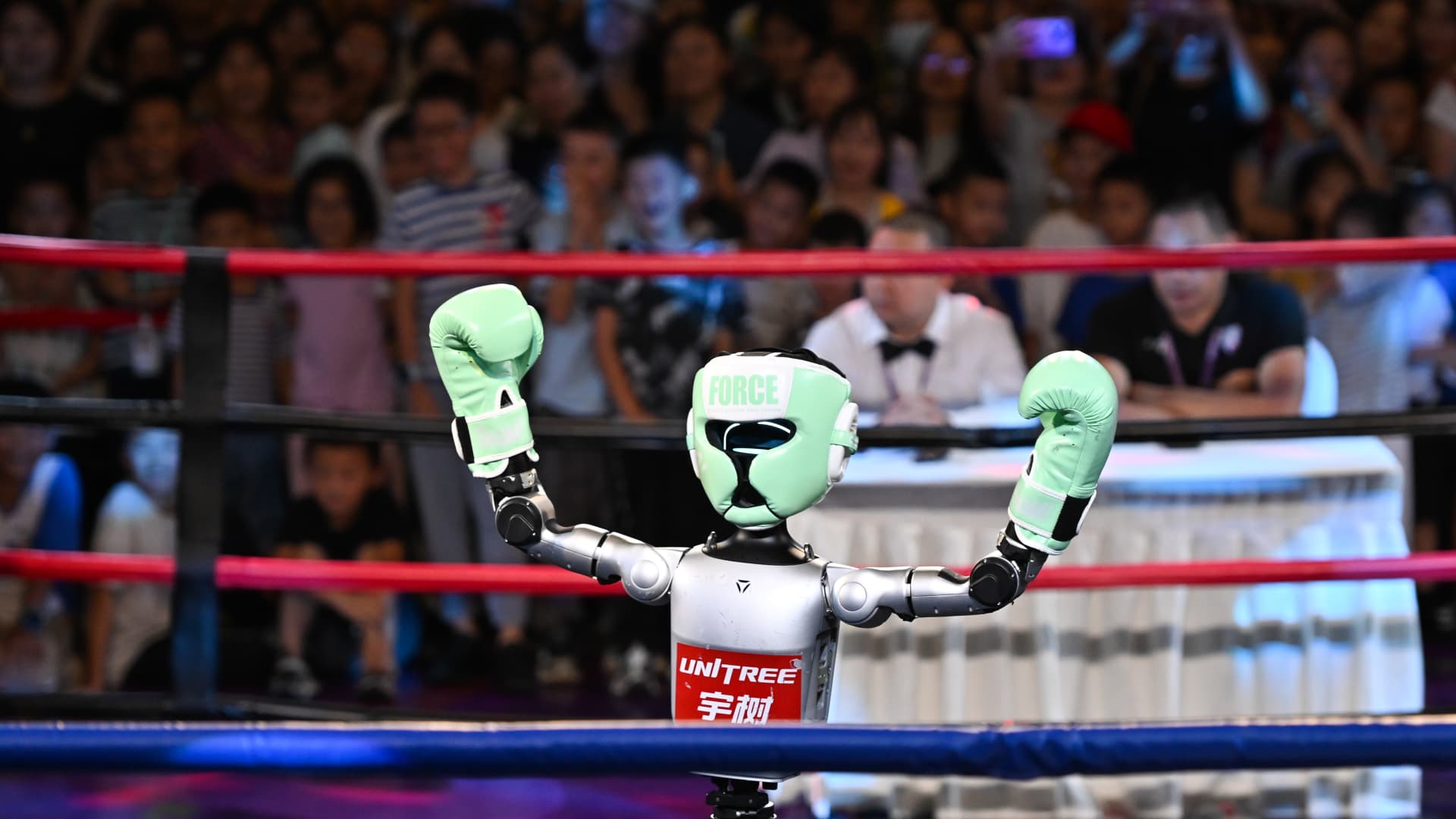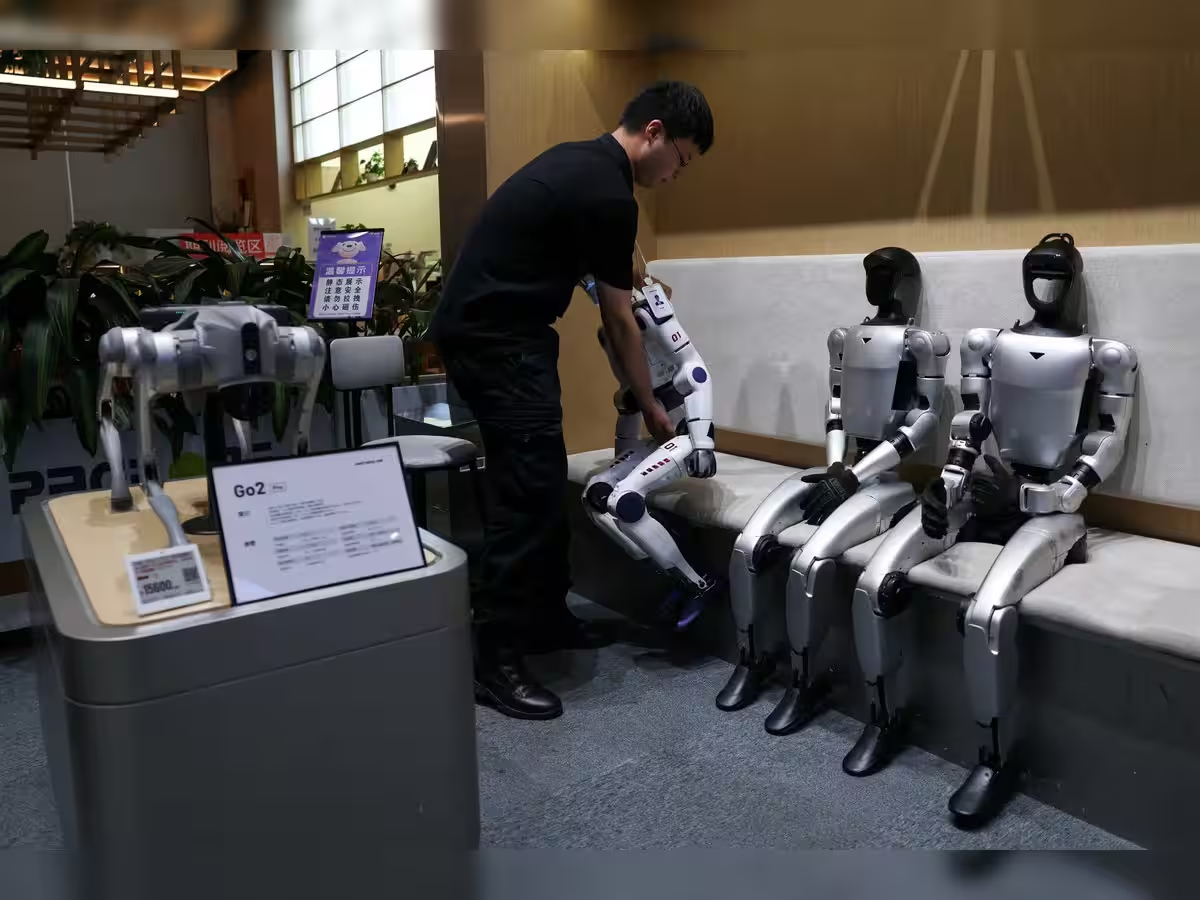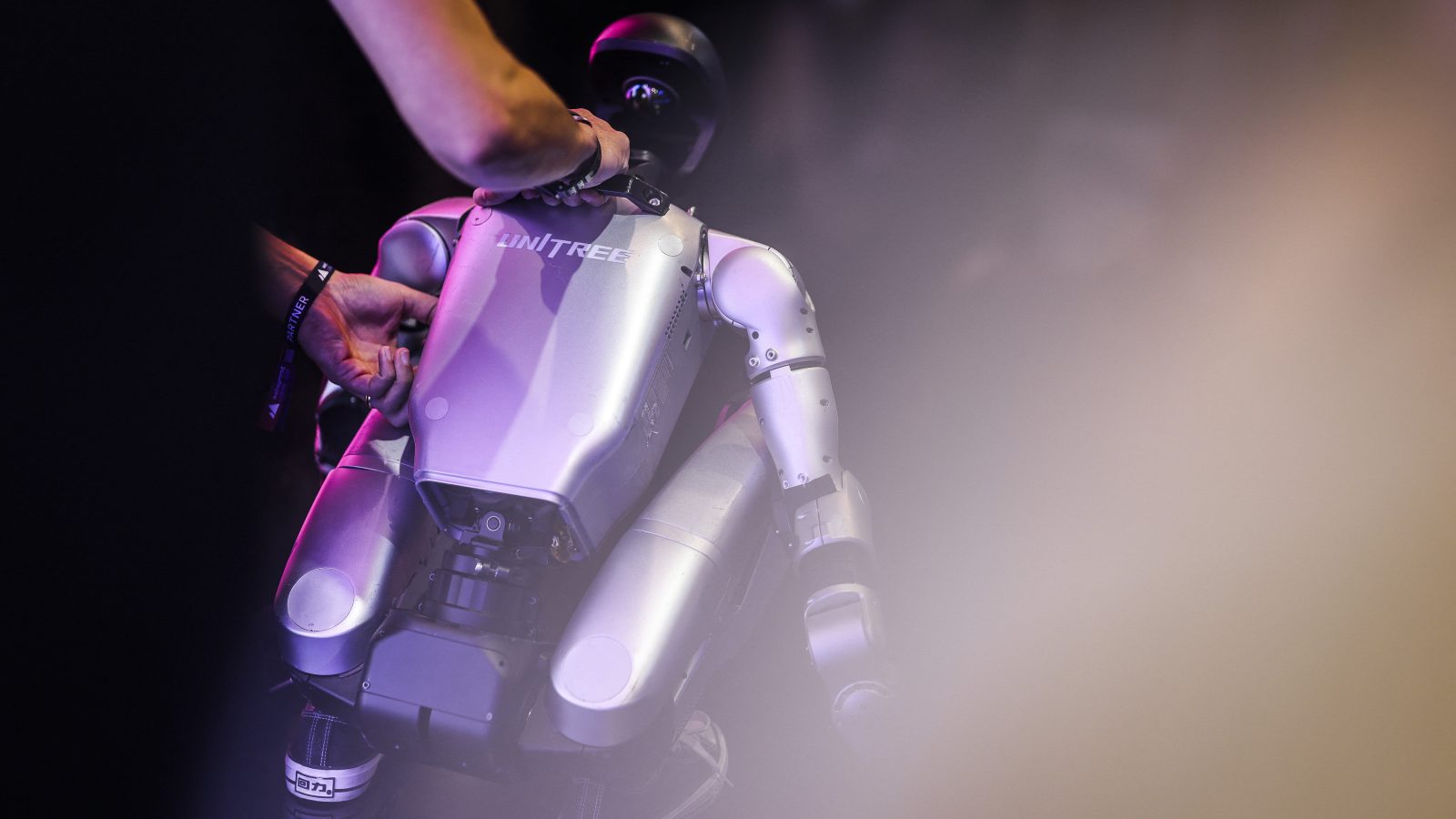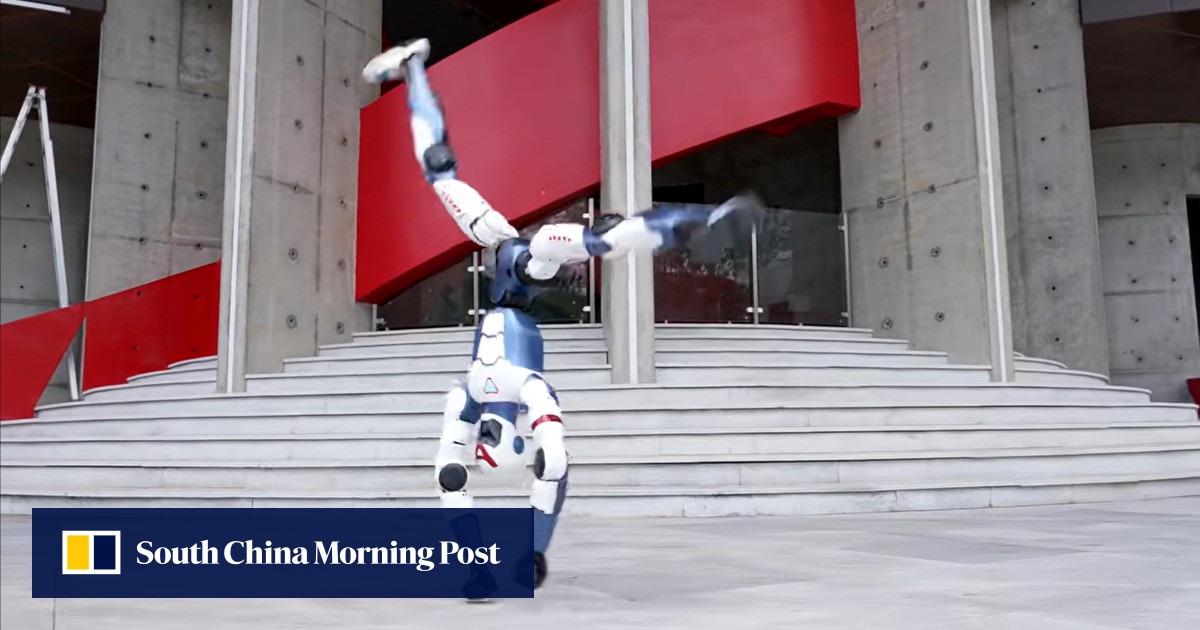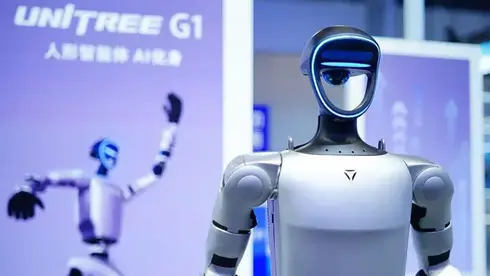
Unitree Robotics, the Chinese maker of robotic dogs and humanoids, is going public at a $9 billion valuation; While Tesla and US rivals struggle to commercialize humanoids, Unitree is already selling thousands at prices as low as $16,000 Related TopicsWhile Tesla and other U.S. tech giants continue to make grandiose promises and release polished demonstration videos, China’s robotics industry is reaching a clear commercial milestone. Unitree Robotics, which burst into the public consciousness with robotic dogs performing acrobatic stunts in countless TikTok videos and has taken the internet by storm over the past year with humanoid robots, is completing its initial public offering on the Shanghai Stock Exchange’s STAR Market.The IPO drew record-breaking local demand, with massive oversubscription among retail investors and a valuation of about $9 billion. The move positions Unitree as the first major player in the robotics field to make the transition from a research laboratory to public markets on such a scale.China’s robotics industry is reaching a clear commercial milestone (Photo: Getty Images)Unitree’s surge comes after years of work by the company. It reported revenue of about 1.7 billion yuan in 2025 while supplying thousands of humanoid and quadruped robots to the research, education and industrial markets. Its main growth engine is based on a classic but aggressive Chinese strategy: a strong domestic supply chain that enables significant price cuts.Its compact flagship G1 model, which stands about 1.30 meters tall and weighs just 35 kilograms, is offered at a starting price of about $16,000 — a price tag previously unseen in the category. That makes it possible for smaller laboratories and artificial intelligence developers to purchase physical hardware for implementing embodied AI models, or models designed to operate a robotic body.Unitree New Robot Preview: “Superman” Breaking the Limits of Humanity🥳Standing high jump 2 m, top speed 12.66 m/s (0.85 m leg length)Surpassing the standing high jump and running speed records of all humans around the worldThis new machine has only been in development for a… pic.twitter.com/12i80ITU6p— Unitree (@UnitreeRobotics) August 17, 2026 The gap between Unitree’s model and its Western competitors illustrates the industry’s growing divide. While Elon Musk’s Tesla intends to deploy its Optimus robot on its own autonomous production lines and does not currently offer it for sale to the general public, Unitree is already shipping its robots to actual customers.By contrast, companies such as U.S.-based Agility Robotics, which developed the Digit robot now operating in Amazon’s large warehouses, are focused on the industrial logistics sector and offer systems costing hundreds of thousands of dollars.Unitree Super Athlete AS2-W 😉Fluid movement, compact yet exceptional. Supports a continuous 16kg payload, with 30+ km unloaded driving range pic.twitter.com/AwjdwnzUFs— Unitree (@UnitreeRobotics) July 24, 2026 Other U.S. projects, such as Figure AI, which has received massive investment, and robots developed by Boston Dynamics, demonstrate engineering superiority and sophisticated processing capabilities. But they remain largely closed commercial platforms designed for specific applications and are not accessible to the general public, while also being extremely expensive to purchase and operate.Despite the market enthusiasm, Unitree does have global sales, with more than 40% of its revenue coming from outside China, but it faces growing regulatory and geopolitical obstacles. In the United States and Europe, concerns are mounting over the use of autonomous robots equipped with Chinese-made sensor arrays, depth cameras and lidar systems, amid regulatory scrutiny and data security concerns.Beyond that, there is a significant gap between a robot’s ability to perform flips or agile movements in TikTok videos and its ability to reliably carry out autonomous tasks in unpredictable home or industrial environments.Still, Unitree’s IPO marks the beginning of a genuine industrialization phase for humanoid robotics. The race is no longer measured solely by learning algorithms or joint design, but by the ability to produce reliable, low-cost platforms on a mass scale.While the West leads in developing advanced language and perception models, China is once again demonstrating that when it comes to turning science fiction into affordable hardware that can be bought off the shelf, its factories are moving at a pace that is difficult to compete with.Comments
While Tesla waits, China’s Unitree is already selling humanoid robots
Unitree Robotics, the Chinese maker of robotic dogs and humanoids, is going public at a $9 billion valuation; While Tesla and US rivals struggle to commercialize humanoids, Unitree is already selling thousands at prices as low as $16,000
TL;DRAI
Unitree IPO'd at $9 billion, already selling G1 humanoid robots at $16,000; Tesla and US rivals remain in development. China is industrializing humanoid robotics at affordable scale while Western competitors focus on closed, expensive platforms—signaling market leadership shift.
676 words~3 min read