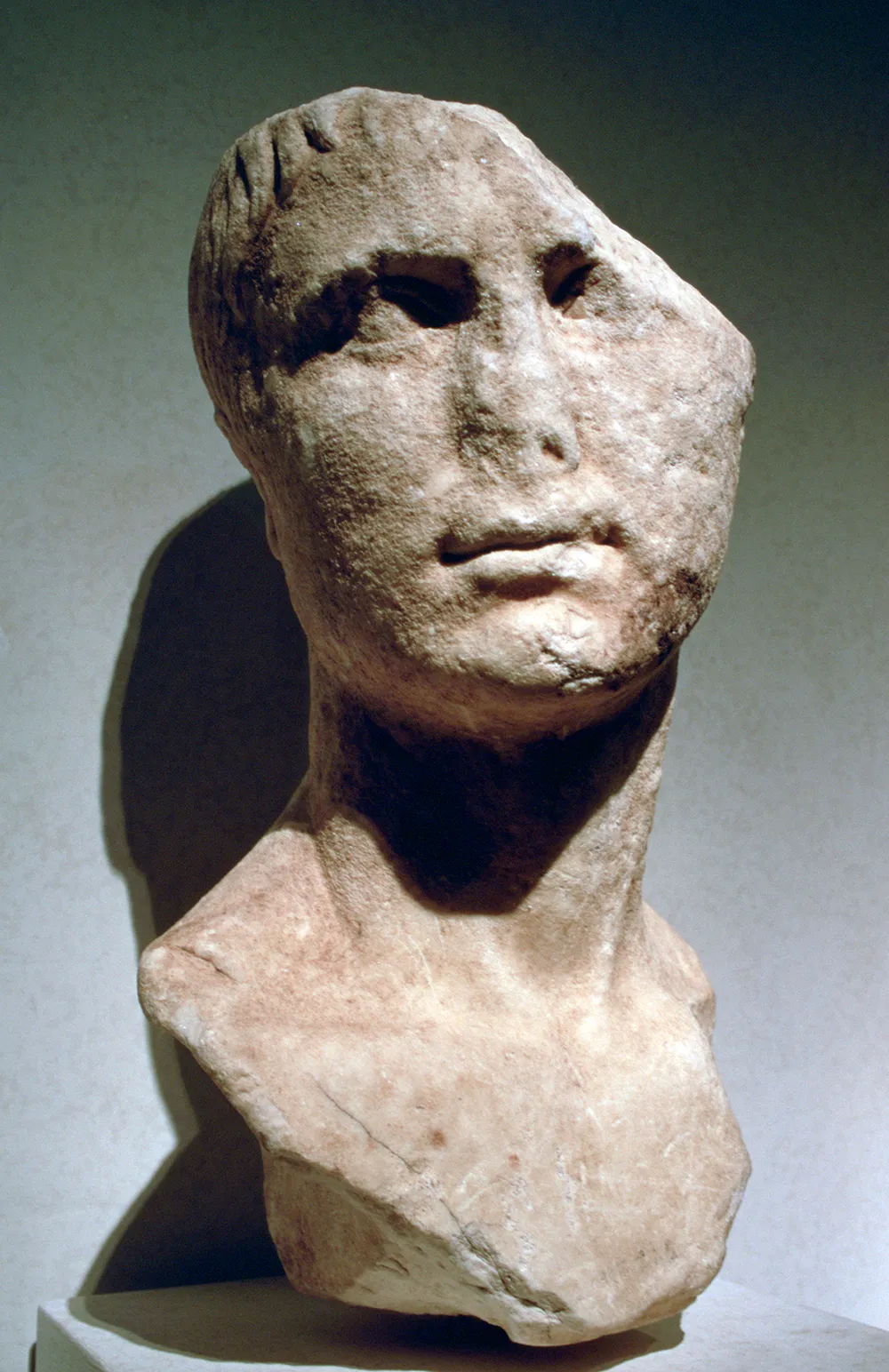
Any readers of Robert Harris’s new novel who aren’t ancient historians might be surprised to discover what an important figure Marcus Vipsanius Agrippa was: Caesar Augustus’s right-hand man since they were at school together; the builder of some of Rome’s most significant buildings; the winning commander in several battles that changed history; even, as Harris puts it in an afterword, ‘the effective co-ruler of the Roman world for many years’.
Happily, that same afterword also suggests that such ignorance of Agrippa’s achievements isn’t necessarily our fault – because Augustus ‘all but effaced his closest comrade from the official record’. This, of course, leaves a handy gap for the novelist to fill. But how to fill it? The only clue to Agrippa the man (‘his inner life a blank’) that Harris can find is a single inscription by him in ‘terse, plain, no-nonsense language’ – and that’s the language he adopts for Agrippa’s narrative voice. It’s a decision that certainly plunges us deep into the mind of a bluff, unillusioned observer of his own life and of the more dazzling people around him – but that comes rather at the cost of storytelling liveliness.
Most popular
Steven Edginton
Will the BBC apologise for its role in the Jason Arday story?